


The Executive Yuan yesterday pledged to present laws to phase out the existing nuclear power plants, regulate storage sites for nuclear waste and promote the use of cleaner sources of energy.
A Cabinet official also suggested amending the Constitution to make Taiwan a nuclear-free country, a policy of the DPP.
Also high on the government's agenda is to organize a national conference next spring on the establishment of a "nuclear-free home."
Briefing the press after the first closed-door meeting of Cabinet's Council for the Promotion of a Nuclear-free Home (非核家園推動委員會), Minister without Portfolio Yeh Jiunn-rong (葉俊榮) quoted Premier Yu Shyi-kun as saying that the government will do its best to build a nuclear-free home because the public demand it.
"When we and the Legislative Yuan signed an agreement to push for the establishment of a nuclear-free home last February, we promised to hammer out a comprehensive energy development plan that will take into account economic and social development and be in line with global trends and international treaties. This would, of course, have to provide sufficient energy," Yeh said.
Cabinet Secretary-General Liu Shih-fang (
"The energy development plan needs many supplementary measures to make it more complete, including enacting new laws and changing the Constitution," she said.
Yu said that building a nuclear-free home did not mean passively boycotting nuclear power. Rather, he said, it meant aggressively developing green technology and using cleaner and more efficient alternative forms of energy.
"When we talk about building a nuclear-free home, we're not just talking about the problem of nuclear power plants, but about how to end the intimidation of nuclear weapons, how to use nuclear power in a peaceful way, how to strengthen the use of renewable energy, how to liberalize and privatize the power industry and how to refuse nuclear pollution," Yu said.
Although there is a long way to go before Taiwan can become a nuclear-free home, Yu said, the government's determination would prevail.
"I know the road will be long and bumpy, but I believe we won't be alone because the public is on our side," he said.
During yesterday's meeting, the 17-member commission reached a resolution to divide the organization into eight groups. The different groups will handle: adjusting the structure of the energy industry; the promotion of clean energy; the discharge of nuclear power plants; the storage of nuclear waste; the promotion of a nuclear-free home; education about creating a nuclear-free home; legislation for building a nuclear-free home and the supervision of nuclear power plants.
To solicit opinions from the public and academic circles, the commission will start preparing for a national conference next spring to discuss the establishment of a nuclear-free home.
Commission members also called on the public to participate in the 10th No Nukes Asia Forum 2002 on Taiwan, which will be held from Sept. 27 to Oct. 3 in Taipei.
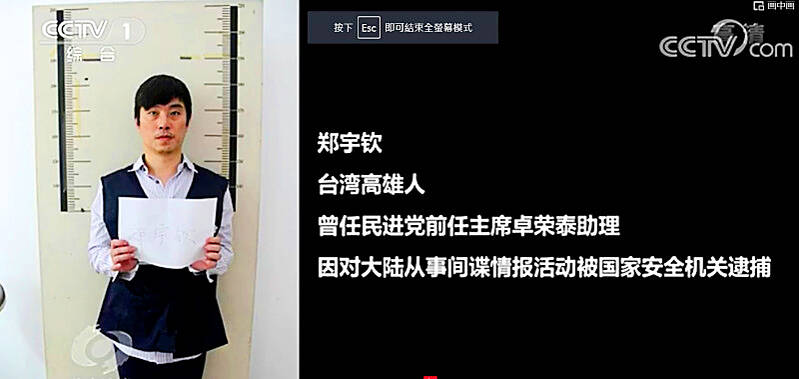
Former Czech Republic-based Taiwanese researcher Cheng Yu-chin (鄭宇欽) has been sentenced to seven years in prison on espionage-related charges, China’s Ministry of State Security announced yesterday. China said Cheng was a spy for Taiwan who “masqueraded as a professor” and that he was previously an assistant to former Cabinet secretary-general Cho Jung-tai (卓榮泰). President-elect William Lai (賴清德) on Wednesday last week announced Cho would be his premier when Lai is inaugurated next month. Today is China’s “National Security Education Day.” The Chinese ministry yesterday released a video online showing arrests over the past 10 years of people alleged to be
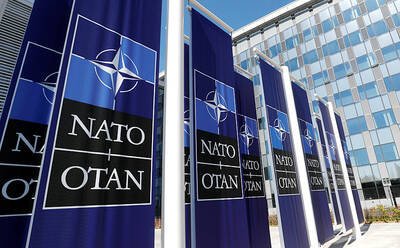
THE HAWAII FACTOR: While a 1965 opinion said an attack on Hawaii would not trigger Article 5, the text of the treaty suggests the state is covered, the report says NATO could be drawn into a conflict in the Taiwan Strait if Chinese forces attacked the US mainland or Hawaii, a NATO Defense College report published on Monday says. The report, written by James Lee, an assistant research fellow at Academia Sinica’s Institute of European and American Studies, states that under certain conditions a Taiwan contingency could trigger Article 5 of NATO, under which an attack against any member of the alliance is considered an attack against all members, necessitating a response. Article 6 of the North Atlantic Treaty specifies that an armed attack in the territory of any member in Europe,
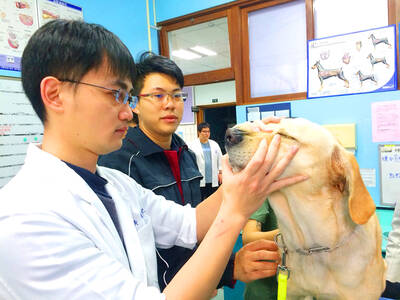
LIKE FAMILY: People now treat dogs and cats as family members. They receive the same medical treatments and tests as humans do, a veterinary association official said The number of pet dogs and cats in Taiwan has officially outnumbered the number of human newborns last year, data from the Ministry of Agriculture’s pet registration information system showed. As of last year, Taiwan had 94,544 registered pet dogs and 137,652 pet cats, the data showed. By contrast, 135,571 babies were born last year. Demand for medical care for pet animals has also risen. As of Feb. 29, there were 5,773 veterinarians in Taiwan, 3,993 of whom were for pet animals, statistics from the Animal and Plant Health Inspection Agency showed. In 2022, the nation had 3,077 pediatricians. As of last
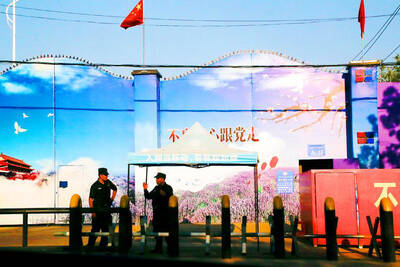
XINJIANG: Officials are conducting a report into amending an existing law or to enact a special law to prohibit goods using forced labor Taiwan is mulling an amendment prohibiting the importation of goods using forced labor, similar to the Uyghur Forced Labor Prevention Act (UFLPA) passed by the US Congress in 2021 that imposed limits on goods produced using forced labor in China’s Xinjiang region. A government official who wished to remain anonymous said yesterday that as the US customs law explicitly prohibits the importation of goods made using forced labor, in 2021 it passed the specialized UFLPA to limit the importation of cotton and other goods from China’s Xinjiang Uyghur region. Taiwan does not have the legal basis to prohibit the importation of goods


 RSS
RSS