


For the first time, leading industrialists -- including those from Taiwan -- say that not only is sustainable development good for business, the solving of environmental and social problems is essential for future economic growth.
Their thoughts were recorded in a new book released yesterday in Johannesburg.
The book demonstrates that the vanguard who have pushed cutting-edge environmental and social initiatives are benefiting in a myriad of ways that also help the bottom line and the planet. The book, Walking the Talk -- The Business Case for Sustainable Development, was introduced to the public at the Business Forum, one of forums at the UN World Summit on Sustainable Development (WSSD), by the World Business Council for Sustainable Development (WBCSD). The new book draws on 80 case studies and a wealth of personal interviews with business leaders around the world.
Stephan Schmidheiny, author of the influential Changing Course, joined fellow heavyweights at the WBCSD, Charles Holliday of DuPont and Philip Watts of Shell, to spell out the business case for addressing sustainable development as a key strategic issue.
Inspirational ideas
At the release party, Holliday said that the book would promote positive ideas pertaining to running a business.
The book argues that far more eco-efficient and socially equitable modes of development must be pursued in order to allow poorer nations to raise their standards of living.
To achieve these goals, according to the book, markets must be mobilized in favor of sustainability -- leveraging the power of innovation and global markets for the benefit of everyone.
In the book, interviews with two prominent Taiwanese business leaders were also included. Chen Yao-sheng (
"There's a lack of commitment from senior management of most businesses; thus the top-down process of integrating eco-efficiency into daily business operations is not functioning well," Chen was quoted as saying.
Chen said the concept of eco-efficiency was introduced to Taiwan in the last three or four years, with the formation of the Business Council for Sustainable Development in Taiwan, and both industry and the government need time to implement eco-efficiency.
Tsai Chi-jui (
Pressure from retailers
Retailers are putting pressure on their suppliers to improve labor practices; these suppliers in turn impose the same standards on their own suppliers. This has been the case for the Pou Chen Group in Taiwan, according to the book.
Given the growing pressure on suppliers to maintain high labor standards, Tsai, who employs 220,000 workers in countries such as Taiwan, China, Vietnam, Indonesia and the US, said in the book that the company had adopted strict policies demanded by customers.
"This in turn has set a good example for the industry. In fact, some of the brands with which we work have adopted our CSR policies as their standard and have introduced our CSR practice to their subcontractors," Tsai said.
Niven Huang (
"It is time for industry to take more effort in pursuing goals pertaining to sustainable development, since the world expects that leaders' discussion at the summit will not draw conclusions on key issues," Huang said.
Key issues left for leaders to decide at the summit this week include good governance, human rights, a world solidarity fund, sanitation, energy, trade and finance, natural resources, climate change, global public goods, globalization and others.
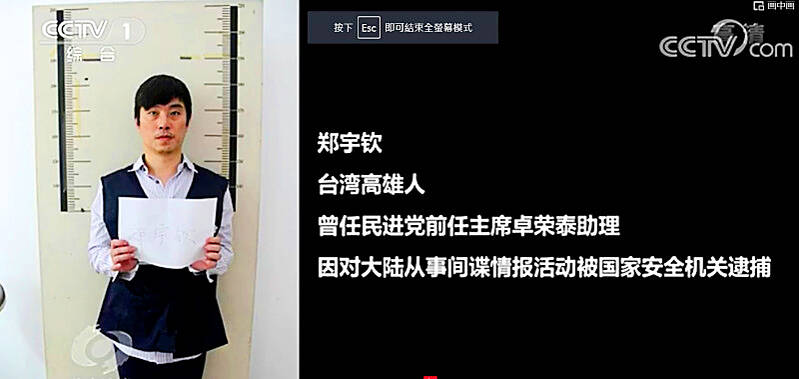
Former Czech Republic-based Taiwanese researcher Cheng Yu-chin (鄭宇欽) has been sentenced to seven years in prison on espionage-related charges, China’s Ministry of State Security announced yesterday. China said Cheng was a spy for Taiwan who “masqueraded as a professor” and that he was previously an assistant to former Cabinet secretary-general Cho Jung-tai (卓榮泰). President-elect William Lai (賴清德) on Wednesday last week announced Cho would be his premier when Lai is inaugurated next month. Today is China’s “National Security Education Day.” The Chinese ministry yesterday released a video online showing arrests over the past 10 years of people alleged to be
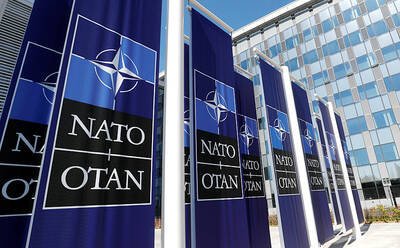
THE HAWAII FACTOR: While a 1965 opinion said an attack on Hawaii would not trigger Article 5, the text of the treaty suggests the state is covered, the report says NATO could be drawn into a conflict in the Taiwan Strait if Chinese forces attacked the US mainland or Hawaii, a NATO Defense College report published on Monday says. The report, written by James Lee, an assistant research fellow at Academia Sinica’s Institute of European and American Studies, states that under certain conditions a Taiwan contingency could trigger Article 5 of NATO, under which an attack against any member of the alliance is considered an attack against all members, necessitating a response. Article 6 of the North Atlantic Treaty specifies that an armed attack in the territory of any member in Europe,

LIKE FAMILY: People now treat dogs and cats as family members. They receive the same medical treatments and tests as humans do, a veterinary association official said The number of pet dogs and cats in Taiwan has officially outnumbered the number of human newborns last year, data from the Ministry of Agriculture’s pet registration information system showed. As of last year, Taiwan had 94,544 registered pet dogs and 137,652 pet cats, the data showed. By contrast, 135,571 babies were born last year. Demand for medical care for pet animals has also risen. As of Feb. 29, there were 5,773 veterinarians in Taiwan, 3,993 of whom were for pet animals, statistics from the Animal and Plant Health Inspection Agency showed. In 2022, the nation had 3,077 pediatricians. As of last

XINJIANG: Officials are conducting a report into amending an existing law or to enact a special law to prohibit goods using forced labor Taiwan is mulling an amendment prohibiting the importation of goods using forced labor, similar to the Uyghur Forced Labor Prevention Act (UFLPA) passed by the US Congress in 2021 that imposed limits on goods produced using forced labor in China’s Xinjiang region. A government official who wished to remain anonymous said yesterday that as the US customs law explicitly prohibits the importation of goods made using forced labor, in 2021 it passed the specialized UFLPA to limit the importation of cotton and other goods from China’s Xinjiang Uyghur region. Taiwan does not have the legal basis to prohibit the importation of goods


 RSS
RSS