


The KMT's legislative caucus yesterday presented its draft of legislation that would regulate intelligence agencies within the Legislative Yuan.
The national-intelligence supervision bill (
According to the draft law, the committee would oversee resolutions made in the National Security Council (NSC, 國家安全會議) and the intelligence-gathering activities of the National Security Bureau (NSB, 國安局). The NSC secretary-general and the NSB director would be required to report regularly to the committee.
The KMT version of the draft law was submitted by lawmakers Lee Chia-chin (
Intelligence activities have to be regulated by law and appropriately supervised, the lawmakers said, otherwise the intelligence agencies would become subject to abuses of power and malpractice.
As well as the NSC and NSB, intelligence agencies defined in the draft law include the Coast Guard Administration (海巡署), the National Police Administration (警政署) and the Investigation Bureau (調查局) under the Ministry of Justice.
The draft requires intelligence personnel to remain politically neutral. It prohibits them from joining political parties, running in elections for public office and helping with election campaigns.
This stipulation appears designed to address a dispute during the legislative elections last year in which intelligence agencies reportedly leaked classified election-related information to the DPP headquarters.
The draft says that the intelligence supervision committee, on which 17 lawmakers will sit, should meet privately.
Lee said that the legislature's Budget Committee had previously invited Secretary-General to the President Chen Shih-meng (陳師孟), NSC Secretary-General Chiou I-jen (邱義仁) and NSB Director Tsai Chao-ming (蔡朝明) to attend its meetings, but that they turned down the invitation under various pretexts. Lee argued that their ignorance of the legislature's rights had sabotaged national security and the supervision of intelligence agencies.
As a result, Lee said, they hoped the draft bill would be passed as soon as possible to establish the legislature's supervisory mechanism over national-intelligence agencies.
Despite unanimous agreement from all legislative caucuses that such a committee should be formed, lawmakers disagreed over the details.
DPP lawmaker Lee Wen-chung (
In the version presented by PFP lawmaker Liu Wen-hsiung (
There were also disagreements over how long lawmakers would be required to keep classified information to themselves.
Both the KMT and DPP versions state that lawmakers must not divulge secrets before the classified documents are released into the public domain.
While the PFP version does not specifically stipulate how long lawmakers are required to keep information secret, it states that lawmakers and their assistants should get approval to leave the country within five years after they leave the current positions.
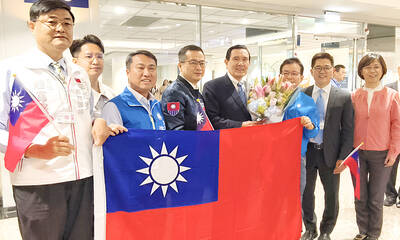
Former president Ma Ying-jeou’s (馬英九) mention of Taiwan’s official name during a meeting with Chinese President Xi Jinping (習近平) on Wednesday was likely a deliberate political play, academics said. “As I see it, it was intentional,” National Chengchi University Graduate Institute of East Asian Studies professor Wang Hsin-hsien (王信賢) said of Ma’s initial use of the “Republic of China” (ROC) to refer to the wider concept of “the Chinese nation.” Ma quickly corrected himself, and his office later described his use of the two similar-sounding yet politically distinct terms as “purely a gaffe.” Given Ma was reading from a script, the supposed slipup
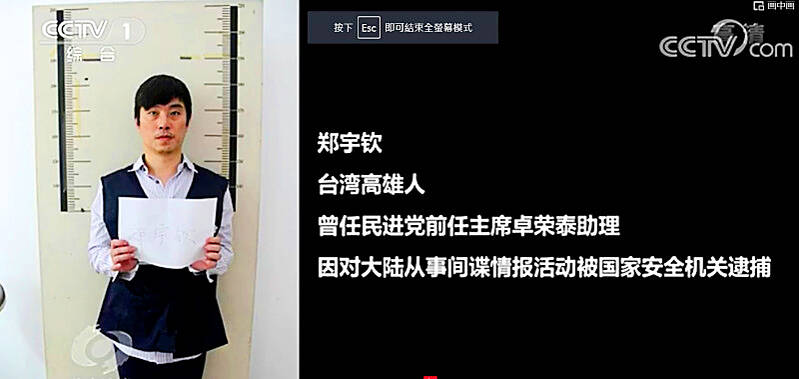
Former Czech Republic-based Taiwanese researcher Cheng Yu-chin (鄭宇欽) has been sentenced to seven years in prison on espionage-related charges, China’s Ministry of State Security announced yesterday. China said Cheng was a spy for Taiwan who “masqueraded as a professor” and that he was previously an assistant to former Cabinet secretary-general Cho Jung-tai (卓榮泰). President-elect William Lai (賴清德) on Wednesday last week announced Cho would be his premier when Lai is inaugurated next month. Today is China’s “National Security Education Day.” The Chinese ministry yesterday released a video online showing arrests over the past 10 years of people alleged to be
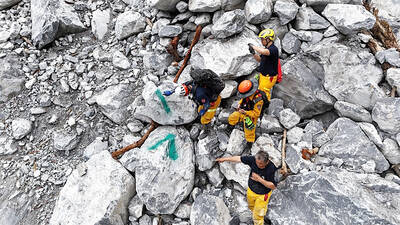
The bodies of two individuals were recovered and three additional bodies were discovered on the Shakadang Trail (砂卡礑) in Taroko National Park, eight days after the devastating earthquake in Hualien County, search-and-rescue personnel said. The rescuers reported that they retrieved the bodies of a man and a girl, suspected to be the father and daughter from the Yu (游) family, 500m from the entrance of the trail on Wednesday. The rescue team added that despite the discovery of the two bodies on Friday last week, they had been unable to retrieve them until Wednesday due to the heavy equipment needed to lift
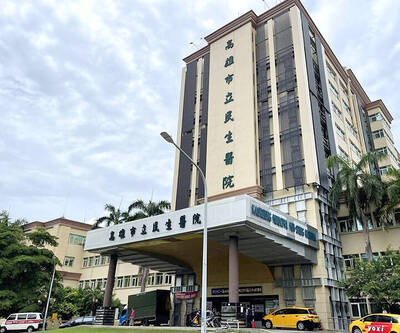
MIX-UP: Kaohsiung Municipal Min-Sheng Hospital director Yen Chia-chi was suspended from his duties after surgeons operated on the wrong patient last week The Kaohsiung Department of Health yesterday fined Kaohsiung Municipal Min-Sheng Hospital NT$500,0000 for misidentifying two patients and consequently causing one of them to undergo the wrong surgery last week. The hospital’s director Yen Chia-chi (顏家祺) was suspended from his duties. The surgeon who was scheduled to operate on the patient was given a major demerit and is subject to subsequent disciplinary actions. Demerits were given to the anesthesiologist, the nurse in the operation room, the nurse in the ward and the worker who helped transfer the patient from the ward to the operation room for having failed to verify the patient’s identity. Meanwhile, the


 RSS
RSS