


To many sports fans conditioned to the pomp and primp surrounding the NFL and NBA drafts, Major League Baseball's annual June draft is a considerably more existential affair: If no one has heard of the players, can the draft make a sound?
With almost every pick being an anonymous high-school or college player -- and with one-third of first-round picks never reaching the major leagues at all -- the baseball draft could be mistaken for a tree falling, unnoticed, in the woods. But some teams do far better than others. Dr. Rany Jazayerli wanted to figure out which ones they were.
By day a dermatologist in suburban Chicago, Jazayerli, a longtime writer for Baseball Prospectus, spent several months this spring developing a sophisticated system for examining the baseball draft (to be held Tuesday).
His analysis showed how some clubs (like the Phillies and the A's) leveraged draft picks well, while others (like the Mets and the Pirates) squandered opportunities left and right. He also found that some common draft wisdom -- college players are better bets than high-schoolers, for example -- might no longer be true.
"I'm skeptical of any conclusion until it's proven to be so," Jazayerli said. "I have a very healthy distrust of other people's opinions."
Most previous studies looked at who reached the major leagues -- giving equal credit to Alex Rodriguez and Alex Arias -- or recalled a famous anecdote, like how the Cubs snagged the future Hall of Famer Greg Maddux in the second round in 1984.
Jazayerli, however, appears to have been more exacting. He determined the average historical value of every pick from No. 1 to No. 100, using a Baseball Prospectus metric called Wins Above Replacement Player. He then compared each draft pick's performance with his expected value. (Wins Above Replacement Player estimates the number of victories a player has contributed beyond the average Class AAA-type player.)
The results showed what many baseball insiders have long suspected, that the Phillies, despite otherwise underachieving, were in fact the best drafters in baseball for most of the 1990s.
For example, when the team used the No. 46 overall pick in 1993 on Scott Rolen, then in high school in rural Indiana and now a Cardinal, it got a player whose future performance (63.2 WARP) far exceeded the average of 5.0 that spot usually generates. The Phillies have succeeded with picks high and low in the top few rounds: Pat Burrell (No. 1 overall in 1998) has had several top slugging years, and shortstop Jimmy Rollins (No. 46 overall in 1996) and the left-hander Randy Wolf (No. 54 in 1997) have been All-Stars.
The worst-ranked drafters are no surprise, having usually been the teams that have languished for most of the past 10 years because of their inability to develop young players who earn relatively small salaries for their first four to six seasons. Ranking last were the Pirates, who were such poor judges of talent that they released their best pick, the right-hander Bronson Arroyo, before he developed with the Red Sox. Other perennial cellar-dwellers like the Brewers and the Tigers also ranked in the bottom five.
Twenty-two of 24 Mets picks underperformed, among them colossal busts like the high-school pitchers Kirk Presley (No. 8, 1993) and Geoff Goetz (No. 6, 1997). The Yankees also had only two selections that panned out, the 1996 picks Eric Milton and Nick Johnson, but always drafted low enough that no pick was that valuable to begin with.

Four-time NBA all-star DeMarcus Cousins arrived in Taiwan with his family early yesterday to finish his renewed contract with the Taiwan Beer Leopards in the T1 League. Cousins initially played a four-game contract with the Leopards in January. On March 18, the Taoyuan-based team announced that Cousins had renewed his contract. “Hi what’s up Leopard fans, I’m back. I’m excited to be back and can’t wait to join the team,” Cousins said in a video posted on the Leopard’s Facebook page. “Most of all, can’t wait to see you guys, the fans, next weekend. So make sure you come out and support the Beer
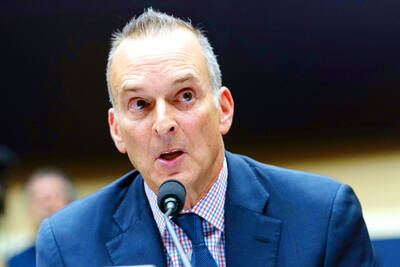
Revelations of positive doping tests for nearly two dozen Chinese swimmers that went unpunished sparked an intense flurry of accusations and legal threats between the World Anti-Doping Agency (WADA) and the head of the US drug-fighting organization, who has long been one of WADA’s fiercest critics. WADA on Saturday said it was turning to legal counsel to address a statement released by US Anti-Doping Agency (USADA) CEO Travis Tygart, who said WADA and anti-doping authorities in China swept positive tests “under the carpet by failing to fairly and evenly follow the global rules that apply to everyone else in the world.” The

Taiwanese judoka Yang Yung-wei on Saturday won silver in the men’s under-60kg category at the Asian Judo Championships in Hong Kong. Nicknamed the “judo heartthrob” in Taiwan, the Olympic silver-medalist missed out on his first Asian Championships gold when he lost to Japanese judoka Taiki Nakamura in the finals. Yang defeated three opponents on Saturday to reach the final after receiving a bye through the round of 32. He first topped Laotian Soukphaxay Sithisane in the round of 16 with two seoi nage (over-the-shoulder throws), then ousted Indian Vijay Kumar Yadav in the quarter-finals with his signature ude hishigi sankaku gatame (triangular armlock). He
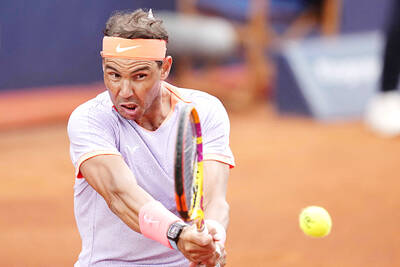
Rafael Nadal on Wednesday said the upcoming French Open would be the moment to “give everything and die” on the court after his comeback from injury in Barcelona was curtailed by Alex de Minaur. The 22-time Grand Slam title winner, back playing this week after three months on the sidelines, battled well, but eventually crumbled 7-5, 6-1 against the world No. 11 from Australia in the second round. Nadal, 37, who missed virtually all of last season, is hoping to compete at the French Open next month where he is the record 14-time champion. The Spaniard said the clash with De Minaur was


 RSS
RSS