


Five minutes into the NASCAR season, Andy Hillenburg was already a kilometer behind the leaders.
His chances of racing in the Daytona 500 had all but expired. His chances of winning the championship this year? Well, nobody really ever thought he had a chance at that, anyway. Not even the owner of his car.
"We're not really in that group," longtime owner Junie Donleavy said Thursday while his car was loaded into the hauler. He was done for the week after finishing 22nd of 23 in the first Daytona 500 qualifying race.
Such is life in NASCAR.
While the contenders debate the big changes in the points system that are supposed to bring more teams into contention, about half of the drivers remain on the wrong side of a stock-car racing caste system.
"You've got to have a good car, good equipment, good crew and good luck," said Greg Biffle, who will start from the pole for the Daytona 500.
Trying to spark interest in the final 10 races of the year, NASCAR split the season -- 26 races at the start, followed by a 10-race "Chase for the Championship." The final showdown will give the top 10 cars after the early races the best chance to win the Nextel Cup.
It's an attempt to make all the races mean more and get more drivers in the mix for the title. In reality, though, Donleavy figures only about 30 cars start the season with a legitimate chance at the title.
"Then, after a few races, the owners of those teams pick their best cars and devote most of their stuff toward them," he said.
That leaves about 10 to 15 cars with a real chance, and the names are always the same -- no matter how they keep score.
Jeff Gordon, Dale Jarrett, Dale Earnhardt Jr., Jack Roush, Rick Hendrick, Robert Yates. Those drivers and owners all have sponsorship deals in the US$15 million to US$20 million range, and they're part of multiple-car teams. This year, Roush and Yates -- rivals who both own stables of Fords -- pooled their resources to open a testing center.
The have-nots make up the numbers. Hillenburg drives for Donleavy. Guys like Kirk Shelmerdine, Derrike Cope and Johnny Benson came here thinking not about the season, but simply getting through the week.
The problem manifests itself in different ways. Only 45 cars were brought to Daytona to fill a 43-car field for the sport's biggest race. The number of qualifiers used to reach in the 50s. Some in racing circles, however, believe the day is coming soon when prohibitive costs will make it so NASCAR won't fill all 43 spots for a Nextel Cup race.
"We're fine," NASCAR CEO Brian France said. "As I've said, the quality of the fields is what I'm interested in; how many competitive teams are out there."
France said NASCAR would love to go back to "the Alan Kulwicki days," when an underfunded underdog scratched together the resources and won the title in 1992.
"But that's not our call," France conceded. "The marketplace determines what a sponsor will pay for one team or another team, and obviously the team will determine how they spend that money."
Donleavy doesn't feel he's part of that argument. He says he likes the new points system, not because it levels the playing field -- which it doesn't -- but simply because it's something a little different.
"It will give me a reason to stay interested in the race at the end of the year," he said. "Because I sure know I won't be involved in it."
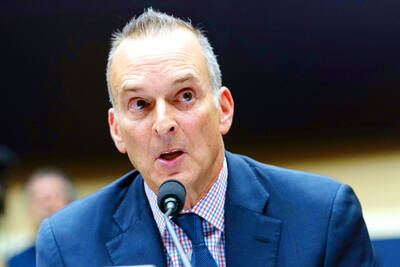
Revelations of positive doping tests for nearly two dozen Chinese swimmers that went unpunished sparked an intense flurry of accusations and legal threats between the World Anti-Doping Agency (WADA) and the head of the US drug-fighting organization, who has long been one of WADA’s fiercest critics. WADA on Saturday said it was turning to legal counsel to address a statement released by US Anti-Doping Agency (USADA) CEO Travis Tygart, who said WADA and anti-doping authorities in China swept positive tests “under the carpet by failing to fairly and evenly follow the global rules that apply to everyone else in the world.” The
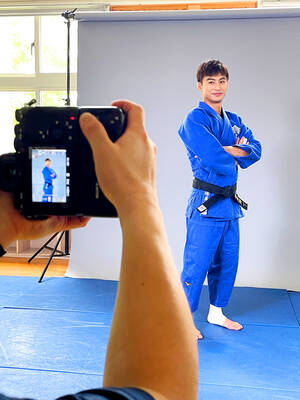
Taiwanese judoka Yang Yung-wei on Saturday won silver in the men’s under-60kg category at the Asian Judo Championships in Hong Kong. Nicknamed the “judo heartthrob” in Taiwan, the Olympic silver-medalist missed out on his first Asian Championships gold when he lost to Japanese judoka Taiki Nakamura in the finals. Yang defeated three opponents on Saturday to reach the final after receiving a bye through the round of 32. He first topped Laotian Soukphaxay Sithisane in the round of 16 with two seoi nage (over-the-shoulder throws), then ousted Indian Vijay Kumar Yadav in the quarter-finals with his signature ude hishigi sankaku gatame (triangular armlock). He
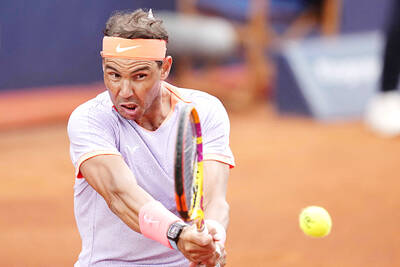
Rafael Nadal on Wednesday said the upcoming French Open would be the moment to “give everything and die” on the court after his comeback from injury in Barcelona was curtailed by Alex de Minaur. The 22-time Grand Slam title winner, back playing this week after three months on the sidelines, battled well, but eventually crumbled 7-5, 6-1 against the world No. 11 from Australia in the second round. Nadal, 37, who missed virtually all of last season, is hoping to compete at the French Open next month where he is the record 14-time champion. The Spaniard said the clash with De Minaur was

RALLY: It was only the second time the Taiwanese has partnered with Kudermetova, and the match seemed tight until they won seven points in a row to take the last set 10-2 Taiwan’s Chan Hao-ching and Russia’s Veronika Kudermetova on Sunday won the Porsche Tennis Grand Prix women’s doubles final in Stuttgart, Germany. The pair defeated Norway’s Ulrikke Eikeri and Estonia’s Ingrid Neel 4-6, 6-3, 10-2 in a tightly contested match at the WTA 500 tournament. Chan and Kudermetova fell 4-6 in the first set after having their serve broken three times, although they played increasingly well. They fought back in the second set and managed to break their opponents’ serve in the eighth game to triumph 6-3. In the tiebreaker, Chan and Kudermetova took a 3-0 lead before their opponents clawed back two points, but


 RSS
RSS