


Evander Holyfield is fighting once again, bringing smiles to the faces of both his fans and the people who make money off of him.
He's healthy -- or so they say. And what's wrong with a guy doing what he loves and making millions of dollars to do it?
Plenty.
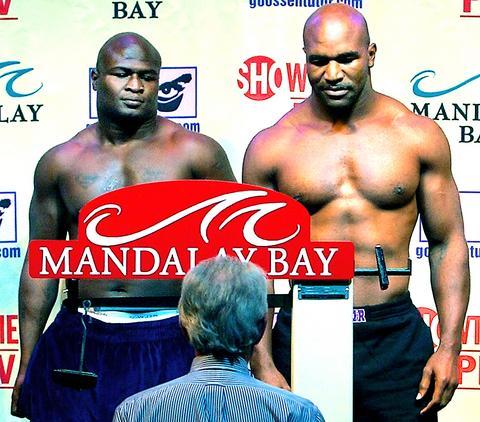
PHOTO: AP
The problem is, Holyfield is a shot fighter trying to cash in on a name that once meant something in the heavyweight ranks. Four times a heavyweight champion, he's 2-3-2 in his last seven fights and hasn't stopped an opponent in six years.
Yes, Holyfield will claim he won all those fights. But that's the way fighters think, especially when they're in denial over what Mother Nature has done to their aging reflexes and skills.
Look beyond the fond remembrances you might have of a fighter who was once a great warrior, though, and some troubling facts emerge.
When Holyfield enters the ring tonight against James Toney he'll be two weeks shy of his 41st birthday and will have been taking punches for a living for two decades.
He's been in wars with the likes of Riddick Bowe and Michael Dokes, never backing down but sometimes taking a beating because he wouldn't. A casual look at Holyfield's always sculptured body won't show it, but age and thousands of punches to the head have taken their toll.
He'll argue with you about it, but realistically Holyfield hasn't looked good since beating Mike Tyson seven years ago in one of heavyweight boxing's biggest upsets. Before that fight, there was so much worry about his health that some feared he might die in the ring against the fearsome Tyson.
That's not a concern anymore. A problem with Holyfield's heart mysteriously healed, and his handlers make sure he undergoes brain scans and a battery of other physical tests before every fight.
The goal is to prevent Holyfield from ending up brain-damaged like some other fighters before him who didn't know when to quit getting in the head. Among heavyweights, the late Jerry Quarry comes to mind, as does Greg Page. Joe Frazier's speech is slurred, and Muhammad Ali's Parkinson's might have come from repeated punches to the face.
Nevada boxing officials looked at Holyfield's latest tests and gave him some others before giving him a license to fight.
"We feel very comfortable allowing him to fight," said Margaret Goodman, who heads the Nevada Athletic Commission's medical advisory board. "Evander is certainly an anomaly in sports. He's someone who has responded well to aging."
No one can argue that Holyfield looks awfully good for a 40-something fighter -- at least until he steps into the ring and tries futilely to land punches against the likes of the slick Chris Byrd.
The problem is, measuring the impact of years of taking punches is an inexact science, at best. Brain scans can take a snapshot of the moment, but can't predict what the next series of punches might do to Holyfield's thought and speech process.
Indeed, Goodman acknowledges that there is evidence that shows fighters have an increased susceptibility to brain injury the older they get -- which can hardly be comforting to someone who is willing to take as many punches as Holyfield.
"But no one knows what that age is," said Goodman, who is a neurologist. "Everyone's career is so different."
The real question isn't why boxing officials allow Holyfield to fight on. It's why he would even take the risk. Holyfield has been crowned heavyweight champion four times, so one more plastic belt can't mean that much. And he's got so much money that even Mike Tyson couldn't spend it all.
At a time in his life where he should be content to watch people get hit, though, Holyfield insists on taking the blows himself. He goes ahead blindly, believing that he still has the skills to become the undisputed heavyweight champion of the world once again.
"My whole life, people have wanted to retire me," Holyfield said. "They have said that I was no good. They have said that I was too small, but all it is, is talk. The most important thing for me is not my age. It is that I have taken good care of myself."
Even in today's diluted heavyweight world, Holyfield is clinging to a fantasy. Ten of his last eleven fights were for the heavyweight title, but now he's reduced to fighting a cruiserweight champion tonight with nothing but his pride at stake.
Toney may be moving up in weight but he has something Holyfield doesn't seem to have anymore -- reflexes that allow him to throw a punch when his mind tells him to.
If Holyfield should beat Toney -- and that's a big if -- he sees a possible fight with WBA heavyweight champion Roy Jones Jr. While he waits, the months and years will continue to tick by.
Boxing is a cruel master which waits for no man, even Evander Holyfield.
Holyfield should quit fooling himself, and stop conning his fans.

Four-time NBA all-star DeMarcus Cousins arrived in Taiwan with his family early yesterday to finish his renewed contract with the Taiwan Beer Leopards in the T1 League. Cousins initially played a four-game contract with the Leopards in January. On March 18, the Taoyuan-based team announced that Cousins had renewed his contract. “Hi what’s up Leopard fans, I’m back. I’m excited to be back and can’t wait to join the team,” Cousins said in a video posted on the Leopard’s Facebook page. “Most of all, can’t wait to see you guys, the fans, next weekend. So make sure you come out and support the Beer
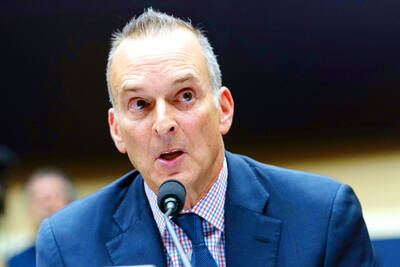
Revelations of positive doping tests for nearly two dozen Chinese swimmers that went unpunished sparked an intense flurry of accusations and legal threats between the World Anti-Doping Agency (WADA) and the head of the US drug-fighting organization, who has long been one of WADA’s fiercest critics. WADA on Saturday said it was turning to legal counsel to address a statement released by US Anti-Doping Agency (USADA) CEO Travis Tygart, who said WADA and anti-doping authorities in China swept positive tests “under the carpet by failing to fairly and evenly follow the global rules that apply to everyone else in the world.” The

Taiwanese judoka Yang Yung-wei on Saturday won silver in the men’s under-60kg category at the Asian Judo Championships in Hong Kong. Nicknamed the “judo heartthrob” in Taiwan, the Olympic silver-medalist missed out on his first Asian Championships gold when he lost to Japanese judoka Taiki Nakamura in the finals. Yang defeated three opponents on Saturday to reach the final after receiving a bye through the round of 32. He first topped Laotian Soukphaxay Sithisane in the round of 16 with two seoi nage (over-the-shoulder throws), then ousted Indian Vijay Kumar Yadav in the quarter-finals with his signature ude hishigi sankaku gatame (triangular armlock). He
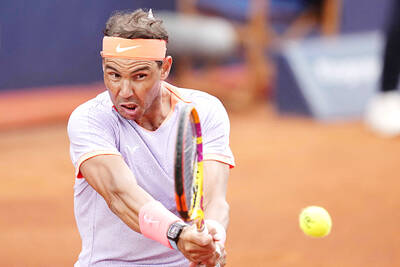
Rafael Nadal on Wednesday said the upcoming French Open would be the moment to “give everything and die” on the court after his comeback from injury in Barcelona was curtailed by Alex de Minaur. The 22-time Grand Slam title winner, back playing this week after three months on the sidelines, battled well, but eventually crumbled 7-5, 6-1 against the world No. 11 from Australia in the second round. Nadal, 37, who missed virtually all of last season, is hoping to compete at the French Open next month where he is the record 14-time champion. The Spaniard said the clash with De Minaur was


 RSS
RSS