


As women go through the menopause, they may see a decline in their ability to carry out routine tasks such as climbing stairs and carrying heavy things, according to a US study.
Exactly why is not clear, though weight gain and depression seem to account for the link to a degree, said researchers whose findings were published in the journal Menopause.
“There is definitely a connection between menopause and the physical limitations women perceive themselves as having,” said lead researcher Lisa Tseng, a medical student at the University of Pittsburgh.
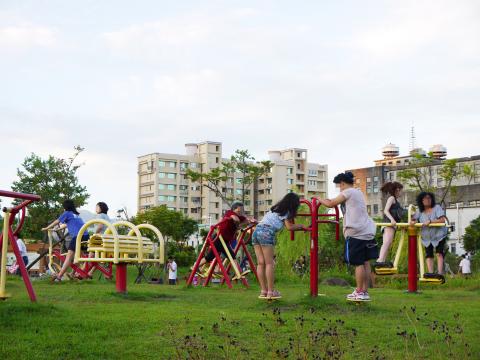
Photo: Lin Ya-ti, Taipei Times
照片:台北時報林亞蒂
Tseng said her findings suggest that the physiological changes of menopause play a role. A woman’s body tends to go through physical changes with an increase in fat and decrease in muscle mass. With a decline in estrogen, bone mass also falls.
Men also lose muscle mass and strength as they age, but studies have found that a reduction in women’s physical strength seems to speed up around the menopause.
(Reuters)
根據一項美國研究指出,女性走過更年期時,可能會看到做爬樓梯與提重物等例行工作的能力下滑。
在《更年期》期刊刊登發現的研究人員說,實際原因並不清楚,不過體重增加與憂鬱症狀似乎可以解釋些許關聯。
首席研究員、匹茲堡大學醫學系學生麗莎.曾(譯音)說:「更年期與女性認為自己身體受到限制之間絕對有關聯。」
麗莎.曾表示,她的發現顯示,更年期的生理改變造成這種作用。女性的身體組成似乎會隨著脂肪增加以及肌肉質量降低而改變,隨著雌激素減少,骨質密度也會降低。
男性也會隨著年紀增長流失肌肉密度與力量,但研究發現女性力量的減少似乎會在更年期左右加速。
(路透/翻譯:國際新聞中心)
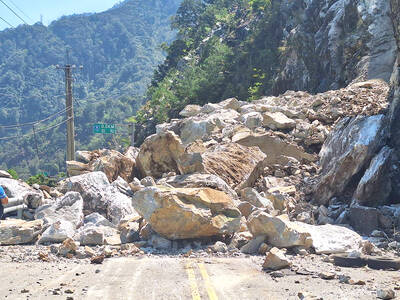
The strongest earthquake to hit Taiwan in 25 years killed at least 16 people and damaged dozens of buildings, but the destruction was largely contained thanks to decades of preparedness work. Taiwan sits on the “Ring of Fire,” an arc of intense seismic activity along the Pacific Rim, and — much like neighboring Japan — has a long history of catastrophic quakes. How does April 3 compare with other recent quakes? The April 3 earthquake, which measured 7.4 on the moment magnitude scale, was felt across Taiwan. It was the most severe since a 7.6 magnitude quake in 1999 killed

Around the time of the Dragon Boat Festival in June, the streets of Taiwan are filled with the delightful aroma of zongzi, a traditional snack made of sticky rice wrapped in leaves. The leaves are folded into a cone and then filled with sticky rice and other ingredients such as braised pork belly, peanuts and salted duck egg yolks. The filled leaves are then tightly tied with kitchen twine and ready for cooking. 每到六月端午時節,街頭巷尾就會飄出粽子的香氣。粽子是將糯米包進粽葉的傳統美食,先將粽葉折成圓錐狀塞入糯米,以及紅燒肉、花生、鹹鴨蛋黃等配料,用棉線綁緊後即可烹煮。 Dragon Boat Festival (n. phr.) 端午節 aroma

Everyone has seen a piece of fruit turn brown after being cut. Have you ever wondered why that happens? It is a common phenomenon that occurs due to a chemical reaction called enzymatic browning. The appearance, flavor and nutritional value of the fruit are all affected by this reaction. Some fruits, such as apples, pears, bananas, avocados and peaches, are more prone to enzymatic browning than others. These fruits contain high levels of an enzyme called polyphenol oxidase, or PPO for short. __1__ This causes a chain of chemical reactions that ultimately transforms the phenolic compounds into
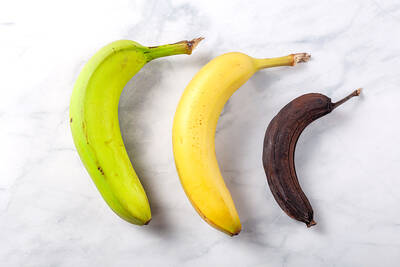
There are several methods to prevent or slow down enzymatic browning in fruit. __3__ This lowers the pH level of the fruit tissue, causing the PPO to be far less active. Another method is to store the fruit in an airtight container or to wrap it tightly with plastic wrap. Doing this will reduce its exposure to oxygen. __4__ Although fruit that has undergone enzymatic browning may look less appealing, it is still safe to eat. However, by using one of these simple methods, you can enjoy fresh-looking fruit for a longer period. 有一些方法能避免或減緩水果的酶促褐變。其中一個有效的方式就是在切片水果的表面塗上酸性物質,像是檸檬汁或醋。這樣做能降低水果組織的酸鹼值,讓 PPO 更不為活躍。另一個方式是將水果存放在密封的容器內,或用保鮮膜將其緊緊包住。這樣做會減少水果與氧氣的接觸。快速蒸一下切片水果或將其短暫浸泡在滾水中也能使PPO失去活性,並終止 PPO 與空氣的作用。 雖然經歷酶促褐變的水果可能看起來較不吸引人,但仍然可以安全食用。然而,藉由採用這些簡單方法中的其中一個,你就能在更長的一段時間享用看起來新鮮的水果。 What Did You


 RSS
RSS