


It’s Saturday night at the Alwiyah Club, and 21-year-old Sarah al-Kimackchy is doing the hip thing — playing bingo.
The streets outside may still not be as safe as they once were, and the occasional deadly bombing still rips through Baghdad, but al-Kimackchy is here with her family and entirely fixated on her game, wondering if tonight will finally be her night. “Since I was a young girl I’ve played bingo and even ‘til today, I’ve never won!” she says.
After years of bombings and killings, Baghdad’s 85-year-old elite social club is making a comeback — and there’s no better evidence than the open bar, the deafening Arabic pop music and the Saturday night bingo games that draw hundreds of fun-seekers, from teenagers to grandparents.
While it is only a small snapshot of Iraq, bingo mania reflects the growing sense of security in Baghdad and the resurgence of a community that wants no part of the religious divisions that almost destroyed the city. They are Sunnis, Shiites, Christians — and nobody seems to care.
Founded when Iraq was ruled by Britain, the Alwiyah’s lawns, tennis courts, swimming pool and bar were long the gathering place of the cultural, political and intellectual elite — those who met the membership criteria of a college degree and knowledge of a foreign language.
It continued to thrive under Saddam Hussein until the early 1990s, when the dictator cut the country’s booze supply to curry favor with Muslim conservatives and tribal leaders.
“It became like a military club. No drinking. No parties. What kind of club is that?’’ said Abdul Rahman Hamza, a 45-year-old lawyer whose family were among the founding members.
After years of violence following the 2003 US-led invasion, the turning point came in 2008, when violence in Iraq dropped dramatically. The Alwiyah came alive again.
On bingo night, the parking lot is packed, pop music blasts over the lawn, and the atmosphere is decidedly secular.
A large outdoor bingo screen is lit up and a man calls out the numbers and letters. Individuals pay about US$4 for a wooden table on which they can play bingo all night. Prizes are small amounts of cash.
“The girls outside wearing trousers and tank tops — you wouldn’t see it before,’’ said Kadam Mokdady, vice president of the club, gesturing to the lawn. “It was very limited. It wasn’t really a family club as such until 2008. Since then, it has become almost back to normal.” Mokdady said the club plans to add a bowling alley, gymnasium and cafeteria.
The club has about 4,000 members. A family pays a one-time fee of about one million Iraqi dinars (US$850), and then 100,000-150,000 dinars (US$85-US$100) a year, Mokdady said.
“Let’s hope it will stay like this,’’ said Samar Edward Hana, a 60-year-old civil servant in a dapper suit and tie who has been a member 25 years. “And all the families will return from abroad.”
(AP WITH STAFF WRITER)
這是一個星期六的晚上,在阿爾維亞俱樂部,二十一歲的莎拉.亞姬瑪琪正在從事一個時髦的活動──玩賓果。
外頭的街道或仍不如以往安全,巴格達仍受到零星致命炸彈攻擊,但和全家人聚在這裡的亞姬瑪琪專注在她的遊戲上,心想著今晚是否會抱回大獎。她說:「我從小玩賓果以來,至今都不曾贏過!」
經過多年的炸彈攻擊和血腥殺戮,巴格達這間有八十五年歷史的精英社交俱樂部又再度活絡了起來──露天酒吧、震耳欲聾的阿拉伯流行音樂,和週六晚上的賓果之夜,吸引了從老到少數百名想要找樂子的民眾,這些都是最好的證明。
儘管這只是伊拉克現況的縮影,但賓果遊戲熱潮,反映出巴格達民眾的安全感逐漸回升及社會的復甦,他們不希望再捲入差點毀掉該市的宗教分歧。賓果玩家包括遜尼派教徒、什葉派教徒和基督徒,而且他們似乎都毫不在意。
阿爾維亞俱樂部在伊拉克被英國統治時成立,其草坪、網球場、游泳池和酒吧一直以來都是文人、政治人物和知識份子的聚集地,這些精英份子皆符合擁有大學學歷和通曉外語等入會條件。
該俱樂部在薩達姆.海珊統治時相當興旺,直到一九九0年代初期,這位獨裁者為了討好穆斯林保守派和部族領袖,禁止全國供應酒精飲料,才逐漸式微。
四十五歲的律師阿布杜爾.拉赫曼.哈姆薩說:「它變得像軍官俱樂部一樣。禁止飲酒、禁止派對。這樣還算什麼俱樂部?」他的家人都是該俱樂部的元老級會員。
以美國為首的部隊二OO三年揮軍入伊,幾年下來暴力攻擊事件頻傳,二OO八年出現轉折,暴力攻擊事件戲劇性地減少,阿爾維亞俱樂部又再度活絡了起來。
每逢賓果之夜,停車場就被塞得滿滿的,流行音樂響徹整個草坪,而現場的氣氛絕對世俗。
戶外有一座閃亮亮的大型賓果螢幕,一位主持人負責唸出號碼和字母。每個人只要花費約四美元,就可以包下一張木桌,玩上一整晚的賓果遊戲。贏家的獎品是小額獎金。
該俱樂部副董事長卡丹•莫克達迪指著草坪說:「外面的女孩們穿著長褲和坦克背心──這是從前不可能見到的景象。在二OO八年以前,這裡的入會限制非常嚴格,不像現在是闔家同樂的俱樂部。從那之後,這間俱樂部幾乎又恢復正常了。」莫克達迪說,該俱樂部計畫增設保齡球館、健身房和自助餐廳。
這間俱樂部約有四千名會員。莫克達迪說,入會家庭需先繳付約一百萬伊拉克第納爾(八百五十美元)的終生會費,然後每年再繳十萬到十五萬第納爾(八十五到一百美元)的年費。
穿著西裝打著領帶、衣冠楚楚的六十歲公務員薩馬.愛德華.哈那說:「希望它能保持現在的型態,也希望所有的家庭都能從國外回來。」他從二十五年前就一直是這間俱樂部的會員。
(美聯社╱翻譯:袁星塵)
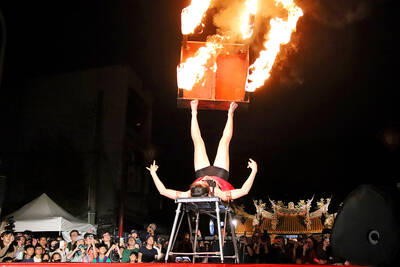
A: Over 130,000 college graduates are about to enter the workforce upon graduation. B: According to a survey, the top 10 most desired careers among Taiwanese are: independent content creator, civil servant, information engineer, financial professional, medical worker, content planner, flight attendant, news anchor, designer and fitness trainer. A: What are the “dream jobs” for young Gen Zers? B: The top three for men are YouTuber, pro gamer and engineer. For women, they are writer, social media editor and YouTuber. A: Every profession has its champion. Just look at Taiwanese fire dancer Yang Li-wei — who was on fire

A: While AI is reshaping the world, “Money Talks News” revealed seven career fields that are “AI-proof.” First is the healthcare field, like nursing jobs, personal care aides, and social work specialists. B: This type of job is indeed in high demand. So what’s next? A: Up next are skill-based positions, like electricians, mechanics, and construction workers. Then there’s the field of education, like teachers, tutors, and education specialists. Fourth is the mental health field, like jobs in counseling, therapy, and social work. B: I didn’t expect teaching to be safe from AI. What else is

Laptop chipmakers such as Intel and AMD should be worried about their new rival Nvidia, experts say, after the US hardware titan announced on June 1 a push into the personal computer market. But despite Nvidia boss Jensen Huang’s assertion that homes will soon contain AI supercomputers, the race is still on to develop an ubiquitous, one-size-fits-all intelligent device. Huang vowed to “reinvent the PC” with Nvidia’s powerful chip for Windows machines, calling it “as big of a deal as the reinvention of the phone into what we now know as the smartphone.” Su Lian-jye, a chief analyst at Omdia,
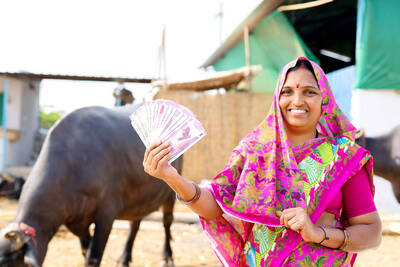
India has launched one of the world’s largest social policy experiments by transferring cash directly to housewives in recognition of their unpaid domestic labor. Across 12 states, an estimated 118 million adult women regularly receive 1,000 to 2,500 rupees (NT$348 to NT$871), equal to about 5% to 12% of household income. Surveys show Indian women devote nearly five hours per day to household tasks — over 7.6 times men’s contribution. This imbalance is a major factor in India’s low female labor force participation. Though modest in amount, the transfers symbolically acknowledge the hidden labor supporting families and society.


 RSS
RSS