


If you’ve been swimming, you probably tried it at least once: Dive into the water and see how far you can get without taking a stroke. Coast past 19m and you could have earned a gold medal at the 1904 Olympics.
The tug-of-war you played with friends at school? That could have been worth a podium spot at six Games.
“It was a different thing, particularly the very early days before it got formalized,” said David Wallechinsky, vice president of the International Society of Olympic Historians. “Eventually, as it got bigger, they had to take it a lot more seriously.”

PHOTO: AP
At the first few modern Olympics, there were no national teams — athletes could just sign up, pay an entry fee and compete — and the host countries had a free rein to pick what events were to be held.
One event was the dueling pistols at the 1896 Athens Summer Olympics.
The participants didn’t actually shoot each other; they fired upon mannequins dressed in frock coats with bulls-eyes on their chests.
For the authentic blood and guts, you’d have to go back to the 1900 Paris Games and live pigeon shooting. Nearly 300 birds were killed during the release-and-shoot competition, leaving a mess of feathers and blood after an event that clearly wouldn’t fly today.
The swimming obstacle race in 1900 was another unusual one, with swimmers climbing up and down a pole, then over and under boats in the Seine River. Surely, some kid at the local swimming pool made that one up.
“It was probably tremendously entertaining,” says Olympic historian John Lucas.
(STAFF WRITER, With AP)
常游泳的人,都至少這樣試過:跳下水,看看不划水能前進多遠。若能滑行超過十九公尺,你就能在一九O四年的奧運中奪下金牌。
你和朋友在學校玩的拔河呢?那有可能讓你站上六屆奧運賽的頒獎台。
國際奧林匹克歷史學者學會副會長大衛.瓦勒欽斯基說:「以前的奧運和現在的大不相同,尤其是在規則、形式都還未定的最早期。最後,隨著奧運規模愈來愈大,他們不得不更認真看待這場運動會。」
最早的幾屆現代奧運中,並沒有所謂的國家代表隊,運動員可以自己報名、繳費然後參賽,而地主國可以任意決定要比哪些運動項目。
一八九六年在雅典舉辦的夏季奧運會就把拔槍對決列入比賽項目。
參賽選手並不是真的用槍射殺彼此,而是把槍瞄準穿著長大衣的人型模特兒胸膛上的靶心射擊。
至於血肉模糊的血腥畫面,你得回到一九OO年的巴黎奧運會,去看看當時的射活鴿比賽。那場放鴿子讓選手射殺的比賽,犧牲了將近三百隻鴿子,這場現今絕不可能舉行的比賽結束後,留下了滿地的羽毛和鮮血。
障礙泳賽是一九OO年奧運中另一個不尋常的項目,游泳選手必須爬上竿子,下來後,再從塞納河上的船舶下方游過。想必這是當地游泳池裡的某個小孩想出來的鬼點子。
奧林匹克歷史學家約翰.盧卡斯說:「這可能極富娛樂效果吧。」
(美聯社�翻譯:袁星塵)
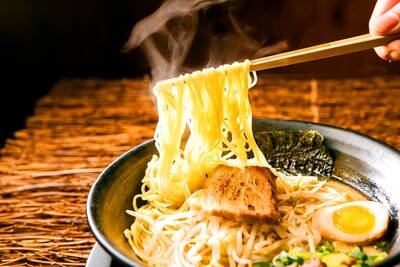
It’s no secret that Japanese people have a deep affection for noodles. Like in the rest of East Asia, noodles are an important staple food, second only to rice. Japanese people have enjoyed noodles for over 1,000 years. The first noodles came from China and were introduced around 800 CE. As time passed, noodles in Japan not only became widespread but also developed some unique Japanese characteristics. The three most popular types of noodles in Japan are ramen, soba, and udon. Ramen, typically made from wheat flour, is usually thin and firm. The dough is kneaded and left to
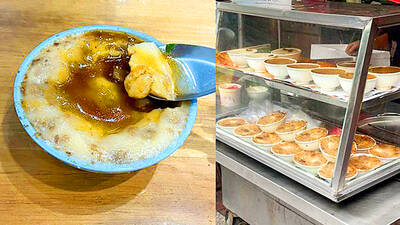
Rice is an essential ingredient in Taiwanese cuisine. Many foods are made of rice, adding more variety to our cooking, such as rice cake, or “gui.” Wagui is made by steaming rice flour batter in a bowl. The term “gui” refers to a type of food made from rice, while “wa” refers to a bowl. The pronunciation of “gui” in Taiwanese Hokkien is similar to the word for “nobility” in Chinese, so it is common for people to prepare various types of gui, including wagui, as offerings to the gods or ancestors,. 米是台灣重要的主食,用米製成的食品十分多元,豐富我們的飲食,如米做成的「粿」。粿的意思是米做成的糕點,碗粿是將在來米漿倒入碗中蒸熟,因而得名。粿因為音同「貴」,因此碗粿等粿食常用作供品祭拜神明和祖先。 nobility (n.) 高貴,高尚;貴族 offering (n.) 供品 While Taiwan may not be
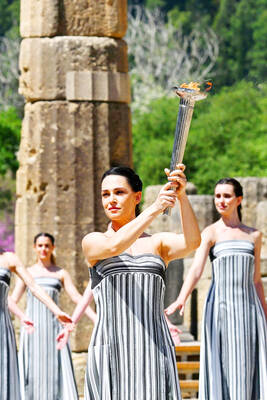
On Tuesday last week, the flame for this summer’s Paris Olympics was lit at the birthplace of the ancient Olympic Games in southern Greece in a meticulously choreographed ceremony. It will then be carried through Greece for more than 5,000km before being handed over to French organizers at the Athens venue used for the first modern Olympics in 1896. The pageantry at Olympia has been an essential part of every Olympics for nearly 90 years since the Games in Berlin. It’s meant to provide an ineluctable link between the modern event and the ancient Greek original on which it was initially modelled. Once
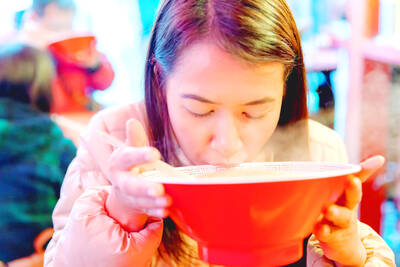
Continued from yesterday(延續自昨日) https://www.taipeitimes.com/News/lang As with many aspects of Japanese culture, there is etiquette to follow when you enjoy noodles. To fully experience noodles like a local on your next visit to Japan, consider these simple guidelines. First, be careful where you put your chopsticks. Don’t leave them sticking up in the broth or set them at the side of the bowl. When you have finished eating or if you’re taking a break, place them on the chopstick rest next to the bowl. Also, it is impolite to wave chopsticks around or bring them above mouth-level. Second, don’t take too


 RSS
RSS