


Technological gains in the next 14 years will deliver the greatest benefits not to countries currently lagging, but to those already on technology's cutting edge, a new study has found.
"Where people live will have a big impact on how technology applications affect their personal health and standard of living, and will also play a part in determining the ability of their countries to protect them and their environment," said Richard Silberglitt, one of the lead authors of the RAND Corporation study.
The study found that by 2020, "people in the US, Canada, Germany (representing western Europe), South Korea, Japan, Australia and Israel will benefit the most from advances in technology."
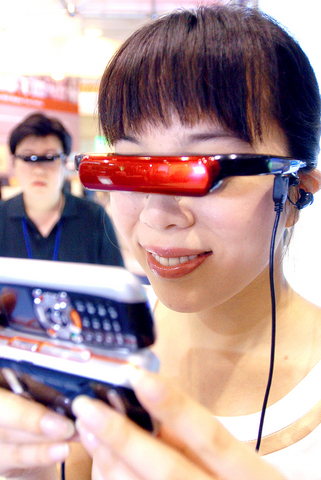
PHOTO: AFP
As examples of potential high-tech advances, it cited creating sensor networks in public areas to conduct real-time surveillance; providing access to information any time and anywhere; and creating wearable computers.
Scientifically developing countries "are poised to take advantage of modestly sophisticated technology applications, including devices to constantly track the movement of everything from products to people; easy-to-use health diagnostic tests that give immediate results for a large range of infections; and environmentally friendly manufacturing methods," the study also found.
But the authors of the study were not without hope for the scientifically "lagging" countries -- Fiji, the Dominican Republic, Georgia, Nepal, Pakistan, Egypt, Iran, Jordan, Kenya, Cameroon and Chad. "When such countries have the will to make changes ... they can improve the lives of their citizens," the study added, citing examples such as cheap solar energy, simpler, effective ways to purify water, and rural wireless communications. (AFP)
一份新研究報告發現,未來十四年內,科技利益的最大受惠者不是目前科技落後的國家,而是已擁有尖端技術的國家。
蘭德公司研究的一位執筆李察*席柏利表示:「人們所居住的國家,對於科技應用如何影響他們的個人健康和生活水平有很大的影響,那也是決定該國是否有能力保護人民和環境的因素之一。」
這份研究發現二○二○年以前,「美國、加拿大、德國(代表西歐)、南韓、日本、澳洲,以及以色列的人民是進步科技的最大受惠者」。
研究列舉了幾項高科技發展的可能,例如:在公共場所架設感應網路以進行即時監視;提供隨時隨地取得資訊的途徑,以及製造穿戴式電腦。
研究亦發現,科技發展中國家準備要利用中等複雜的科技技術,包括:可持續追蹤從產品到人民等每樣物品動態的儀器;為人體大範圍感染所設計,能立即顯示結果又方便使用的健診試劑,以及環保的生產方式。
不過此研究的作者們對科技落後國─斐濟、多明尼加共和國、喬治亞、尼泊爾、巴基斯坦、埃及、伊朗、約旦、肯亞、喀麥隆和查德─仍不放棄希望,還說「上述國家若願意改變,便能改善其人民的生活」,研究中也列舉了低廉的太陽能、更簡單有效的淨水方式和鄉村無線通訊等改善方法。 (法新社/翻譯:鄭湘儀)
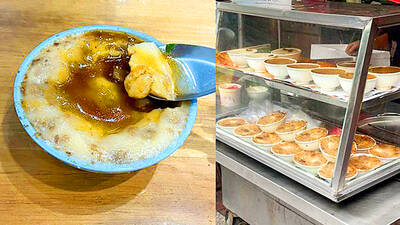
Rice is an essential ingredient in Taiwanese cuisine. Many foods are made of rice, adding more variety to our cooking, such as rice cake, or “gui.” Wagui is made by steaming rice flour batter in a bowl. The term “gui” refers to a type of food made from rice, while “wa” refers to a bowl. The pronunciation of “gui” in Taiwanese Hokkien is similar to the word for “nobility” in Chinese, so it is common for people to prepare various types of gui, including wagui, as offerings to the gods or ancestors,. 米是台灣重要的主食,用米製成的食品十分多元,豐富我們的飲食,如米做成的「粿」。粿的意思是米做成的糕點,碗粿是將在來米漿倒入碗中蒸熟,因而得名。粿因為音同「貴」,因此碗粿等粿食常用作供品祭拜神明和祖先。 nobility (n.) 高貴,高尚;貴族 offering (n.) 供品 While Taiwan may not be
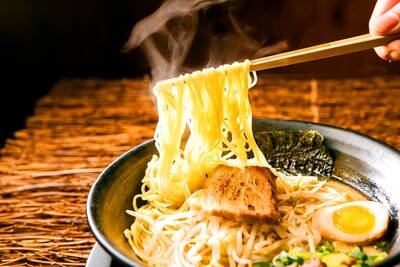
It’s no secret that Japanese people have a deep affection for noodles. Like in the rest of East Asia, noodles are an important staple food, second only to rice. Japanese people have enjoyed noodles for over 1,000 years. The first noodles came from China and were introduced around 800 CE. As time passed, noodles in Japan not only became widespread but also developed some unique Japanese characteristics. The three most popular types of noodles in Japan are ramen, soba, and udon. Ramen, typically made from wheat flour, is usually thin and firm. The dough is kneaded and left to

On Tuesday last week, the flame for this summer’s Paris Olympics was lit at the birthplace of the ancient Olympic Games in southern Greece in a meticulously choreographed ceremony. It will then be carried through Greece for more than 5,000km before being handed over to French organizers at the Athens venue used for the first modern Olympics in 1896. The pageantry at Olympia has been an essential part of every Olympics for nearly 90 years since the Games in Berlin. It’s meant to provide an ineluctable link between the modern event and the ancient Greek original on which it was initially modelled. Once

Drive-through (or drive-thru) restaurants provide people with the immense convenience of being able to purchase and pick up meals without needing to leave their vehicles. These restaurants have been around for decades, and their success has spawned a number of equally handy services. The drive-through concept originated with the drive-in restaurant, the first of which was established in the US in 1921. Patrons would order and eat the food that was delivered to their cars by workers called “carhops.” Ten years later, a drive-through service was introduced, but it was not until 1947 that the first exclusively drive-through restaurant opened its


 RSS
RSS