


Researchers have found that primitive dentists were drilling teeth 9,000 years ago, which is 4,000 years earlier than they had thought. Teeth found in a Pakistani graveyard have shown that primitive dentists drilled nearly perfect holes into patients' teeth between 5500BC and 7000BC.
This was not just tinkering. ``The holes were so perfect, so nice,'' said co-author of the research David Frayer, a professor at the University of Kansas. ``I showed the pictures to my dentist and he thought they were amazing holes.''
The drilling occurred on both men and women, and probably went on for about 1,500 years until 5500BC, said Roberto Macchiarelli, head author of the study. There are no signs of drilling after that. Macchiarelli and Frayer said the drilling was probably done to reduce the pain of cavities.

PHOTO: AP
Macchiarelli pointed to the teeth of one unfortunate person who had had a tooth drilled twice. Another person had had three teeth drilled. No signs of fillings were found, but it is possible that these dentists put some kind of substance inside the holes, he said.
But Dr Richard Glenner, an author of dental history books, wasn't convinced that this was good dentistry. The drilling could have been decorative or done to release evil spirits, not to fix unhealthy teeth, he said. ``Why did they do it? No one will ever know,'' he said.
However, Macchiarelli said the hard-to-see locations of the drilled teeth seem to rule out drilling for decorative purposes. (ap)
研究人員發現,九千年前的遠古牙醫就已具備鑽牙技術,這比他們原先認為的時間還早了四千年。研究人員在巴基斯坦一處墓地發現的牙齒顯示,西元前七千年到西元前五千五百年間,遠古牙醫在病患牙齒上鑽出幾近完美的洞。
這鑽牙並非隨便鑽一鑽。這項研究作者之一的堪薩斯大學教授大衛.佛瑞爾說:「這些牙洞非常完美、非常精細。我把照片秀給我的牙醫看,他也覺得這些鑽洞令人驚奇。」
率領這項研究的羅伯托.馬奇亞瑞利表示,男、女的牙齒上都有這樣的鑽洞,這項鑽牙技術可能持續了大約一千五百年,直到西元前五千五百年為止。在那之後就沒有任何鑽牙的跡象。馬奇亞瑞利和佛瑞爾表示,鑽牙可能是為了減緩蛀牙疼痛。
馬奇亞瑞利指出,有位不幸的患者一顆牙被鑽了兩個洞,而另一名患者則是三顆牙上都有鑽洞。他說,沒有發現填補物的痕跡,但這些牙醫可能在鑽洞裡放了某種材料。
不過,牙科歷史叢書作者理查.葛蘭納爾博士並不認同這是好的牙科醫學。他表示,鑽牙有可能是為了裝飾或釋放邪靈,並不是要修補不健康的牙齒。他說:「他們為什麼這麼做?永遠沒人知道。」
但馬奇亞瑞利表示,那些鑽了洞的牙齒都位在難以看見的地方,這似乎排除了鑽牙是為了裝飾的可能。
(美聯社/翻譯:林倩如)
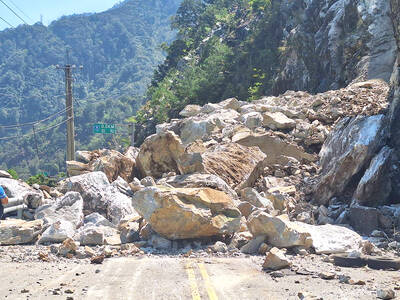
The strongest earthquake to hit Taiwan in 25 years killed at least 16 people and damaged dozens of buildings, but the destruction was largely contained thanks to decades of preparedness work. Taiwan sits on the “Ring of Fire,” an arc of intense seismic activity along the Pacific Rim, and — much like neighboring Japan — has a long history of catastrophic quakes. How does April 3 compare with other recent quakes? The April 3 earthquake, which measured 7.4 on the moment magnitude scale, was felt across Taiwan. It was the most severe since a 7.6 magnitude quake in 1999 killed

A: Artificial intelligence technology has been causing controversy lately: a student was caught cheating with AI to win the grand prize in an art contest. B: That’s so absurd. Does this mean that AI paints better than humans? A: Maybe. Luckily, the student was later disqualified. B: And more absurdly, it’s becoming more and more popular to use AI technology to “resurrect” people. A: Yeah, some netizens even posted videos featuring the late singer CoCo Lee, who was “resurrected” by them with AI software. A: 人工智慧的爭議不斷,有學生違規使用AI參加美術展,甚至贏得首獎。 B: 真誇張,這是不是代表AI比人類還強大? A: 或許吧,幸好得獎資格被取消。 B: 還有更誇張的︰讓死者重現的「AI復活」技術越來越熱門。 A: 對啊,還有網友製作已故歌后李玟「復活」的影片呢! (By Eddy Chang, Taipei Times/台北時報張聖恩)

Around the time of the Dragon Boat Festival in June, the streets of Taiwan are filled with the delightful aroma of zongzi, a traditional snack made of sticky rice wrapped in leaves. The leaves are folded into a cone and then filled with sticky rice and other ingredients such as braised pork belly, peanuts and salted duck egg yolks. The filled leaves are then tightly tied with kitchen twine and ready for cooking. 每到六月端午時節,街頭巷尾就會飄出粽子的香氣。粽子是將糯米包進粽葉的傳統美食,先將粽葉折成圓錐狀塞入糯米,以及紅燒肉、花生、鹹鴨蛋黃等配料,用棉線綁緊後即可烹煮。 Dragon Boat Festival (n. phr.) 端午節 aroma

It’s another school day with the same ritual. You wake up to your smartphone’s alarm, scroll through messages during your commute, and listen to your favorite playlist with your wireless earbuds between classes. These devices, integrated smoothly into your daily routine, certainly make life more convenient. However, where do these devices end up after you replace them? In fact, the issue of electronic waste is a growing global concern. According to the United Nations, in 2019 alone, we generated an astonishing 53.6 million tons of e-waste—an average of 7.3kg per person. Projections hint at the figure soaring to 110


 RSS
RSS