


A Northern Ireland policeman was killed in a car bomb attack on Saturday, which leaders on all sides vowed would not be allowed to derail the province’s delicate peace process.
Ronan Kerr, 25, a Catholic recruit who only completed his training three weeks ago, was killed by the booby-trap under his car outside his home in Omagh, the scene of Northern Ireland’s worst terror atrocity.
Responsibility for the attack has not yet been claimed. However, senior politicians pointed toward dissident republicans, who oppose the power-sharing peace process.
Northern Ireland First Minister Peter Robinson said it was a “Neanderthal” attempt to scare Catholics off from joining the province’s police service.
British Prime Minister David Cameron said he utterly condemned the murder.
“Those who carried out this wicked and cowardly crime will never succeed in dragging Northern Ireland back to a dark and bloody past,” he said in a statement. “Their actions are rejected by the overwhelming majority of people right from all parts of the community.”
Northern Ireland’s people “have said time and again they want a peaceful, shared future,” he said.
US Secretary of State Hillary Rodham Clinton, whose husband, former US president Bill Clinton, helped facilitate negotiations that led to the “Good Friday” peace agreement in 1998, condemned the murder, calling it a “cowardly act.”
“The perpetrators of this cowardly act represent the failures of the past, and their actions run counter to the achievements, aspirations and collective will of the people of Northern Ireland,” Clinton said in a statement.
The victim is only the second member of the Police Service of Northern Ireland (PSNI) to be killed since it succeeded the Royal Ulster Constabulary in 2001 as part of the peace process.
The first was shot dead during an outbreak of deadly attacks by republican dissidents in March 2009 that also saw two UK soldiers gunned down, the first such killings in 12 years.
At Omagh police station, PSNI Chief Constable Matt Baggott described Kerr as a “modern-day hero” who had joined the service to serve the community impartially.
“Tragedy has returned to Omagh. I have no words to describe the awfulness of the events and my abhorrence and anger at this wasted life,” Baggott said.
The target and location of the attack both bear significance.
Since the PSNI was formed, growing numbers of Catholics have signed up. While mainstream republicans, such as Sinn Fein — the largest Catholic party — support the PSNI, dissidents see it as an arm of the British state.
Omagh was the scene of the deadliest attack of the Troubles, the three decades of sectarian violence between Protestants and Catholics, which was largely ended by the April 1998 peace accords.
The Real Irish Republican Army splinter group killed 29 people, including a pregnant woman, and wounded about 200 others in an August 1998 attack.
More than 3,500 people died in the Troubles between Catholics, who largely wanted the province to become part of the Republic of Ireland, and Protestants, who generally want to stay within the UK.
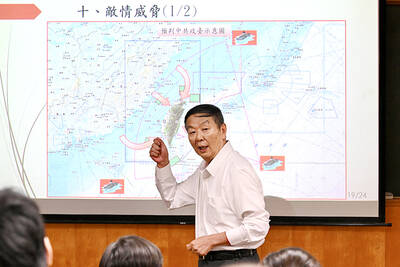
RETHINK? The defense ministry and Navy Command Headquarters could take over the indigenous submarine project and change its production timeline, a source said Admiral Huang Shu-kuang’s (黃曙光) resignation as head of the Indigenous Submarine Program and as a member of the National Security Council could affect the production of submarines, a source said yesterday. Huang in a statement last night said he had decided to resign due to national security concerns while expressing the hope that it would put a stop to political wrangling that only undermines the advancement of the nation’s defense capabilities. Taiwan People’s Party Legislator Vivian Huang (黃珊珊) yesterday said that the admiral, her older brother, felt it was time for him to step down and that he had completed what he

Taiwan has experienced its most significant improvement in the QS World University Rankings by Subject, data provided on Sunday by international higher education analyst Quacquarelli Symonds (QS) showed. Compared with last year’s edition of the rankings, which measure academic excellence and influence, Taiwanese universities made great improvements in the H Index metric, which evaluates research productivity and its impact, with a notable 30 percent increase overall, QS said. Taiwanese universities also made notable progress in the Citations per Paper metric, which measures the impact of research, achieving a 13 percent increase. Taiwanese universities gained 10 percent in Academic Reputation, but declined 18 percent
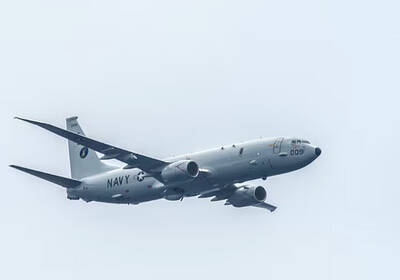
CHINA REACTS: The patrol and reconnaissance plane ‘transited the Taiwan Strait in international airspace,’ the 7th Fleet said, while Taipei said it saw nothing unusual The US 7th Fleet yesterday said that a US Navy P-8A Poseidon flew through the Taiwan Strait, a day after US and Chinese defense heads held their first talks since November 2022 in an effort to reduce regional tensions. The patrol and reconnaissance plane “transited the Taiwan Strait in international airspace,” the 7th Fleet said in a news release. “By operating within the Taiwan Strait in accordance with international law, the United States upholds the navigational rights and freedoms of all nations.” In a separate statement, the Ministry of National Defense said that it monitored nearby waters and airspace as the aircraft
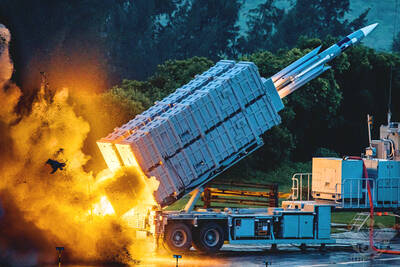
UNDER DISCUSSION: The combatant command would integrate fast attack boat and anti-ship missile groups to defend waters closest to the coastline, a source said The military could establish a new combatant command as early as 2026, which would be tasked with defending Taiwan’s territorial waters 24 nautical miles (44.4km) from the nation’s coastline, a source familiar with the matter said yesterday. The new command, which would fall under the Naval Command Headquarters, would be led by a vice admiral and integrate existing fast attack boat and anti-ship missile groups, along with the Naval Maritime Surveillance and Reconnaissance Command, said the source, who asked to remain anonymous. It could be launched by 2026, but details are being discussed and no final timetable has been announced, the source


 RSS
RSS