


The Ministry of Foreign Affairs yesterday said it hoped to increase the number of countries granting visa waivers to Taiwanese nationals to 100 by next year to mark the 100th anniversary of the Republic of China (ROC).
Ministry Deputy Spokesman James Chang (章計平) said the ministry had been working hard to obtain visa-waiver agreements from other countries.
“We hope that an increasing number of countries will offer Taiwanese nationals visa exemption — the more the better,” Chang said.
Minister of Foreign Affairs Timothy Yang (楊進添) told reporters on Monday that the ministry would like to mark the centennial anniversary of the ROC by raising the number of countries granting Taiwan visa-free privileges to 100.
Bureau of Consular Affairs data show that 60 countries currently issue holders of Taiwanese passports a visa waiver upon arrival.
Taipei is now seeking to obtain Schengen visa waiver treatment from the EU.
The European Commission on July 5 proposed granting Taiwan the privilege.
If Taiwan received the exemption by the end of the year, the ministry would be much closer to achieving its goal of having visa-waiver agreements with about 100 countries.
Meanwhile, James Lee (李光章), deputy director-general of the ministry’s Department of European Affairs, told a press conference that the commission’s proposal to include Taiwan in the list of nations and territories enjoying Schengen visa-free treatment was likely to be included in the agenda of the European Parliament by early September and the agenda of the European Council’s Visa Working Group’s meeting scheduled for Sept. 15.
Lee shrugged off the impact of the death penalty issue on the possibility of the EU adopting the proposal.
On April 30, the Ministry of Justice’s execution of four death-row inmates added uncertainty as to whether Taiwan would see its wish granted.
The European Parliament’s Subcommittee on Human Rights in early May voiced concerns over the executions, saying they could have a negative impact on Taiwan’s relations with the EU.
Lee said the commission’s press release on July 5 said the visa-waiver proposal was made based on Taiwan’s travel documents meeting security standards.
“The press release never mentioned the death penalty,” Lee said.
“Many [local] reporters have tried to establish a link [between the visa-waiver proposal and the death penalty issue], but this is unnecessary,” he said.
He declined to comment when asked if the review of the proposal could be stalled if more executions occurred in coming months.
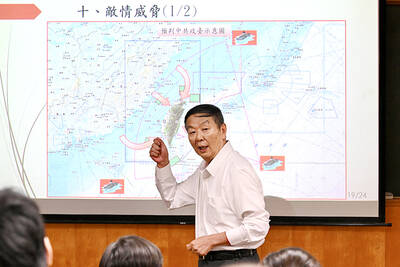
RETHINK? The defense ministry and Navy Command Headquarters could take over the indigenous submarine project and change its production timeline, a source said Admiral Huang Shu-kuang’s (黃曙光) resignation as head of the Indigenous Submarine Program and as a member of the National Security Council could affect the production of submarines, a source said yesterday. Huang in a statement last night said he had decided to resign due to national security concerns while expressing the hope that it would put a stop to political wrangling that only undermines the advancement of the nation’s defense capabilities. Taiwan People’s Party Legislator Vivian Huang (黃珊珊) yesterday said that the admiral, her older brother, felt it was time for him to step down and that he had completed what he
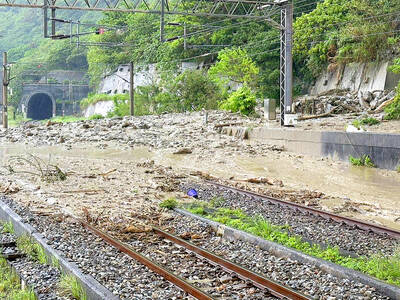
ROLLER-COASTER RIDE: More than five earthquakes ranging from magnitude 4.4 to 5.5 on the Richter scale shook eastern Taiwan in rapid succession yesterday afternoon Back-to-back weather fronts are forecast to hit Taiwan this week, resulting in rain across the nation in the coming days, the Central Weather Administration said yesterday, as it also warned residents in mountainous regions to be wary of landslides and rockfalls. As the first front approached, sporadic rainfall began in central and northern parts of Taiwan yesterday, the agency said, adding that rain is forecast to intensify in those regions today, while brief showers would also affect other parts of the nation. A second weather system is forecast to arrive on Thursday, bringing additional rain to the whole nation until Sunday, it

CONDITIONAL: The PRC imposes secret requirements that the funding it provides cannot be spent in states with diplomatic relations with Taiwan, Emma Reilly said China has been bribing UN officials to obtain “special benefits” and to block funding from countries that have diplomatic ties with Taiwan, a former UN employee told the British House of Commons on Tuesday. At a House of Commons Foreign Affairs Committee hearing into “international relations within the multilateral system,” former Office of the UN High Commissioner for Human Rights (OHCHR) employee Emma Reilly said in a written statement that “Beijing paid bribes to the two successive Presidents of the [UN] General Assembly” during the two-year negotiation of the Sustainable Development Goals. Another way China exercises influence within the UN Secretariat is
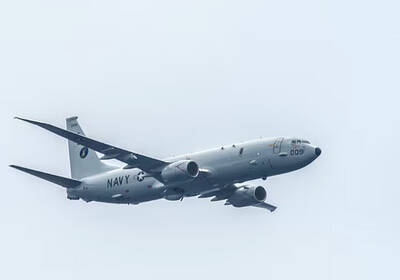
CHINA REACTS: The patrol and reconnaissance plane ‘transited the Taiwan Strait in international airspace,’ the 7th Fleet said, while Taipei said it saw nothing unusual The US 7th Fleet yesterday said that a US Navy P-8A Poseidon flew through the Taiwan Strait, a day after US and Chinese defense heads held their first talks since November 2022 in an effort to reduce regional tensions. The patrol and reconnaissance plane “transited the Taiwan Strait in international airspace,” the 7th Fleet said in a news release. “By operating within the Taiwan Strait in accordance with international law, the United States upholds the navigational rights and freedoms of all nations.” In a separate statement, the Ministry of National Defense said that it monitored nearby waters and airspace as the aircraft


 RSS
RSS