


The US is poised to lift a decades-old ban on HIV-positive visitors from abroad that was based on fear and ignorance of the facts, US President Barack Obama said on Friday.
“Twenty-two years ago, in a decision rooted in fear rather than fact, the United States instituted a travel ban on entry into the country for people living with HIV/AIDS,” Obama said as he signed a bill reauthorizing funding for a federal program providing HIV-related health care.
“Now, we talk about reducing the stigma of this disease — yet we’ve treated a visitor living with it as a threat,” he said at the signing ceremony of the Ryan White HIV/AIDS Treatment Extension Act. “If we want to be the global leader in combating HIV/AIDS, we need to act like it. And that’s why on Monday, my administration will publish a final rule that eliminates the travel ban effective just after the New Year.”
Obama’s predecessor George W. Bush signed legislation last year that removed HIV from a list of diseases “of public health significance” that effectively barred any person infected with HIV from entering the US. However, the law was not implemented by the US Department of Health and Human Services, which regulates US immigration authorities in some instances.
Human rights and HIV/AIDS activism groups hailed the end of the controversial ban, saying it would put the US back in a leadership role in the fight against the illness and would help to lift the stigma.
“We applaud President Obama for working to reduce the stigma of HIV/AIDS by announcing this important policy change and reminding us of the voice a young man named Ryan White who was living with HIV and wanted to go to school,” said Rebecca Haag, director of the AIDS Action Council.
The Ryan White bill, which was first passed 19 years ago, is named after a 13-year-old boy who contracted HIV during a blood transfusion in 1984 — a time when the virus was first becoming known and was hugely misunderstood.
His family was forced to move from the town in Indiana where they lived after some parents protested when he continued to show up for class, with some pulling their own children out of the school.
Physicians for Human Rights hailed the lifting of the ban, which it said had “made the United States a pariah in human rights circles, and harmed our reputation as a world leader of HIV/AIDS prevention, treatment and care.”
The HIV Medicine Association (HIVMA) bade the ban “good riddance,” saying the “discriminatory rule ... had no basis in public health or sound science.”
“This long-overdue move brings the US in line with current scientific and international standards of public health and will lessen the painful stigma and discrimination suffered by HIV-positive people,” HIVMA chairwoman Arlene Bardeguez said in a statement.
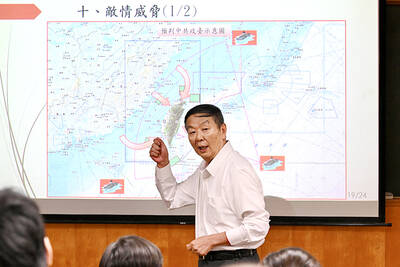
RETHINK? The defense ministry and Navy Command Headquarters could take over the indigenous submarine project and change its production timeline, a source said Admiral Huang Shu-kuang’s (黃曙光) resignation as head of the Indigenous Submarine Program and as a member of the National Security Council could affect the production of submarines, a source said yesterday. Huang in a statement last night said he had decided to resign due to national security concerns while expressing the hope that it would put a stop to political wrangling that only undermines the advancement of the nation’s defense capabilities. Taiwan People’s Party Legislator Vivian Huang (黃珊珊) yesterday said that the admiral, her older brother, felt it was time for him to step down and that he had completed what he
Taiwan has experienced its most significant improvement in the QS World University Rankings by Subject, data provided on Sunday by international higher education analyst Quacquarelli Symonds (QS) showed. Compared with last year’s edition of the rankings, which measure academic excellence and influence, Taiwanese universities made great improvements in the H Index metric, which evaluates research productivity and its impact, with a notable 30 percent increase overall, QS said. Taiwanese universities also made notable progress in the Citations per Paper metric, which measures the impact of research, achieving a 13 percent increase. Taiwanese universities gained 10 percent in Academic Reputation, but declined 18 percent
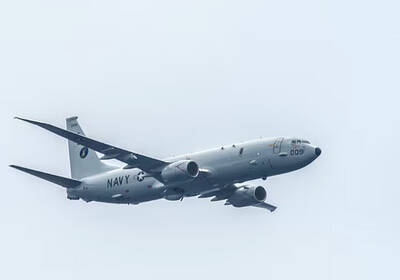
CHINA REACTS: The patrol and reconnaissance plane ‘transited the Taiwan Strait in international airspace,’ the 7th Fleet said, while Taipei said it saw nothing unusual The US 7th Fleet yesterday said that a US Navy P-8A Poseidon flew through the Taiwan Strait, a day after US and Chinese defense heads held their first talks since November 2022 in an effort to reduce regional tensions. The patrol and reconnaissance plane “transited the Taiwan Strait in international airspace,” the 7th Fleet said in a news release. “By operating within the Taiwan Strait in accordance with international law, the United States upholds the navigational rights and freedoms of all nations.” In a separate statement, the Ministry of National Defense said that it monitored nearby waters and airspace as the aircraft
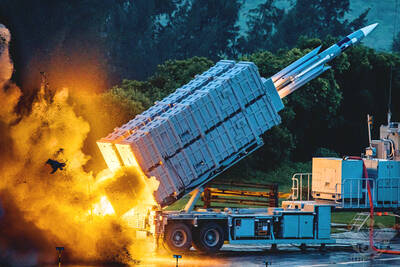
UNDER DISCUSSION: The combatant command would integrate fast attack boat and anti-ship missile groups to defend waters closest to the coastline, a source said The military could establish a new combatant command as early as 2026, which would be tasked with defending Taiwan’s territorial waters 24 nautical miles (44.4km) from the nation’s coastline, a source familiar with the matter said yesterday. The new command, which would fall under the Naval Command Headquarters, would be led by a vice admiral and integrate existing fast attack boat and anti-ship missile groups, along with the Naval Maritime Surveillance and Reconnaissance Command, said the source, who asked to remain anonymous. It could be launched by 2026, but details are being discussed and no final timetable has been announced, the source


 RSS
RSS