


The administration of US President Barack Obama has opted to slash executive salaries at firms rescued by taxpayer bailouts, cutting cash payments by 90 percent amid a public backlash at bloated Wall Street bonuses.
In a dramatic swipe at big business as unemployment nears 10 percent and the economic crisis reaps a painful toll, Obama’s corporate pay czar also hacked away at corporate perks and “golden handshake” payoffs.
The US Federal Reserve meanwhile fired its own shot at the corporate gravy train, unveiling new rules to curb pay awards at top banks that encourage excessive risk-taking that imperils the wider financial system.
Treasury official Kenneth Feinberg cut cash payouts to the 25 top executives of seven bailed out firms by an average of 90 percent, capping salaries at US$500,000 for most and reducing total compensation by an average of 50 percent.
Obama said Feinberg had taken “an important step forward” in curbing financial excess.
“We don’t disparage wealth, we don’t begrudge anybody for doing well, we believe in success,” he said.
“But it does offend our values when executives of big financial firms — firms that are struggling — pay themselves huge bonuses, even as they continue to rely on taxpayer assistance to stay afloat,” Obama said.
The restrictions apply to firms that took the most money from the US$700 billion Troubled Asset Relief Program set up by the administration of former US president George W. Bush last year to stave off a complete financial meltdown.
Those affected include AIG, Bank of America, Chrysler, Chrysler Financial, Citigroup, General Motors and GMAC.
Public anger began to boil over when it was revealed earlier this year that disgraced insurance giant AIG was still paying US$165 million in bonuses despite the huge cash injections by Washington.
Feinberg’s measures are designed to reward long-term success of executives who build firms rather than seek get-rich-quick profits and turn existing cash guarantees held by executives into long-term stocks.
Critics have complained at government interference in the free market and warned that the pay cuts may see struggling firms lose executive talent to competitors not subject to pay curbs.
Feinberg brushed aside those fears, saying he thought the “right balance” had been struck with the new salary limits.
Also See: FSA to require big UK banks to draw up a ‘living will’
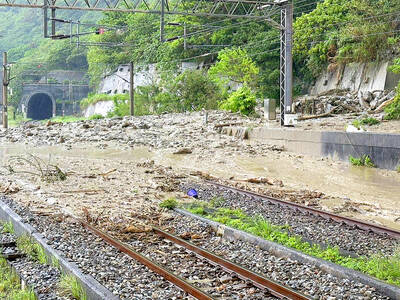
ROLLER-COASTER RIDE: More than five earthquakes ranging from magnitude 4.4 to 5.5 on the Richter scale shook eastern Taiwan in rapid succession yesterday afternoon Back-to-back weather fronts are forecast to hit Taiwan this week, resulting in rain across the nation in the coming days, the Central Weather Administration said yesterday, as it also warned residents in mountainous regions to be wary of landslides and rockfalls. As the first front approached, sporadic rainfall began in central and northern parts of Taiwan yesterday, the agency said, adding that rain is forecast to intensify in those regions today, while brief showers would also affect other parts of the nation. A second weather system is forecast to arrive on Thursday, bringing additional rain to the whole nation until Sunday, it
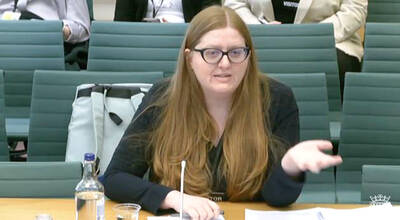
CONDITIONAL: The PRC imposes secret requirements that the funding it provides cannot be spent in states with diplomatic relations with Taiwan, Emma Reilly said China has been bribing UN officials to obtain “special benefits” and to block funding from countries that have diplomatic ties with Taiwan, a former UN employee told the British House of Commons on Tuesday. At a House of Commons Foreign Affairs Committee hearing into “international relations within the multilateral system,” former Office of the UN High Commissioner for Human Rights (OHCHR) employee Emma Reilly said in a written statement that “Beijing paid bribes to the two successive Presidents of the [UN] General Assembly” during the two-year negotiation of the Sustainable Development Goals. Another way China exercises influence within the UN Secretariat is
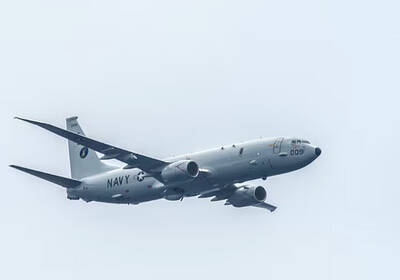
CHINA REACTS: The patrol and reconnaissance plane ‘transited the Taiwan Strait in international airspace,’ the 7th Fleet said, while Taipei said it saw nothing unusual The US 7th Fleet yesterday said that a US Navy P-8A Poseidon flew through the Taiwan Strait, a day after US and Chinese defense heads held their first talks since November 2022 in an effort to reduce regional tensions. The patrol and reconnaissance plane “transited the Taiwan Strait in international airspace,” the 7th Fleet said in a news release. “By operating within the Taiwan Strait in accordance with international law, the United States upholds the navigational rights and freedoms of all nations.” In a separate statement, the Ministry of National Defense said that it monitored nearby waters and airspace as the aircraft

Taiwan’s first drag queen to compete on the internationally acclaimed RuPaul’s Drag Race, Nymphia Wind (妮妃雅), was on Friday crowned the “Next Drag Superstar.” Dressed in a sparkling banana dress, Nymphia Wind swept onto the stage for the final, and stole the show. “Taiwan this is for you,” she said right after show host RuPaul announced her as the winner. “To those who feel like they don’t belong, just remember to live fearlessly and to live their truth,” she said on stage. One of the frontrunners for the past 15 episodes, the 28-year-old breezed through to the final after weeks of showcasing her unique


 RSS
RSS