


Scotland freed the terminally ill Lockerbie bomber on compassionate grounds yesterday, allowing him to go home to Libya to die despite US protests that mercy should not be shown to the man responsible for the deaths of 270 people.
Scottish Justice Secretary Kenny MacAskill said Abdel Baset al-Megrahi’s condition had deteriorated from prostate cancer. Al-Megrahi had only served about eight years of a life sentence, but MacAskill said he was bound by Scottish values to release him.
“Our belief dictates that justice be served but mercy be shown,” MacAskill said, ordering that al-Megrahi “be released on compassionate grounds and be allowed to return to Libya to die.”
“Some hurts can never heal, some scars can never fade,” he said. “Those who have been bereaved cannot be expected to forget, let alone forgive ... However, Mr al-Megrahi now faces a sentence imposed by a higher power.”
Al-Megrahi, 57, was convicted in 2001 of taking part in the bombing of Pan Am Flight 103 on Dec. 21, 1988. He was sentenced to life in prison.
The airliner blew up as it flew over Scotland. All 259 people aboard and 11 on the ground died when the aircraft crashed into the town of Lockerbie.
The former Libyan intelligence officer was sentenced to serve a minimum of 27 years in a Scottish prison. But a 2007 review of his case found grounds for an appeal of his conviction, and many in the UK believe he is innocent.
The White House said yesterday it “deeply regrets” the decision to free al-Megrahi.
MacAskill, however, said he stood by al-Megrahi’s conviction and the sentence for “the worst terrorist atrocity ever committed on UK soil.”
He said he ruled out sending the bomber back to Libya under a prisoner-transfer agreement, saying the US victims had been given assurances that al-Megrahi would serve out his sentence in Scotland.
But he said that as a prisoner given less than three months to live by doctors, al-Megrahi was eligible for compassionate release.

RETHINK? The defense ministry and Navy Command Headquarters could take over the indigenous submarine project and change its production timeline, a source said Admiral Huang Shu-kuang’s (黃曙光) resignation as head of the Indigenous Submarine Program and as a member of the National Security Council could affect the production of submarines, a source said yesterday. Huang in a statement last night said he had decided to resign due to national security concerns while expressing the hope that it would put a stop to political wrangling that only undermines the advancement of the nation’s defense capabilities. Taiwan People’s Party Legislator Vivian Huang (黃珊珊) yesterday said that the admiral, her older brother, felt it was time for him to step down and that he had completed what he

Taiwan has experienced its most significant improvement in the QS World University Rankings by Subject, data provided on Sunday by international higher education analyst Quacquarelli Symonds (QS) showed. Compared with last year’s edition of the rankings, which measure academic excellence and influence, Taiwanese universities made great improvements in the H Index metric, which evaluates research productivity and its impact, with a notable 30 percent increase overall, QS said. Taiwanese universities also made notable progress in the Citations per Paper metric, which measures the impact of research, achieving a 13 percent increase. Taiwanese universities gained 10 percent in Academic Reputation, but declined 18 percent

UNDER DISCUSSION: The combatant command would integrate fast attack boat and anti-ship missile groups to defend waters closest to the coastline, a source said The military could establish a new combatant command as early as 2026, which would be tasked with defending Taiwan’s territorial waters 24 nautical miles (44.4km) from the nation’s coastline, a source familiar with the matter said yesterday. The new command, which would fall under the Naval Command Headquarters, would be led by a vice admiral and integrate existing fast attack boat and anti-ship missile groups, along with the Naval Maritime Surveillance and Reconnaissance Command, said the source, who asked to remain anonymous. It could be launched by 2026, but details are being discussed and no final timetable has been announced, the source
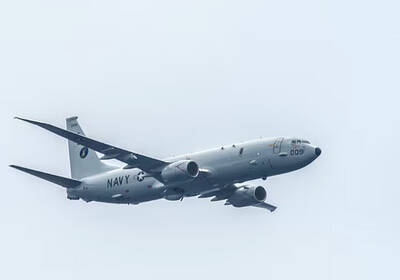
CHINA REACTS: The patrol and reconnaissance plane ‘transited the Taiwan Strait in international airspace,’ the 7th Fleet said, while Taipei said it saw nothing unusual The US 7th Fleet yesterday said that a US Navy P-8A Poseidon flew through the Taiwan Strait, a day after US and Chinese defense heads held their first talks since November 2022 in an effort to reduce regional tensions. The patrol and reconnaissance plane “transited the Taiwan Strait in international airspace,” the 7th Fleet said in a news release. “By operating within the Taiwan Strait in accordance with international law, the United States upholds the navigational rights and freedoms of all nations.” In a separate statement, the Ministry of National Defense said that it monitored nearby waters and airspace as the aircraft


 RSS
RSS