


The WHO said on Friday it was hopeful that the pharmaceutical industry would be ready to produce an anti-swine flu vaccine by the end of next month or early July.
“We're hopeful that by the end of June or by the beginning July this will be the time that commercial companies will be in a position of being able to make a vaccine,” interim assistant director-general Keiji Fukuda said.
However, Fukuda said experts were still mulling whether to give the go ahead for production as this may reduce or halt the manufacture of vaccines for seasonal flu.
“We will hold off on making this decision for a little while,” he said.
Production of up to 4.9 billion doses a year of a vaccine against the new influenza A(H1N1) virus would be possible, a forecast presented to vaccine makers this week said.
Apart from weighing the impact of the new virus against that of seasonal flu, issues like dosage and safety testing also have to be settled.
“There will need to be fast tracking of some of these studies,” Fukuda said.
The WHO hopes to send candidate virus samples to drug companies by the end of this month to serve as a reference in making the vaccine.
Thirty vaccine makers from 19 industrialized and developing countries were invited by the WHO to a meeting on Tuesday to discuss production of a vaccine against swine flu.
The world remains at flu alert level five, signaling an “imminent pandemic,” as China, South Korea and Hong Kong also reported new cases yesterday, a day after Moscow recorded its first infection.
Australia yesterday defended its escalation of swine flu protection measures, even as Japan, which has 321 confirmed cases, relaxed measures imposed to limit the spread of the disease.
Australian Prime Minister Kevin Rudd said it was inconvenient but necessary to ramp up the country's pandemic threat response as it reported its 14th confirmed infection.
Canberra raised its alert level to a containment phase on Friday, after recording the country's first domestic transmission of the A(H1N1) virus.
The victim is a 10-year-old girl who contracted the disease from a classmate who was taken ill on her return from the US.
The new phase allows for the closure of schools and other public places and the cancelation of major events, with three schools already shut following the confirmation of cases among students and further closures likely.
Rudd acknowledged the move would inconvenience families, but said it was important to take decisive action.
Health officials in Japan's Hyogo Prefecture, one of the worst-hit parts of the country, yesterday announced they were easing guidelines for more than 4,800 schools and kindergartens which had been closed to slow the spread of the virus.
In Hong Kong officials yesterday confirmed two new cases of swine flu, raising the territory's total number of infections to six, local radio reported.
The latest official figures from the WHO show 11,168 confirmed cases and 86 deaths have been recorded worldwide since A(H1N1) influenza emerged in Mexico and the US a month ago.
WHO Director-General Margaret Chan (陳馮富珍), however, said on Friday that poorer countries should be prepared for more severe cases.
“Countries especially in the developing world, where populations are most vulnerable, should prepare to see more than the present small number of severe cases,” she said.
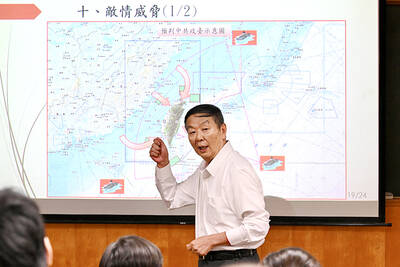
RETHINK? The defense ministry and Navy Command Headquarters could take over the indigenous submarine project and change its production timeline, a source said Admiral Huang Shu-kuang’s (黃曙光) resignation as head of the Indigenous Submarine Program and as a member of the National Security Council could affect the production of submarines, a source said yesterday. Huang in a statement last night said he had decided to resign due to national security concerns while expressing the hope that it would put a stop to political wrangling that only undermines the advancement of the nation’s defense capabilities. Taiwan People’s Party Legislator Vivian Huang (黃珊珊) yesterday said that the admiral, her older brother, felt it was time for him to step down and that he had completed what he
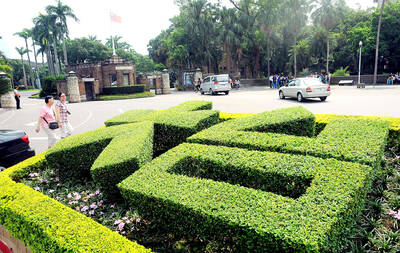
Taiwan has experienced its most significant improvement in the QS World University Rankings by Subject, data provided on Sunday by international higher education analyst Quacquarelli Symonds (QS) showed. Compared with last year’s edition of the rankings, which measure academic excellence and influence, Taiwanese universities made great improvements in the H Index metric, which evaluates research productivity and its impact, with a notable 30 percent increase overall, QS said. Taiwanese universities also made notable progress in the Citations per Paper metric, which measures the impact of research, achieving a 13 percent increase. Taiwanese universities gained 10 percent in Academic Reputation, but declined 18 percent
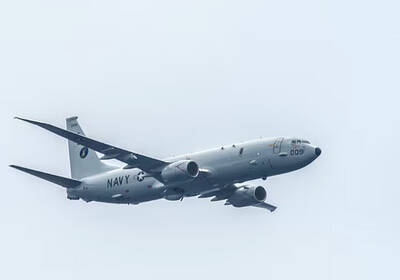
CHINA REACTS: The patrol and reconnaissance plane ‘transited the Taiwan Strait in international airspace,’ the 7th Fleet said, while Taipei said it saw nothing unusual The US 7th Fleet yesterday said that a US Navy P-8A Poseidon flew through the Taiwan Strait, a day after US and Chinese defense heads held their first talks since November 2022 in an effort to reduce regional tensions. The patrol and reconnaissance plane “transited the Taiwan Strait in international airspace,” the 7th Fleet said in a news release. “By operating within the Taiwan Strait in accordance with international law, the United States upholds the navigational rights and freedoms of all nations.” In a separate statement, the Ministry of National Defense said that it monitored nearby waters and airspace as the aircraft
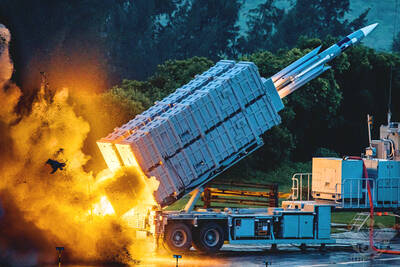
UNDER DISCUSSION: The combatant command would integrate fast attack boat and anti-ship missile groups to defend waters closest to the coastline, a source said The military could establish a new combatant command as early as 2026, which would be tasked with defending Taiwan’s territorial waters 24 nautical miles (44.4km) from the nation’s coastline, a source familiar with the matter said yesterday. The new command, which would fall under the Naval Command Headquarters, would be led by a vice admiral and integrate existing fast attack boat and anti-ship missile groups, along with the Naval Maritime Surveillance and Reconnaissance Command, said the source, who asked to remain anonymous. It could be launched by 2026, but details are being discussed and no final timetable has been announced, the source


 RSS
RSS