


The Presidential Office and the Cabinet yesterday rejected calls for President Ma Ying-jeou (馬英九) and other high-ranking officials to cut their monthly salaries, saying they were worried it risked setting a precedent that could spill over to the private sector, offsetting government efforts to stimulate public spending.
Several Chinese Nationalist Party (KMT) lawmakers on Wednesday proposed following Singapore’s lead by pushing for salary cuts for civil servants during the economic downturn.
Singapore’s Public Service Division said on Monday that top government officials, including Singaporean President S.R. Nathan, Prime Minister Lee Hsien Loong (李顯龍), administrative officers and political, judicial and statutory appointees would see their salaries drop by between 11 percent and 19 percent next year.
Presidential Office Spokesman Wang Yu-chi (王郁琦) yesterday said he believed such an action would have a negative impact.
Wang acknowledged Singapore’s plans to cut the payrolls of government officials and US president-elect Barack Obama’s call for chief executive officers of financial institutions to forego bonuses.
However, Taiwan’s problem was that the public was unwilling to spend money, thereby, worsening an already bleak economic situation, he said.
To tackle the problem, Wang said, the Executive Yuan has announced several measures aimed at stimulating consumption.
He said the Presidential Office was worried widespread salary cuts might have a negative impact on the private sector and the public as a whole.
“The worst-case scenario is that the efficiency of the government’s economic stimulus plan would be diminished, including consumer vouchers,” he said. “That is what worries us.”
A high-ranking official, who asked to remain anonymous, said the issue smacked of “populism” and that it was the consensus of the government and party that “it was an issue that did not deserve any more discussion.”
The party would pressure legislators to drop the topic, the official said.
The official said that when he got the ball rolling, it would not stop at Ma or political appointees, but would affect the private sector and then wage earners.
“The most important thing at the moment is to stimulate public consumption,” he said. “Political appointees must take the lead to spend money. When everybody spends money, businesses will make money. When businesses make more money, people will spend more money.”
If government officials’ salaries were cut, private companies might follow suit and that would offset the efficacy of the government’s economic stimulus plans, including the consumer vouchers, the official said.
“The government is willing to consider all options if they are conducive to energizing the economy, but if not, we will not risk them,” he said.
At a separate setting yesterday, Executive Yuan Spokeswoman Vanessa Shih (史亞平) also rejected the suggestion, saying that the idea ran counter to government efforts to boost spending.
“If this salary cut issue spreads ... and extends from government officials to the private sector, it might compromise [the government’s] well-intentioned plan to stimulate consumption,” she said.
On top of that, the situation in Singapore and Taiwan cannot be mentioned in the same breath because government officials in Singapore have salaries more then 10 times higher than those of their counterparts in Taiwan, Shih said.
Shih said Taiwan didn’t always have to follow the example of other countries.
Legislative Speaker Wang Jin-pyng (王金平), on the other hand, yesterday urged high-ranking government officials to consider taking a pay cut to show the government’s determination to get through the economic downturn.
Wang said the heads of five major government branches — the Executive Yuan, the Legislative Yuan, the Judicial Yuan, the Examination Yuan and the Control Yuan — and high-earning officials should consider voluntarily cutting their salaries, even though the move would not have any substantial effect on the nation’s economy. Wang said he was willing to take a pay cut of up to 20 percent, but did not support expanding the cut to all government employees.
“We should respect the current pay scale of public officials and look after all government employees,” he said.
Wang declined to comment when asked if lawmakers should also take a pay cut.
KMT caucus secretary-general Chang Sho-wen (張碩文) told a press conference yesterday that all legislators should take a pay cut if necessary. KMT caucus deputy secretary-general Lo Shu-lei (羅淑蕾) said she supported the idea even though many legislators had a lot of bills to cover. Chang also urged state-run enterprises and state-run banks “that did not perform well” to consider revising salaries and year-end bonuses.
While urging officials to take a pay cut, Democratic Progressive Party (DPP) Legislator Lin Shu-fen (林淑芬) yesterday urged Ma to make good his campaign promise to forego half of his salary should he fail to fulfil his “6-3-3” campaign pledge. The “6-3-3” economic policy refers to the goal of achieving annual GDP of 6 percent, annual per capita income of US$30,000, and an unemployment rate of less than 3 percent.
Lin also called on Premier Liu Chao-shiuan (劉兆玄) to step down.
ADDITIONAL REPORTING BY SHIH HSIU-CHUAN AND JIMMY CHUANG
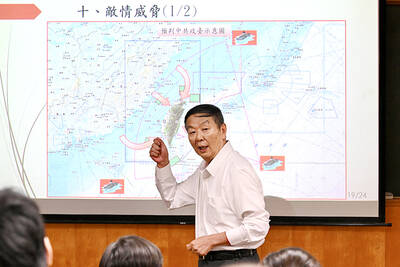
RETHINK? The defense ministry and Navy Command Headquarters could take over the indigenous submarine project and change its production timeline, a source said Admiral Huang Shu-kuang’s (黃曙光) resignation as head of the Indigenous Submarine Program and as a member of the National Security Council could affect the production of submarines, a source said yesterday. Huang in a statement last night said he had decided to resign due to national security concerns while expressing the hope that it would put a stop to political wrangling that only undermines the advancement of the nation’s defense capabilities. Taiwan People’s Party Legislator Vivian Huang (黃珊珊) yesterday said that the admiral, her older brother, felt it was time for him to step down and that he had completed what he
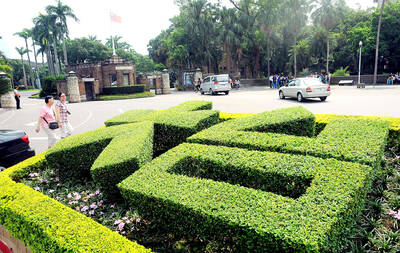
Taiwan has experienced its most significant improvement in the QS World University Rankings by Subject, data provided on Sunday by international higher education analyst Quacquarelli Symonds (QS) showed. Compared with last year’s edition of the rankings, which measure academic excellence and influence, Taiwanese universities made great improvements in the H Index metric, which evaluates research productivity and its impact, with a notable 30 percent increase overall, QS said. Taiwanese universities also made notable progress in the Citations per Paper metric, which measures the impact of research, achieving a 13 percent increase. Taiwanese universities gained 10 percent in Academic Reputation, but declined 18 percent

UNDER DISCUSSION: The combatant command would integrate fast attack boat and anti-ship missile groups to defend waters closest to the coastline, a source said The military could establish a new combatant command as early as 2026, which would be tasked with defending Taiwan’s territorial waters 24 nautical miles (44.4km) from the nation’s coastline, a source familiar with the matter said yesterday. The new command, which would fall under the Naval Command Headquarters, would be led by a vice admiral and integrate existing fast attack boat and anti-ship missile groups, along with the Naval Maritime Surveillance and Reconnaissance Command, said the source, who asked to remain anonymous. It could be launched by 2026, but details are being discussed and no final timetable has been announced, the source
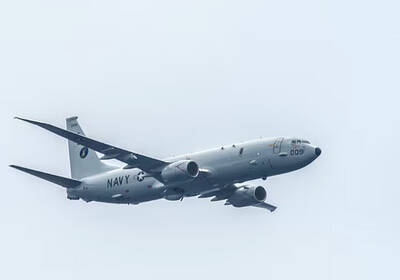
CHINA REACTS: The patrol and reconnaissance plane ‘transited the Taiwan Strait in international airspace,’ the 7th Fleet said, while Taipei said it saw nothing unusual The US 7th Fleet yesterday said that a US Navy P-8A Poseidon flew through the Taiwan Strait, a day after US and Chinese defense heads held their first talks since November 2022 in an effort to reduce regional tensions. The patrol and reconnaissance plane “transited the Taiwan Strait in international airspace,” the 7th Fleet said in a news release. “By operating within the Taiwan Strait in accordance with international law, the United States upholds the navigational rights and freedoms of all nations.” In a separate statement, the Ministry of National Defense said that it monitored nearby waters and airspace as the aircraft


 RSS
RSS