


It’s a hot, summer morning at the office of Winkler Partners in Taipei. At the reception desk the air conditioning is barely on and a floor fan churns on low. A few meters away is a bicycle and helmet. Staff walk around busily in casual clothes and house slippers.
Robin Winkler (文魯彬) — long-time environmentalist, lawyer and former Environmental Impact Assessment (EIA) committee member — emerges in a T-shirt and shorts, his feet bare, and says: “Let me give you a tour around the office.”
The office is divided into two sections: one for Winkler Partners, a legal office that serves “Fortune-500 type clients,” and the other for Wild at Heart Legal Defense Association (WaH), a group that offers legal assistance in cases involving development projects that threaten the habitats of wildlife and people.
In his 12th floor office on Chong-qing S Road, Winkler opens a glass door and reveals a rooftop garden complete with shrubs, herbs, a vine trellis, an outdoor compost toilet and three metal barrels that collect rainwater to flush some of the toilets inside the office.
In addition to protecting the environment, Winkler is a strong advocate of “greening” our offices, something he calls “reverse engineering.”
“The process of office greening consists of observing what nature tells us and then trying to apply that information in the context of a modern law office,” he says.
We take the stairs from the 12th floor to the ground floor — with Winkler turning off the staircase lights along the way — and catch the subway to a meeting of the Taipei Bar Association’s environmental group, where attorneys discuss environmental issues from a legal standpoint.
Along the way, Winkler takes out a towel and hands it to the owner of a baked-yam stall, who wraps up eight yams for his lunch and possibly dinner.
Both Winkler Partners and WaH were founded by Winkler in 1993, but his involvement in Taiwan started long before that. Winkler first set foot in Taiwan in 1977, when he came to learn Chinese. Twenty-six years later he traded in his US citizenship to become a naturalized Taiwanese.
Asked what inspired his dedication to environmental issues, Winkler rebutted the notion that he first became passionate about nature after surviving cancer almost five years ago.
“We see the world based on our experience,” he said. “I had the good fortune to spend a lot of time the first six years of my life on a farm” in Wisconsin.
Those years were the foundation for his love of nature, he said. His upbringing by very environmentally conscious parents and his ravenous appetite for books cemented that passion.
Born to parents who loved the great outdoors and enjoyed the work of Rachel Carson — a renowned US nature writer and biologist whose works in the 1950s were pivotal to the environmentalist movement — Winkler said that more than a decade ago, he began going through mounds of books that seemed “to confirm a lot of things I’d observed, but wasn’t able to articulate.”
The Continuum Concept by Jean Liedloff, Beyond Civilization by Daniel Quinn and The Ecology of Commerce by Paul Hawken were especially insightful, Winkler said.
“There are things that most people would be upset with if they noticed — like locking dogs in wired cages, slapping children around or having road lamps turned on in daylight ... The problem is that, people just don’t,” he said.
The state of the environment in Taiwan has been sliding downhill, Winkler said.
“It’s becoming an environmental disaster,” he said. “One of the prime indicators is that we are consuming like Americans ... We are a superpower when it comes to waste and overconsumption.”
Winkler strives for simplicity and zero negative impact, seeking to reduce and eventually eliminate all purchases of new materials and equipment for himself and his office.
“I haven’t used an air conditioner for years in my home; I’m trying to never buy anything new again and I don’t own a car,” he said.
Outside of his daily work at the office, Winkler gives lectures at schools, meets with individuals and groups interested in his message and publishes books on environmental protection.
WaH also promotes education and public discussion on the environment, in addition to producing research and translations of important works in a variety of related fields. Winkler Partners, meanwhile, donates 3 percent of its earnings to environmental and social organizations.
Winkler and WaH are also working on a long list of projects. They are opposed to the Central Taiwan Science Park and WaH is in the middle of biodiversity research to combat a Yunlin County decision to flood Youcing Valley (幽情谷) to alleviate a water shortage in the area.
Does the work ever pay off? Yes, Winkler says. The organization’s efforts have, for example, led Taipei County to fine a construction company that began building a road between Wulai (烏來) and Sansia (三峽) before its EIA had been passed.
But the green movement is more than just seeking a balance in our use of the environment, Winkler says: Society has a lot to learn.
“The greening process include[s] paying colleagues as much as we can afford, being completely open about firm finances and providing opportunities to develop or move to different positions within the office,” he said.
In the right environment, most people can do some very interesting and outstanding things, he says — and that in turn benefits the organization as a whole.
Above all, Winkler says, people need to learn to “really see” their surroundings.
“You ask me why I care about the environment so much, but I’m surprised whenever I talk to people outside the environmental field,” he said. “Why isn’t [the issue of the environment] obvious to everyone?”
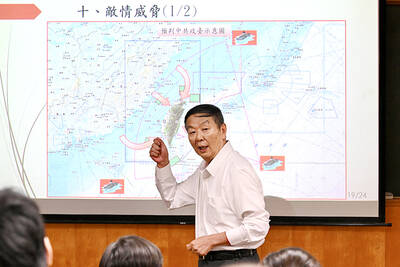
RETHINK? The defense ministry and Navy Command Headquarters could take over the indigenous submarine project and change its production timeline, a source said Admiral Huang Shu-kuang’s (黃曙光) resignation as head of the Indigenous Submarine Program and as a member of the National Security Council could affect the production of submarines, a source said yesterday. Huang in a statement last night said he had decided to resign due to national security concerns while expressing the hope that it would put a stop to political wrangling that only undermines the advancement of the nation’s defense capabilities. Taiwan People’s Party Legislator Vivian Huang (黃珊珊) yesterday said that the admiral, her older brother, felt it was time for him to step down and that he had completed what he
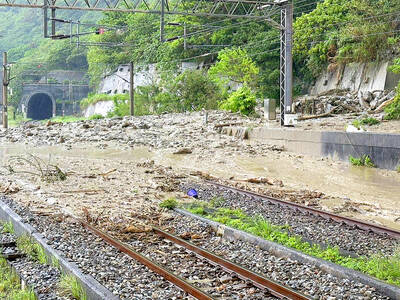
ROLLER-COASTER RIDE: More than five earthquakes ranging from magnitude 4.4 to 5.5 on the Richter scale shook eastern Taiwan in rapid succession yesterday afternoon Back-to-back weather fronts are forecast to hit Taiwan this week, resulting in rain across the nation in the coming days, the Central Weather Administration said yesterday, as it also warned residents in mountainous regions to be wary of landslides and rockfalls. As the first front approached, sporadic rainfall began in central and northern parts of Taiwan yesterday, the agency said, adding that rain is forecast to intensify in those regions today, while brief showers would also affect other parts of the nation. A second weather system is forecast to arrive on Thursday, bringing additional rain to the whole nation until Sunday, it

CONDITIONAL: The PRC imposes secret requirements that the funding it provides cannot be spent in states with diplomatic relations with Taiwan, Emma Reilly said China has been bribing UN officials to obtain “special benefits” and to block funding from countries that have diplomatic ties with Taiwan, a former UN employee told the British House of Commons on Tuesday. At a House of Commons Foreign Affairs Committee hearing into “international relations within the multilateral system,” former Office of the UN High Commissioner for Human Rights (OHCHR) employee Emma Reilly said in a written statement that “Beijing paid bribes to the two successive Presidents of the [UN] General Assembly” during the two-year negotiation of the Sustainable Development Goals. Another way China exercises influence within the UN Secretariat is
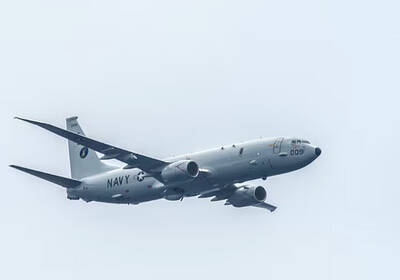
CHINA REACTS: The patrol and reconnaissance plane ‘transited the Taiwan Strait in international airspace,’ the 7th Fleet said, while Taipei said it saw nothing unusual The US 7th Fleet yesterday said that a US Navy P-8A Poseidon flew through the Taiwan Strait, a day after US and Chinese defense heads held their first talks since November 2022 in an effort to reduce regional tensions. The patrol and reconnaissance plane “transited the Taiwan Strait in international airspace,” the 7th Fleet said in a news release. “By operating within the Taiwan Strait in accordance with international law, the United States upholds the navigational rights and freedoms of all nations.” In a separate statement, the Ministry of National Defense said that it monitored nearby waters and airspace as the aircraft


 RSS
RSS