


Taipei prosecutors said yesterday they would soon interview Minister of Foreign Affairs James Huang (黃志芳) for a second time as part of their investigation into the Papua New Guinea diplomatic fund scandal.
Huang, Vice Premier Chiou I-jen (邱義仁) and Deputy Minister of National Defense Ko Cheng-heng (柯承亨) have all been questioned as witnesses during an investigation into how US$30 million intended to help the nation establish diplomatic ties with Port Moresby went missing after it was wired to a Singapore bank account that belonged to Ching Chi-ju (金紀玖) and Wu Shih-tsai (吳思材), both of whom acted as middlemen in the deal.
Prosecutors also confirmed yesterday that they had questioned Ko on Saturday afternoon.
They said they were comparing the statements made by Huang, Chiou and Ko with those made by Wu.
On Saturday evening, prosecutors raided Wu’s residence in Taipei, seizing documents in English and a laptop computer.
Earlier on Saturday, Wu told a press conference that he had offered prosecutors a “list” related to the diplomatic project because he believed his life would be in danger if he held on to it.
The list is believed to contain the names of individuals who were prepared to take money from the fund.
Prosecutors refused to comment on the content of the list yesterday, only saying that any government official who had pocketed money from the fund would be charged with corruption.
The scandal first made the headlines on Thursday after the Singaporean Chinese-language Lianhe Zaobao reported the Singapore High Court’s decision to grant a request by the Ministry of Foreign Affairs (MOFA) that Ching and Wu’s assets be frozen.
In August 2006, the 56-year-old Wu, a Singaporean, and his partner, Ching, were commissioned by the ministry and then-National Security Council (NSC) secretary-general Chiou to act as intermediaries in attempts to help Taiwan forge diplomatic relations with Papua New Guinea.
The ministry later agreed to wire US$30 million into Wu and Ching’s joint account at Singapore’s OCBC Bank.
The money, Huang said, was meant to “secure the interests” of the Papuan government and would have been transferred to its government after both countries had signed a diplomatic communique.
However, when the two countries failed to form official ties in December that year, Ching allegedly refused to give back the money and has since disappeared.
Huang and Chiou have both apologized to the public and vowed to take full responsibility.
Wu made his first public appearance in Taipei on Saturday, accusing Ko of being a key handler in the deal and claiming that Papua New Guinea had only asked for US$20 million, or US$20 million less than the offer Taiwan received from the brokers.
Chiou, who declined on Friday to reveal the identity of the close friend who he said introduced Ching to him, confirmed after Wu’s press conference that the friend was Ko. Wu said it had been arranged that he would represent the Papuan side while Ching would act on behalf of Taiwan.
Wu was told by Ching that all instructions had to come from Chiou, whom he called “the boss.”
Prosecutors have summoned Chiou, Huang, Ko and Wu for questioning.
As of press time, none of the concerned parties was in custody.
Despite Chiou’s comments, Chinese Nationalist Party (KMT) Legislator Ting Shou-chung (丁守中) has questions about the role former Presidential Office deputy secretary-general Ma Yung-cheng (馬永成) might have played in the affair.
“Chiou first denied but later admitted that Ko [introduced Ching to him]. I feel that this is damage control [on the part of the government] because what I heard from senior officials within the national security apparatus shows that Ma Yung-cheng was involved,” Ting said.
Meanwhile, ministry spokeswoman Phoebe Yeh (葉非比) said the ministry had agreed to set up the joint account in Ching and Wu;s name because the Papuan government had requested that the funds be wired via the joint account as a display of Taiwan’s “sincerity.”
Asked if it was legal for the ministry to wire money to such an account, Yang Te-chuan (楊德川), comptroller of the ministry’s accounting department, said his office could not reject or inquire about the ministry’s decision to remit money as long as the decision was approved by the minister.
Yeh said the ministry did not know how much money was left in the account because Wu’s answers to the ministry’s inquiries were inconsistent.
She said Wu had provided bank statements at the end of last July showing that all the funds remained in the account.
He made the same claim to the ministry earlier this year, Yeh said.
However, Wu gave the ministry an emergency notice in the middle of March, saying that there was only US$2,000 left in the account and admitting that he had surrendered his rights to the account to Ching in February last year, Yeh said.
Ministry personnel thereupon accompanied Wu to the OCBC Bank to obtain bank statements of the account “in any possible way,” but the bank refused to provide anything, she said.
Meanwhile, president-elect Ma Ying-jeou (馬英九) said yesterday that the best way Taiwan could demonstrate its strength was to continue its effort to sponsor children from economically disadvantaged families instead of spending large amounts of money on diplomatic matters.
“Taiwan is one of the top five countries providing financial assistance to children from poor families. As for disaster relief, the [Buddhist Compassion Relief] Tzu Chi Foundation is renown internationally,” Ma said. “This is where we can demonstrate our actual strength. We should not recklessly spend large sums of money on foreign affairs and create unnecessary trouble.”
Ma made the remarks during an awards ceremony for the Taiwan Fund for Children and Families in Taichung.
Vice President Annette Lu (呂秀蓮) said yesterday afternoon it would more proper to handle diplomatic matters through official channels as doing otherwise can only create problems.
Lu said she was stunned by the scandal and knew nothing about it. She said the affair should serve as a reference for the next president.
Lu made the remarks after attending the Democratic Progressive Party’s (DPP) extraordinary National Congress at the International Convention Center in Taipei.
Asked whether President Chen Shui-bian (陳水扁) should be held responsible for the scandal, Lu said that “whoever is responsible should be held accountable.”
While there have been calls for Chiou’s resignation, Lu said resignation was not a responsible way of dealing with the matter. Until the judiciary has fully determined the nature of the affair, it would be inappropriate to guess who is responsible, she said.
Furthermore, Lu said, there are only a few days left before the Cabinet resigns and the affair occurred when Chiou was at the NSC rather than at the Executive Yuan.
DPP Chairman Frank Hsieh (謝長廷) said he fully supported the investigation because taxpayers’ money was involved.
Premier Chang Chun-hsiung (張俊雄) said that while the matter happened in 2006, he did not become aware of it until MOFA briefed him and the ministry took the case to the Taipei Prosecutors’ Office.
As prosecutors are investigating the case, Chang said the Executive Yuan would cooperate fully, but would not intervene as it concerns the nation’s diplomatic interests.
As to whether Chen, Chiou or Huang should be held responsible, Chang said it would only be appropriate to apportion blame after the truth was uncovered.
DPP caucus whip William Lai (賴清德) said the affair was yet another disaster for Taiwan and that it would only be to the party’s advantage that an investigation be launched.
Mainland Affairs Council Chairman (MAC) Chen Ming-tong (陳明通) said that while the scandal was not something to be proud of, it was the result of the diplomatic quandary the nation was in.
Emphasizing that the source of the country’s diplomatic predicament was Beijing, Chen Ming-tong said that unless Beijing respected the existence of the Republic of China, cross-strait relations would never improve.
Koo Kwang-ming (辜寬敏), who hopes to become DPP chairman, said the DPP administration should determine why “crooks” had been allowed to handle the matter, adding that such a situation would not have existed had there been formal diplomatic relations.
While Huang said he had informed the president of the matter before the news broke, Koo said he did not think Huang was off the hook because of this. Nor did he think Chiou was fully responsible for the matter. As a DPP member, Chiou must face the party’s disciplinary action, Koo said.
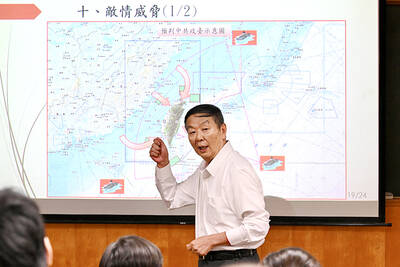
RETHINK? The defense ministry and Navy Command Headquarters could take over the indigenous submarine project and change its production timeline, a source said Admiral Huang Shu-kuang’s (黃曙光) resignation as head of the Indigenous Submarine Program and as a member of the National Security Council could affect the production of submarines, a source said yesterday. Huang in a statement last night said he had decided to resign due to national security concerns while expressing the hope that it would put a stop to political wrangling that only undermines the advancement of the nation’s defense capabilities. Taiwan People’s Party Legislator Vivian Huang (黃珊珊) yesterday said that the admiral, her older brother, felt it was time for him to step down and that he had completed what he
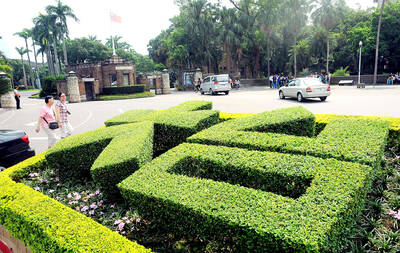
Taiwan has experienced its most significant improvement in the QS World University Rankings by Subject, data provided on Sunday by international higher education analyst Quacquarelli Symonds (QS) showed. Compared with last year’s edition of the rankings, which measure academic excellence and influence, Taiwanese universities made great improvements in the H Index metric, which evaluates research productivity and its impact, with a notable 30 percent increase overall, QS said. Taiwanese universities also made notable progress in the Citations per Paper metric, which measures the impact of research, achieving a 13 percent increase. Taiwanese universities gained 10 percent in Academic Reputation, but declined 18 percent
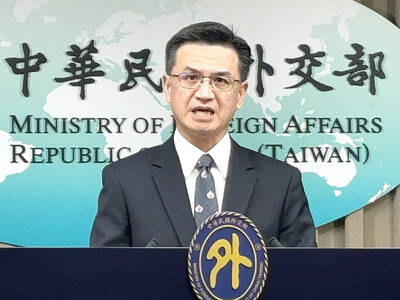
BULLY TACTICS: Beijing has continued its incursions into Taiwan’s airspace even as Xi Jinping talked about Taiwan being part of the Chinese family and nation China should stop its coercion of Taiwan and respect mainstream public opinion in Taiwan about sovereignty if its expression of goodwill is genuine, the Ministry of Foreign Affairs (MOFA) said yesterday. Ministry spokesman Jeff Liu (劉永健) made the comment in response to media queries about a meeting between former president Ma Ying-jeou (馬英九) and Chinese President Xi Jinping (習近平) the previous day. Ma voiced support for the so-called “1992 consensus,” while Xi said that although the two sides of the Taiwan Strait have “different systems,” this does not change the fact that they are “part of the same country,” and that “external
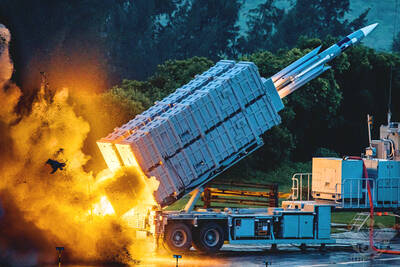
UNDER DISCUSSION: The combatant command would integrate fast attack boat and anti-ship missile groups to defend waters closest to the coastline, a source said The military could establish a new combatant command as early as 2026, which would be tasked with defending Taiwan’s territorial waters 24 nautical miles (44.4km) from the nation’s coastline, a source familiar with the matter said yesterday. The new command, which would fall under the Naval Command Headquarters, would be led by a vice admiral and integrate existing fast attack boat and anti-ship missile groups, along with the Naval Maritime Surveillance and Reconnaissance Command, said the source, who asked to remain anonymous. It could be launched by 2026, but details are being discussed and no final timetable has been announced, the source


 RSS
RSS