


The Cabinet has no plan to increase oil prices despite the "strong recommendation" of the Ministry of Economic Affairs, Executive Yuan Spokesman Shieh Jhy-wey (謝志偉) said yesterday.
"We understand the considerations of the Ministry of Economic Affairs and CPC Corp, Taiwan [CPC,
Shieh said the Cabinet's only consideration was to minimize the impact of rising international oil prices on people's lives and that this policy remained consistent with what it had been before the presidential election.
Shieh made the remarks after attending a meeting at which the matter was discussed.
The Executive Yuan said on March 24 that the state-run CPC Corp, Taiwan would maintain its oil prices at current levels until the new president has been sworn in on May 20.
CPC's rival Formosa Petrochemical Corp (台塑石化) raised its gasoline and diesel prices on Saturday.
Minister of Economic Affairs Steve Chen (陳瑞隆) yesterday told the legislature's Economics Committee that the ministry would "strongly recommend" to the Executive Yuan that it agree to increase oil prices at an appropriate time.
Some Chinese Nationalist Party (KMT) legislators yesterday asked Chen to prove that he had the guts to push through the ministry's recommendation, even if this meant he might lose his job.
Chen said in response that fear of losing his job had never been a factor in the performance of his duties since the day he took office.
Shieh yesterday asked KMT lawmakers to refrain from pressuring Chen, and said the ministry was just doing its job.
The ministry reiterated yesterday that the state-run refiner could continue to fully supply the local market for another two months if necessary.
CPC has revealed that demand at its filling stations has risen by 30 percent for gasoline and 34 percent for diesel over the past three days, which it described as a clear indication that many customers are turning to CPC because of its lower prices.
"The ministry anticipated that Formosa would raise its prices and that consumers would subsequently switch to CPC," Chen told the committee.
CPC has sufficient oil reserves to satisfy gasoline demand for another 64 days, and diesel for another 75 days, even if all of Formosa's customers were to switch to CPC, he said.
Formosa has an estimated 20 percent share of the local market.
Chen rejected speculation that the company would need to borrow money to import more oil to meet demand.
A CPC official said yesterday that the company had recorded a 20 percent rise in demand at its pumps and franchises in the last three days, and stated that it was urgent that the fuel price cap be removed.
"If all of Formosa Petrochemical's customers switched to CPC ... the company could hang on for about another two months," Liao Tsang-long (廖滄龍), deputy director of the company's Industry Relations Division, told CNA.
He said market expansion could not compensate for the losses the company incurs as a result of the price cap.
CPC recorded losses of NT$20 billion (US$658.7 million) during the last five months.
"The more we sell, the more we lose," Liao said.
While the company planned a single price hike of NT$4 per liter of gasoline and NT$4.5 per liter of diesel, the recent appreciation of the New Taiwan dollar would offset the rise, Liao said.
The appreciation of the local currency, which has risen by about 8 percent against the US dollar this year, would reduce fuel prices by about NT$1 per liter, he said.
Meanwhile, Sure Company (西歐加油站), a domestic retailer for Formosa Petrochemical, said yesterday that it would raise its gasoline and diesel prices by NT$2.8 and NT$3.1 per liter respectively today.
Sure's decision came three days after Formosa Petrochemical raised its wholesale gasoline and diesel prices by the same amount last Saturday.
The retailer said yesterday that it had lost nearly NT$2 million on 600,000 liters of fuel it sold since last Saturday, as the company had kept its fuel prices unchanged.
"Sure waited until Tuesday [today] to raise our fuel prices, as we wanted to give our regular customers a three-day grace period," a Sure executive, who wished to remain anonymous, said yesterday.
"It is inevitable that Sure would raise prices, as Formosa Petrochemical's price hike of NT$2.8 per liter of gasoline has wiped out our profit," he said.
Sure earns NT$2.5 and NT$1.3 per liter of gasoline and diesel, both lower than Formosa Petrochemical's price hikes, the company executive said.
The retailer estimated that it could lose up to 70 percent of its customers as a result of the price hikes, with losses estimated to surge to between NT$7 million and NT$8 million per month, or even as much as NT$10 million, he said.
Formosa Petrochemical said last Sunday that it would reimburse its retailers around NT$1.2 per liter of gasoline or diesel. The final amount has not yet been decided.
A similar incident occurred in 2005, when Formosa Petrochemical first raised its wholesale gasoline prices by NT$2.4 per liter in late August, prompting CPC Corp, Taiwan to raise it prices by the same amount a month later.
Sure opened the nation's first privately owned gas station in Taipei's Shilin District on Feb. 2, 1988. The retailer has nine gas stations nationwide.
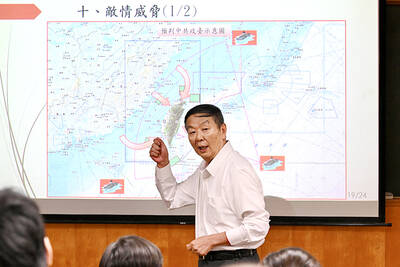
RETHINK? The defense ministry and Navy Command Headquarters could take over the indigenous submarine project and change its production timeline, a source said Admiral Huang Shu-kuang’s (黃曙光) resignation as head of the Indigenous Submarine Program and as a member of the National Security Council could affect the production of submarines, a source said yesterday. Huang in a statement last night said he had decided to resign due to national security concerns while expressing the hope that it would put a stop to political wrangling that only undermines the advancement of the nation’s defense capabilities. Taiwan People’s Party Legislator Vivian Huang (黃珊珊) yesterday said that the admiral, her older brother, felt it was time for him to step down and that he had completed what he
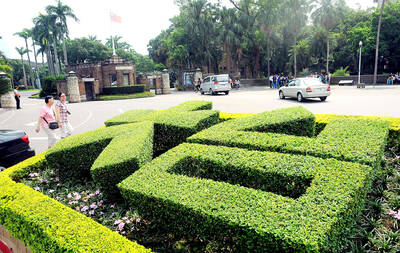
Taiwan has experienced its most significant improvement in the QS World University Rankings by Subject, data provided on Sunday by international higher education analyst Quacquarelli Symonds (QS) showed. Compared with last year’s edition of the rankings, which measure academic excellence and influence, Taiwanese universities made great improvements in the H Index metric, which evaluates research productivity and its impact, with a notable 30 percent increase overall, QS said. Taiwanese universities also made notable progress in the Citations per Paper metric, which measures the impact of research, achieving a 13 percent increase. Taiwanese universities gained 10 percent in Academic Reputation, but declined 18 percent
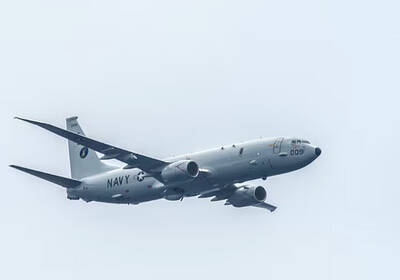
CHINA REACTS: The patrol and reconnaissance plane ‘transited the Taiwan Strait in international airspace,’ the 7th Fleet said, while Taipei said it saw nothing unusual The US 7th Fleet yesterday said that a US Navy P-8A Poseidon flew through the Taiwan Strait, a day after US and Chinese defense heads held their first talks since November 2022 in an effort to reduce regional tensions. The patrol and reconnaissance plane “transited the Taiwan Strait in international airspace,” the 7th Fleet said in a news release. “By operating within the Taiwan Strait in accordance with international law, the United States upholds the navigational rights and freedoms of all nations.” In a separate statement, the Ministry of National Defense said that it monitored nearby waters and airspace as the aircraft
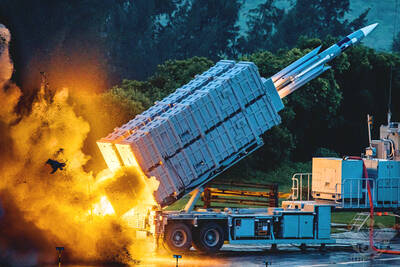
UNDER DISCUSSION: The combatant command would integrate fast attack boat and anti-ship missile groups to defend waters closest to the coastline, a source said The military could establish a new combatant command as early as 2026, which would be tasked with defending Taiwan’s territorial waters 24 nautical miles (44.4km) from the nation’s coastline, a source familiar with the matter said yesterday. The new command, which would fall under the Naval Command Headquarters, would be led by a vice admiral and integrate existing fast attack boat and anti-ship missile groups, along with the Naval Maritime Surveillance and Reconnaissance Command, said the source, who asked to remain anonymous. It could be launched by 2026, but details are being discussed and no final timetable has been announced, the source


 RSS
RSS