


Minister of National Defense Lee Tien-yu (
Lee, who assumed the post in May last year, expressed "deep regret" over the controversy surrounding the founding of Taiwan Goal, in which the Ministry of National Defense (MND) is the largest stakeholder at 45 percent.
As the minister of national defense, Lee said he was devoted to carrying out the nation's defense policy, promoting national security and caring for military personnel and their family.
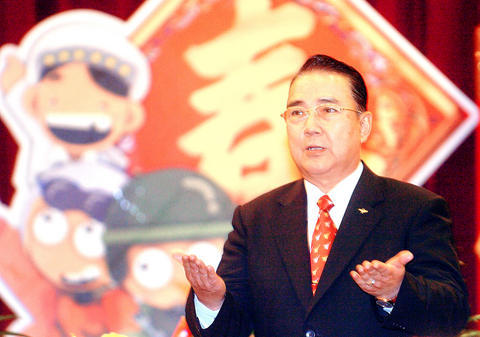
PHOTO: GEORGE TSORNG, TAIPEI TIMES
However, he decided to resign to take responsibility for failing to smoothly carry out an order to establish an arms company, incurring doubts and controversy along the way, he said.
Premier Chang Chun-hsiung (
"Lee insisted he had to take full responsibility for failing to properly deal with the Taiwan Goal matter," Chen told a press conference yesterday afternoon. "Everyone has his own career plan. We should all respect Lee's decision."
Tsai, 67, who has a doctorate from the California Western School of Law, served as a legislator for two terms and as a deputy representative to the US.
The premier confirmed the existence of Taiwan Goal on Feb. 15 following a report by the Chinese-language China Times that it had been established.
Since then, Chinese Nationalist Party (KMT) lawmakers have accused the government of seeking to make a profit from the arms trade.
Opposition lawmakers also alleged that Vice Premier Chiou I-jen (邱義仁) was involved in the firm, which was founded under the order of President Chen Shui-bian (陳水扁), and that Wu Nai-jen (吳乃仁), a Democratic Progressive Party (DPP) stalwart, was appointed company president to reward him for his dedication to the party.
The Cabinet has defended the establishment of such a national defense management, production and trading firm, saying it would resolve many obstacles the country faces when procuring arms from abroad given its sensitive political status.
Taiwan Goal registered with the Ministry of Economic Affairs on Jan. 28 as a private company, with capital of NT$1 billion (US$31.15 million) and paid-in capital totaling NT$80 million.
Chen Chin-jun said the government had acted in accordance with the National Defense Act (
At the press conference yesterday, Chen Chin-jun also announced the premier's decision prohibiting government investment in any private national defense company.
"The establishment of Taiwan Goal and the government's policy to develop the defense industry have been slurred," he said. "As such, the premier has decided that government funds will no longer be used to invest in the private defense industry."
That could mean Taiwan Goal might have difficulty sourcing its initial capital of NT$200 million.
The company's plan was to source 45 percent of its capital from the defense ministry; 15 percent from Yao Hua Glass Co (
Information provided by the Cabinet showed that NT$80 million of the NT$200 million initial funding has been collected -- NT$50 million from China Steel Machinery and NT$30 million from Chunghwa System.
But the target NT$90 million from the MND and NT$30 million from Yao Hua had yet to be injected.
The Cabinet has insisted that Taiwan Goal is a private company, as the MND holds only 45 percent of the company.
Asked whether Wu will stay on as president of Taiwan Goal, Chen Chin-jun said that would be Wu's decision.
President Chen, who was in Nantou County yesterday, did not comment on the matter. The KMT caucus applauded Lee's resignation.
"Lee offered his resignation and saved his reputation," KMT caucus whip Alex Fei (
KMT Legislator Lin Yu-fang (林郁方) said Lee's resignation highlighted the fact that the firm was problematic and lacked legitimacy.
The caucus urged the government to disband the company immediately, while lashing out at the Cabinet's decision to appoint Tsai to take over Lee's position, accusing Tsai of being Chen Shui-bian's "preferred candidate."
DPP caucus whip Ker Chien-ming (柯建銘) told a separate press conference that although he respected Lee's decision to take responsibility for the controversy -- a move which Ker said showed Lee's dignity as a military person -- he nonetheless thought it was unnecessary for Lee to leave.
The KMT caucus' endless attacks on the establishment of the arms company, Lee and his ministry were the main reasons that led to Lee's resignation, Ker said, adding that the KMT caucus had faulted almost every government policy without reason.
The DPP caucus continues to support a private arms company to promote and integrate the nation's defense industry, he said.
When asked by reporters for comments, DPP presidential candidate Frank Hsieh's (
"We hope the public would look at the matter from the viewpoint of the system," Hsieh camp spokesman Hsu Kuo-yong (
Lee graduated from the Air Force Academy in 1959, completing training courses and receiving his pilot's wings in 1965.
In 2001, the president promoted him to lieutenant general and Lee became the deputy commander-in-chief of the Air Force. One year later, he was promoted again to full general, becoming the commander-in-chief of the Air Force.
In 2004, the president promoted him to the highest rank in the armed forces, giving him his fourth star and assigning him as chief of the general staff.
ADDITIONAL REPORTING BY KO SHU-LING, MO YAN-CHIH AND CNA
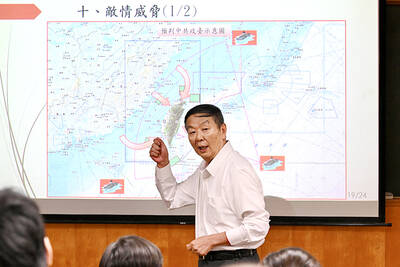
RETHINK? The defense ministry and Navy Command Headquarters could take over the indigenous submarine project and change its production timeline, a source said Admiral Huang Shu-kuang’s (黃曙光) resignation as head of the Indigenous Submarine Program and as a member of the National Security Council could affect the production of submarines, a source said yesterday. Huang in a statement last night said he had decided to resign due to national security concerns while expressing the hope that it would put a stop to political wrangling that only undermines the advancement of the nation’s defense capabilities. Taiwan People’s Party Legislator Vivian Huang (黃珊珊) yesterday said that the admiral, her older brother, felt it was time for him to step down and that he had completed what he

Taiwan has experienced its most significant improvement in the QS World University Rankings by Subject, data provided on Sunday by international higher education analyst Quacquarelli Symonds (QS) showed. Compared with last year’s edition of the rankings, which measure academic excellence and influence, Taiwanese universities made great improvements in the H Index metric, which evaluates research productivity and its impact, with a notable 30 percent increase overall, QS said. Taiwanese universities also made notable progress in the Citations per Paper metric, which measures the impact of research, achieving a 13 percent increase. Taiwanese universities gained 10 percent in Academic Reputation, but declined 18 percent
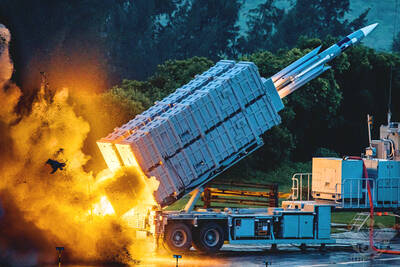
UNDER DISCUSSION: The combatant command would integrate fast attack boat and anti-ship missile groups to defend waters closest to the coastline, a source said The military could establish a new combatant command as early as 2026, which would be tasked with defending Taiwan’s territorial waters 24 nautical miles (44.4km) from the nation’s coastline, a source familiar with the matter said yesterday. The new command, which would fall under the Naval Command Headquarters, would be led by a vice admiral and integrate existing fast attack boat and anti-ship missile groups, along with the Naval Maritime Surveillance and Reconnaissance Command, said the source, who asked to remain anonymous. It could be launched by 2026, but details are being discussed and no final timetable has been announced, the source
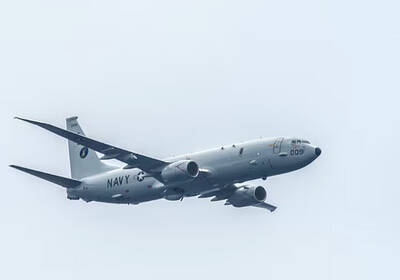
CHINA REACTS: The patrol and reconnaissance plane ‘transited the Taiwan Strait in international airspace,’ the 7th Fleet said, while Taipei said it saw nothing unusual The US 7th Fleet yesterday said that a US Navy P-8A Poseidon flew through the Taiwan Strait, a day after US and Chinese defense heads held their first talks since November 2022 in an effort to reduce regional tensions. The patrol and reconnaissance plane “transited the Taiwan Strait in international airspace,” the 7th Fleet said in a news release. “By operating within the Taiwan Strait in accordance with international law, the United States upholds the navigational rights and freedoms of all nations.” In a separate statement, the Ministry of National Defense said that it monitored nearby waters and airspace as the aircraft


 RSS
RSS