


Nepal's major political parties have agreed to abolish the world's last Hindu monarchy as part of a deal to bring former communist rebels back into the government, the one-time insurgents said yesterday.
While no timetable has been set for the communists to rejoin the government, the deal, signed on Sunday, set the stage for Nepal's transition to a full republic less than two years after the country's king was forced to cede his near dictatorial powers following weeks of unrest.
The Maoists ended their decade-long rebellion last year and later joined the country's interim government. But they withdrew in September, demanding that the monarchy be abolished.
The move plunged Nepal into a political crisis and threatened its transition to democracy.
Yesterday, the former rebels were buoyant over the deal bringing them back into the fold. The deal stipulates the monarchy will be eliminated once a special assembly charged with rewriting the Constitution is elected. The vote had been delayed indefinitely by the Maoists' withdrawal from the government and officials now say they want to hold it in the first half of next year.
"Now there is nothing else that needs to be done," Prachanda, the Maoist leader who uses only one name, told reporters. "There is no monarchy left in the country."
The monarch, King Gyanendra, heads a dynasty that dates back to 1769, when a regional ruler led an army down from the hills and conquered the ancient city of Kathmandu. He established a line of kings that have been traditionally considered reincarnations of the Hindu god Vishnu, to be venerated by their subjects, over whom they once held near absolute sway.
But Gyanendra, the 12th Shah dynasty monarch, has never enjoyed the popularity of his predecessors and Sunday's deal to eliminate the throne was received largely with indifference by the people of Kathmandu.
"Before, kings were part of people's heart," said Mata Pasad Risal, 60, a retired government official. "Now people have turned against him. The king has lost his position and popularity. It will be best for him to leave the palace."
Gyanendra came to the throne in 2001 after a palace massacre in which the crown prince is accused of gunning down Gyanendra's older brother, the late king Birendra, and much of the royal family and then killing himself. The murders helped pierce the mystique surrounding Nepal's royalty.
Four years later, Gyanendra dismissed Nepal's parliament and seized total power, saying he would bring order to a chaotic political scene and quell the Maoist insurgency.
But the insurgency worsened, the economy faltered and Gyanendra used heavyhanded tactics to silence the opposition, jailing and banning criticism of himself, his government and the army.
The result was weeks of unrest in April last year that ended with Gyanendra restoring parliament. He has since been stripped of his powers, command over the army and his immunity from prosecution.
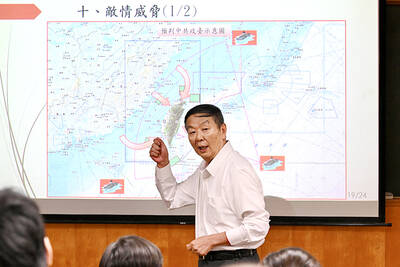
RETHINK? The defense ministry and Navy Command Headquarters could take over the indigenous submarine project and change its production timeline, a source said Admiral Huang Shu-kuang’s (黃曙光) resignation as head of the Indigenous Submarine Program and as a member of the National Security Council could affect the production of submarines, a source said yesterday. Huang in a statement last night said he had decided to resign due to national security concerns while expressing the hope that it would put a stop to political wrangling that only undermines the advancement of the nation’s defense capabilities. Taiwan People’s Party Legislator Vivian Huang (黃珊珊) yesterday said that the admiral, her older brother, felt it was time for him to step down and that he had completed what he

Taiwan has experienced its most significant improvement in the QS World University Rankings by Subject, data provided on Sunday by international higher education analyst Quacquarelli Symonds (QS) showed. Compared with last year’s edition of the rankings, which measure academic excellence and influence, Taiwanese universities made great improvements in the H Index metric, which evaluates research productivity and its impact, with a notable 30 percent increase overall, QS said. Taiwanese universities also made notable progress in the Citations per Paper metric, which measures the impact of research, achieving a 13 percent increase. Taiwanese universities gained 10 percent in Academic Reputation, but declined 18 percent
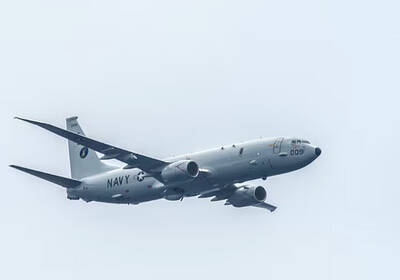
CHINA REACTS: The patrol and reconnaissance plane ‘transited the Taiwan Strait in international airspace,’ the 7th Fleet said, while Taipei said it saw nothing unusual The US 7th Fleet yesterday said that a US Navy P-8A Poseidon flew through the Taiwan Strait, a day after US and Chinese defense heads held their first talks since November 2022 in an effort to reduce regional tensions. The patrol and reconnaissance plane “transited the Taiwan Strait in international airspace,” the 7th Fleet said in a news release. “By operating within the Taiwan Strait in accordance with international law, the United States upholds the navigational rights and freedoms of all nations.” In a separate statement, the Ministry of National Defense said that it monitored nearby waters and airspace as the aircraft
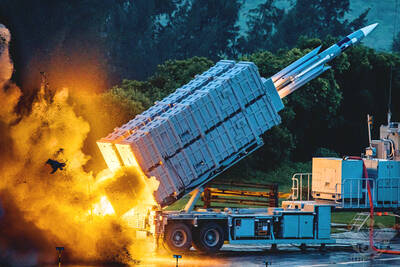
UNDER DISCUSSION: The combatant command would integrate fast attack boat and anti-ship missile groups to defend waters closest to the coastline, a source said The military could establish a new combatant command as early as 2026, which would be tasked with defending Taiwan’s territorial waters 24 nautical miles (44.4km) from the nation’s coastline, a source familiar with the matter said yesterday. The new command, which would fall under the Naval Command Headquarters, would be led by a vice admiral and integrate existing fast attack boat and anti-ship missile groups, along with the Naval Maritime Surveillance and Reconnaissance Command, said the source, who asked to remain anonymous. It could be launched by 2026, but details are being discussed and no final timetable has been announced, the source


 RSS
RSS