


UN Secretary-General Ban Ki-moon was to heap pressure on world leaders yesterday, urging them to smash a deadlock threatening an upcoming conference on climate change in Bali.
Ban was to make the keynote address at an unprecedented world summit entitled "The Future in Our Hands: Addressing the Leadership Challenge of Climate Change."
California Governor Arnold Schwarzenegger, in the vanguard of climate action at state level in the US, was also to address the meeting.
Around 150 countries were taking part in the one-day event, some 80 of them at the level of head of state and government, making it the most senior UN gathering ever held on climate change.
European countries, which have seized the political lead among industrialized countries in pledging cuts to their own emissions, are expected to seek a global commitment at the Dec. 3 to Dec. 14 meeting in Bali, Indonesia.
That meeting has the task of setting down a roadmap for negotiations that hopefully will conclude at the end of 2009 with a deal to accelerate and deepen cuts in emissions of greenhouse gases.
Once ratified -- a process that should take a couple of years -- the accord would succeed the first phase of the UN's Kyoto Protocol, which expires at the end of 2012.
Kyoto's future has been darkened since 2001, when the US, the world's biggest polluter, declared it would not ratify the treaty.
US President George W. Bush fiercely opposes Kyoto's binding caps and instead argues in favor of voluntary measures backed by technology transfer.
Green critics feel this is a tactic to delay Kyoto and divide its supporters by promoting the idea of a cosier, less ambitious alternative.
"I'd like to see a commitment from a majority of heads of state on using and strengthening the present [treaty] architecture and not reinventing it," said Steve Sawyer, secretary-general of the Global Wind Energy Council, a Brussels-based group lobbying for wind power. "Reinventing Kyoto will take 10 years to negotiate, and we don't have the time."
The UN summit was to unfold in four parallel sessions, covering adaptation to climate change, mitigation of greenhouse-gas emissions, technology and financing.
Ban was to present a summary of conclusions at the end of the day and follow this with a dinner gathering representatives from the world's biggest carbon polluters.
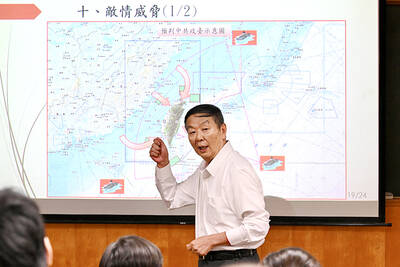
RETHINK? The defense ministry and Navy Command Headquarters could take over the indigenous submarine project and change its production timeline, a source said Admiral Huang Shu-kuang’s (黃曙光) resignation as head of the Indigenous Submarine Program and as a member of the National Security Council could affect the production of submarines, a source said yesterday. Huang in a statement last night said he had decided to resign due to national security concerns while expressing the hope that it would put a stop to political wrangling that only undermines the advancement of the nation’s defense capabilities. Taiwan People’s Party Legislator Vivian Huang (黃珊珊) yesterday said that the admiral, her older brother, felt it was time for him to step down and that he had completed what he

Taiwan has experienced its most significant improvement in the QS World University Rankings by Subject, data provided on Sunday by international higher education analyst Quacquarelli Symonds (QS) showed. Compared with last year’s edition of the rankings, which measure academic excellence and influence, Taiwanese universities made great improvements in the H Index metric, which evaluates research productivity and its impact, with a notable 30 percent increase overall, QS said. Taiwanese universities also made notable progress in the Citations per Paper metric, which measures the impact of research, achieving a 13 percent increase. Taiwanese universities gained 10 percent in Academic Reputation, but declined 18 percent
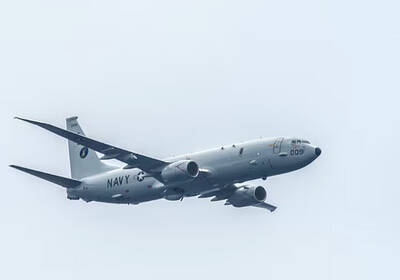
CHINA REACTS: The patrol and reconnaissance plane ‘transited the Taiwan Strait in international airspace,’ the 7th Fleet said, while Taipei said it saw nothing unusual The US 7th Fleet yesterday said that a US Navy P-8A Poseidon flew through the Taiwan Strait, a day after US and Chinese defense heads held their first talks since November 2022 in an effort to reduce regional tensions. The patrol and reconnaissance plane “transited the Taiwan Strait in international airspace,” the 7th Fleet said in a news release. “By operating within the Taiwan Strait in accordance with international law, the United States upholds the navigational rights and freedoms of all nations.” In a separate statement, the Ministry of National Defense said that it monitored nearby waters and airspace as the aircraft
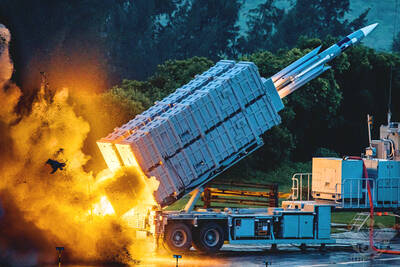
UNDER DISCUSSION: The combatant command would integrate fast attack boat and anti-ship missile groups to defend waters closest to the coastline, a source said The military could establish a new combatant command as early as 2026, which would be tasked with defending Taiwan’s territorial waters 24 nautical miles (44.4km) from the nation’s coastline, a source familiar with the matter said yesterday. The new command, which would fall under the Naval Command Headquarters, would be led by a vice admiral and integrate existing fast attack boat and anti-ship missile groups, along with the Naval Maritime Surveillance and Reconnaissance Command, said the source, who asked to remain anonymous. It could be launched by 2026, but details are being discussed and no final timetable has been announced, the source


 RSS
RSS