


Smilies are so 1990s. Emoticons have evolved to another level in Taiwan after users started making their own animated GIF files and swapping them through chat programs such as the popular MSN Messenger.
Emoticons have an extra twist in this country -- instead of a parenthetical aside, emoticons are now replacing Chinese characters as a part of the sentence.
And while Chinese language academics see this trend, along with the "martian language" (火星文) phenomenon -- in which letters and numbers are used to create the sounds of words -- as another sign of the fallen state of the Chinese language among the young, users can't seem to get enough of the elaborate emoticons for every occasion.
Indeed, it's been more than 25 years since US computer scientist Scott Elliot Fahlman came up with the idea of stringing together a colon, a dash and a parenthesis sign to make a "smiley face."
According to Fahlman's original post on the Carnegie Mellon online bulletin board on Sept. 19, 1982, he thought the sequence of characters could function as a "joke marker" for online conversations that get too heated.
"Read it sideways," advised Fahlman in the original post, retrieved after a massive verification effort digging through old archives.
Little could Falhman have anticipated that more than a quarter of a century later, his flippant suggestion could become a major component of digital communication for the Web-savvy citizens of a far-away country -- Taiwan.
While standard emoticons such as the "smiley" and the "winkey" have taken the world by storm and various software and chat programs now automatically render them into the ubiquitous yellow "smiley" face, the use of such bog-standard emoticons could simply mark one out as behind the times in this country, where the rise of custom animated emoticons have elevated the use of "smilies" to a major component of conversations rather than an aside.
"It all started three years ago, when an update of Microsoft's chat program Instant Messenger begin to support custom emoticons," said blogger Nokimi, who works as a Web site project manager.
Messenger, and other chat programs, have become ubiquitous in Taiwan and along with them the emoticons and animated emoticons that users can easily create and upload as GIFs.
"I would say that everybody I know who uses the 'net in Taiwan is also on MSN," Nokimi said.
He estimated that he has more than 30 online chat conversations a day, with friends, work colleagues and clients.
"At it's peak, my collection had more than 300 emoticons for my IM [Instant Messenger]," said "Annie," a reporter in Taipei who declined to be named for the purpose of this interview.
"Whenever I had a spare moment, I would go online to download some more. I wanted to have an emoticon that was fitting for every occasion. Unfortunately a virus that necessitated wiping my hard drive meant that I've had to start from scratch again," she said.
The world of animated emoticon has even produced its own superstar -- Onionhead. The character, with its distinctive spike of hair, features in a series of more than 70 animated emoticons, allowing users to express everything from getting sleepy, wiping sweat off their brow to laughing while wielding a hidden dagger.
Amy Chang of the Full Tone Art Co said, Onionhead's creator, "Ethan," is now working on new Onionhead emoticons and desktop pictures full-time. Although the downloads are free, Onionhead's popularity brings lucrative licensing opportunities.
The character is considered so popular among the young that the Planned Parenthood Association of Taiwan featured a specially commissioned Onionhead cartoon on the packaging of their condoms.
Onionhead's appeal has also reached overseas.
"It's hard to measure the popularity of Onionhead since most people swap them through IM rather than download them through our site," Chang said. "But we have licensed to merchandisers in China, Hong Kong and Macau."
However, there are complaints that the craze for emoticons has gone too far.
"I'm OK with an emoticon at the end of a sentence to highlight one's feelings, I'm even fine with emoticons that replace Chinese characters with the same character in a cutesy font," Nokimi said. "However, I cannot stand people who replace characters, or even multiple characters, with pictures."
This practice, known as "picture language" (
When Annie types the Chinese character for "no" her friends see a GIF animation of a man shaking his head.
Each sentence she types in IM might automatically bring up three or four such "picture language" icons.
"Friends have complained that I use too many icons when I chat on MSN," Annie said. "However, I don't think it's that hard to guess what I'm saying given the context. If they still can't figure it out, they can always right click to find out what the picture is meant to say."
"That's exactly what I find the most obnoxious about picture language users," Nokimi said. "Their desire to try something novel wastes my time."
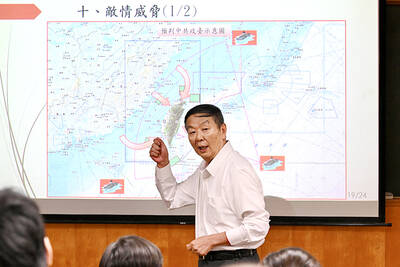
RETHINK? The defense ministry and Navy Command Headquarters could take over the indigenous submarine project and change its production timeline, a source said Admiral Huang Shu-kuang’s (黃曙光) resignation as head of the Indigenous Submarine Program and as a member of the National Security Council could affect the production of submarines, a source said yesterday. Huang in a statement last night said he had decided to resign due to national security concerns while expressing the hope that it would put a stop to political wrangling that only undermines the advancement of the nation’s defense capabilities. Taiwan People’s Party Legislator Vivian Huang (黃珊珊) yesterday said that the admiral, her older brother, felt it was time for him to step down and that he had completed what he
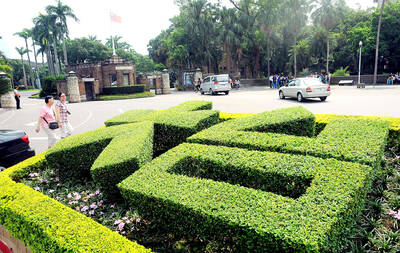
Taiwan has experienced its most significant improvement in the QS World University Rankings by Subject, data provided on Sunday by international higher education analyst Quacquarelli Symonds (QS) showed. Compared with last year’s edition of the rankings, which measure academic excellence and influence, Taiwanese universities made great improvements in the H Index metric, which evaluates research productivity and its impact, with a notable 30 percent increase overall, QS said. Taiwanese universities also made notable progress in the Citations per Paper metric, which measures the impact of research, achieving a 13 percent increase. Taiwanese universities gained 10 percent in Academic Reputation, but declined 18 percent
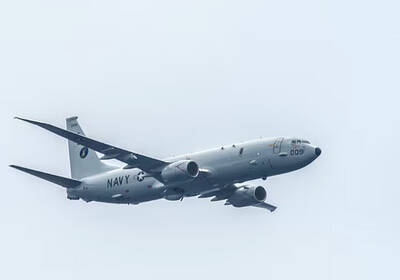
CHINA REACTS: The patrol and reconnaissance plane ‘transited the Taiwan Strait in international airspace,’ the 7th Fleet said, while Taipei said it saw nothing unusual The US 7th Fleet yesterday said that a US Navy P-8A Poseidon flew through the Taiwan Strait, a day after US and Chinese defense heads held their first talks since November 2022 in an effort to reduce regional tensions. The patrol and reconnaissance plane “transited the Taiwan Strait in international airspace,” the 7th Fleet said in a news release. “By operating within the Taiwan Strait in accordance with international law, the United States upholds the navigational rights and freedoms of all nations.” In a separate statement, the Ministry of National Defense said that it monitored nearby waters and airspace as the aircraft
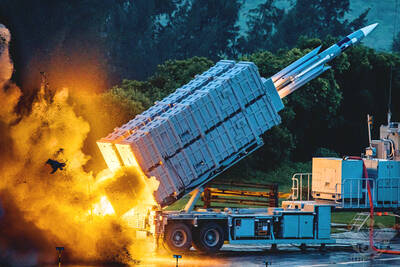
UNDER DISCUSSION: The combatant command would integrate fast attack boat and anti-ship missile groups to defend waters closest to the coastline, a source said The military could establish a new combatant command as early as 2026, which would be tasked with defending Taiwan’s territorial waters 24 nautical miles (44.4km) from the nation’s coastline, a source familiar with the matter said yesterday. The new command, which would fall under the Naval Command Headquarters, would be led by a vice admiral and integrate existing fast attack boat and anti-ship missile groups, along with the Naval Maritime Surveillance and Reconnaissance Command, said the source, who asked to remain anonymous. It could be launched by 2026, but details are being discussed and no final timetable has been announced, the source


 RSS
RSS