


The legal front of the US government's "war on terror" suffered a bad blow on Monday as military judges threw out charges against a Canadian-born al-Qaeda fighter and Osama bin Laden's former driver.
The rulings on Toronto native Omar Ahmed Khadr, 20, and Salim Ahmed Hamdan threatened to torpedo the US government's pursuit of Guantanamo Bay terror suspects through new-look military tribunals.
In both cases, the judges found that they had no jurisdiction to proceed with military commission trials, as neither Khadr nor Hamdan had been classified as an "unlawful enemy combatant" as required by a recent US law.
Khadr was just 15 when he was captured in Afghanistan, accused of killing a US army medic in a hand-grenade attack.
He looked on impassively as Colonel Peter Brownback issued his potentially far-reaching ruling.
"It was very surprising," the defendant's sister, Zaynab Khadr, told reporters in Canada. "But we were very happy to hear the news. I hope he will be released soon."
However, lawyers said that both Khadr and Hamdan will remain in legal limbo at the base in southeast Cuba along with nearly 400 other detainees rounded up or handed over to US forces since the Sept. 11, 2001 attacks.
It was the second major victory for Hamdan, an admitted driver and bodyguard for the al-Qaeda mastermind who was born in Yemen in 1970, after he defeated the government's old tribunal process in a Supreme Court case a year ago.
Major Beth Kubala, spokeswoman for Guantanamo Bay's Office of Military Commissions (OMC), said it would be "speculative" to comment on the rulings' implications for the government.
But she told reporters: "[The] OMC will continue to operate in a manner that's fair, transparent, open and legitimate. If nothing else, today's rulings highlight that the judges operate independently."
Government prosecutors were granted a 72-hour delay while they consider their options for appeal to the Khadr and Hamdan rulings.
However, the appeals court envisioned in the Military Commissions Act (MCA), which was hurriedly passed by Congress last September following the Supreme Court ruling on Hamdan's case, has yet to be created.
"If the administration has any sense at all, this will be the death knell for the commissions," said Jennifer Daskal of Human Rights Watch.
Murder and other charges levied against Khadr were dismissed by Brownback. Late in the evening, US Navy Captain Keith Allred threw out charges of conspiracy and material support for terrorism against Hamdan.
The White House disagreed yesterday with the military judges who threw out the charges, but maintained that special US military tribunals remain appropriate for dealing with foreign terrorism suspects.
"We don't agree with the ruling," White House spokesman Tony Fratto said in Prague where US President George W. Bush began a European tour that will take him to the G8 summit in Germany on Wednesday.
Fratto said that the US Department of Defense had "asked for time" to determine whether it would be "appropriate to make an appeal" of Monday's rulings.
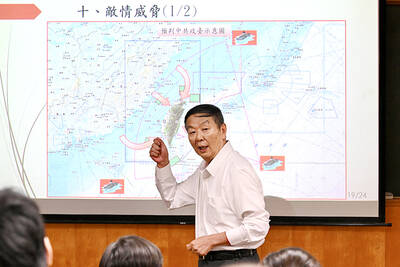
RETHINK? The defense ministry and Navy Command Headquarters could take over the indigenous submarine project and change its production timeline, a source said Admiral Huang Shu-kuang’s (黃曙光) resignation as head of the Indigenous Submarine Program and as a member of the National Security Council could affect the production of submarines, a source said yesterday. Huang in a statement last night said he had decided to resign due to national security concerns while expressing the hope that it would put a stop to political wrangling that only undermines the advancement of the nation’s defense capabilities. Taiwan People’s Party Legislator Vivian Huang (黃珊珊) yesterday said that the admiral, her older brother, felt it was time for him to step down and that he had completed what he

Taiwan has experienced its most significant improvement in the QS World University Rankings by Subject, data provided on Sunday by international higher education analyst Quacquarelli Symonds (QS) showed. Compared with last year’s edition of the rankings, which measure academic excellence and influence, Taiwanese universities made great improvements in the H Index metric, which evaluates research productivity and its impact, with a notable 30 percent increase overall, QS said. Taiwanese universities also made notable progress in the Citations per Paper metric, which measures the impact of research, achieving a 13 percent increase. Taiwanese universities gained 10 percent in Academic Reputation, but declined 18 percent
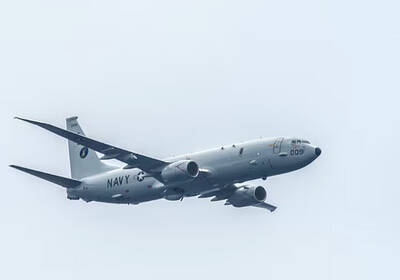
CHINA REACTS: The patrol and reconnaissance plane ‘transited the Taiwan Strait in international airspace,’ the 7th Fleet said, while Taipei said it saw nothing unusual The US 7th Fleet yesterday said that a US Navy P-8A Poseidon flew through the Taiwan Strait, a day after US and Chinese defense heads held their first talks since November 2022 in an effort to reduce regional tensions. The patrol and reconnaissance plane “transited the Taiwan Strait in international airspace,” the 7th Fleet said in a news release. “By operating within the Taiwan Strait in accordance with international law, the United States upholds the navigational rights and freedoms of all nations.” In a separate statement, the Ministry of National Defense said that it monitored nearby waters and airspace as the aircraft
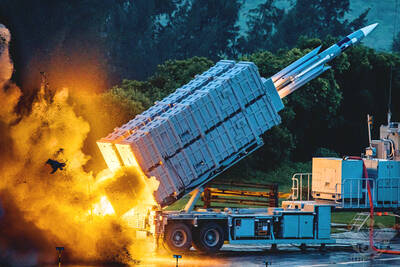
UNDER DISCUSSION: The combatant command would integrate fast attack boat and anti-ship missile groups to defend waters closest to the coastline, a source said The military could establish a new combatant command as early as 2026, which would be tasked with defending Taiwan’s territorial waters 24 nautical miles (44.4km) from the nation’s coastline, a source familiar with the matter said yesterday. The new command, which would fall under the Naval Command Headquarters, would be led by a vice admiral and integrate existing fast attack boat and anti-ship missile groups, along with the Naval Maritime Surveillance and Reconnaissance Command, said the source, who asked to remain anonymous. It could be launched by 2026, but details are being discussed and no final timetable has been announced, the source


 RSS
RSS