


China's missiles may not be the biggest danger to Taiwan. An impending power shortage could cause blackouts within three years and weaken the nation's economy.
Power production is failing to keep pace with demand because of a ban on new nuclear plants and delays in completing projects already underway, said Jeffrey Bor (柏雲昌), a Chung-hua Institution for Economic Research (中經院) fellow.
"The chance of large-scale blackouts is quite high," he said. "Defense against missiles should be of lower importance because the chance of an attack is slim."
President Chen Shui-bian's (陳水扁) government has ignored long-term economic planning because of his drive to secure Taiwan's formal independence from China, said Yang Tai-shuenn (楊泰順), a professor of politics at the Chinese Culture University.
Power supply disruptions could accelerate the exodus of local manufacturers, who already fill more than 40 percent of their export orders through overseas factories.
Taiwan Power Co (Taipower, 台電) is counting on the Fourth Nuclear Power Plant to help prevent shortages.
First approved in 1981, the station is only 63 percent complete. The project, in Kungliao (貢寮) Township, Taipei County, probably won't open until 2011, Bor says.
Without Kungliao, which is designed to produce 6 percent of Taiwan's electricity, the nation may face outages in 2010, say Bor and Liang Chi-yuan (
"Every walk of life will be affected," Liang said.
Taipower estimates that Taiwan's reserve margin, the spare capacity available during peak times, will shrink to 8.5 percent in 2010 without Kungliao.
That's less back-up than the state-run company needs to shut generators for maintenance, meaning one faulty unit could trigger blackouts, says Yang Feng-shuo (楊豐碩), director of energy studies at the Taiwan Institute of Economic Research (
Taipower generates about 75 percent of Taiwan's power.
"The trend of the reserve margin falling is quite worrisome," Yang said.
Clint Chou (周義岳), a spokesman for Taipower, says that at least one of Kungliao's two reactors will be operational by 2010, allowing the company to maintain a reserve margin of 12 percent.
"As long as it's above 10 percent, it'll be OK," Chou said.
The risk of blackouts may prompt manufacturers to leave Taiwan, says Niven Huang (黃正忠), secretary-general of the Taiwan Business Council for Sustainable Development (中華民國永續發展協會), whose 25 members include Taiwan Semiconductor Manufacturing Co (台積電), the world's biggest supplier of custom-made computer chips.
"Electricity outages disrupt operations and prompt companies to rethink investment locations," Huang said.
Still, Eric Tang (
"If there are power outages, we'll be worried," he said.
Taiwan must add 1,200 megawatts (MW) of generating capacity, equal to 4 percent of its production, each year to meet demand. A government panel this month recommended that a 1,600MW coal-fired power station be spiked because of pollution concerns.
Without new coal plants Taiwan may see its back-up capacity slip to almost zero by 2015, said Tu Yueh-yuan (
"We'll be very nervous," she said. "A power system can't allow a situation like that."
Environmental concerns also triggered a 2001 decision to ban new nuclear plants. Reactors weren't considered safe on an island that suffers an average of 200 earthquakes each year.
Finding a solution to Taiwan's dawning energy crisis isn't a pressing issue for the government, Yang Tai-shuenn said.
"Chen Shui-bian is wooing supporters by stirring up issues that may have a short-term benefit," he said. "His main strategy is to focus on the independence issue."
Such a move by Taiwan is unlikely because of the nation's Constitution and political structure, said Chang Wu-ueh (
Revising the Constitution requires the backing of three-quarters of lawmakers and half the electorate.
Still, military spending is budgeted to increase 30 percent to NT$312 billion (US$9 billion) this year because of China's arms build up, including almost 1,000 missiles targeting Taiwan, Chen Shui-bian said in an interview with CNN.
Chen Yi-ling (
"There aren't expected to be power shortages," Chen Yi-ling said.
The government is pushing environmentally friendly technologies, paying as much as half the cost of building solar systems and offering tax-breaks for wind power projects.
By 2025, hydro and other forms of renewable energy may account for 17 percent of installed capacity, up from 12 percent now, the Ministry of Economic Affairs says.
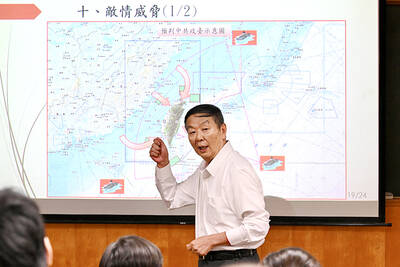
RETHINK? The defense ministry and Navy Command Headquarters could take over the indigenous submarine project and change its production timeline, a source said Admiral Huang Shu-kuang’s (黃曙光) resignation as head of the Indigenous Submarine Program and as a member of the National Security Council could affect the production of submarines, a source said yesterday. Huang in a statement last night said he had decided to resign due to national security concerns while expressing the hope that it would put a stop to political wrangling that only undermines the advancement of the nation’s defense capabilities. Taiwan People’s Party Legislator Vivian Huang (黃珊珊) yesterday said that the admiral, her older brother, felt it was time for him to step down and that he had completed what he
Taiwan has experienced its most significant improvement in the QS World University Rankings by Subject, data provided on Sunday by international higher education analyst Quacquarelli Symonds (QS) showed. Compared with last year’s edition of the rankings, which measure academic excellence and influence, Taiwanese universities made great improvements in the H Index metric, which evaluates research productivity and its impact, with a notable 30 percent increase overall, QS said. Taiwanese universities also made notable progress in the Citations per Paper metric, which measures the impact of research, achieving a 13 percent increase. Taiwanese universities gained 10 percent in Academic Reputation, but declined 18 percent
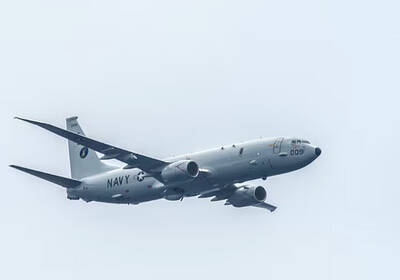
CHINA REACTS: The patrol and reconnaissance plane ‘transited the Taiwan Strait in international airspace,’ the 7th Fleet said, while Taipei said it saw nothing unusual The US 7th Fleet yesterday said that a US Navy P-8A Poseidon flew through the Taiwan Strait, a day after US and Chinese defense heads held their first talks since November 2022 in an effort to reduce regional tensions. The patrol and reconnaissance plane “transited the Taiwan Strait in international airspace,” the 7th Fleet said in a news release. “By operating within the Taiwan Strait in accordance with international law, the United States upholds the navigational rights and freedoms of all nations.” In a separate statement, the Ministry of National Defense said that it monitored nearby waters and airspace as the aircraft
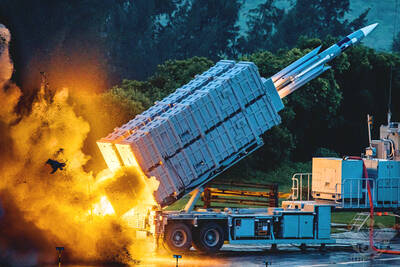
UNDER DISCUSSION: The combatant command would integrate fast attack boat and anti-ship missile groups to defend waters closest to the coastline, a source said The military could establish a new combatant command as early as 2026, which would be tasked with defending Taiwan’s territorial waters 24 nautical miles (44.4km) from the nation’s coastline, a source familiar with the matter said yesterday. The new command, which would fall under the Naval Command Headquarters, would be led by a vice admiral and integrate existing fast attack boat and anti-ship missile groups, along with the Naval Maritime Surveillance and Reconnaissance Command, said the source, who asked to remain anonymous. It could be launched by 2026, but details are being discussed and no final timetable has been announced, the source


 RSS
RSS