


Japanese and Chinese leaders heralded a new era of closer ties between the two Asian powers yesterday, pledging to overcome territorial and history disputes and calling for cooperation on North Korea, energy and the environment.
Chinese Premier Wen Jiabao (溫家寶) and Japanese Prime Minister Shinzo Abe met at the outset of Wen's visit to Tokyo, the first by a Chinese leader for nearly seven years. The meeting followed a preliminary trip by Abe to China in October.
In a joint statement, the two vowed to seek ways to develop gas deposits in disputed waters, pursue the denuclearization of the Korean Peninsula and "face up to history" in building forward-looking relations.
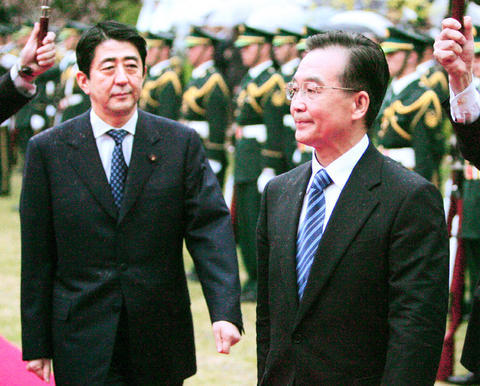
PHOTO: AP
"Our talks will be a big step toward building strategically and mutually beneficial relations," Abe told Wen at the start of their talks at his office complex after welcoming him on with a red carpet, despite the rain.
Wen agreed, saying it was "the most important goal of my visit."
Wen, who was meeting Abe for the third time in six months, said the two leaders "need to talk about the details of what strategically and mutually beneficial relations would entail."
They quickly signed agreements. An environmental accord called for the two to work on a successor to the Kyoto Protocol on climate change by 2013. China is in the Kyoto pact, but its emissions are a rising concern as the economy rapidly expands.
The other agreement committed Japan and China to cooperate on developing energy resources.
A joint declaration made a veiled reference to the bitter dispute over wartime history. China still nurses resentment over Japanese invasions in the 1930s and 1940s, while Japanese nationalists accuse Beijing of exaggerating accounts of atrocities for political gain.
"We resolve to face up to history and open up good, forward-looking relations toward a beautiful future," the statement said.
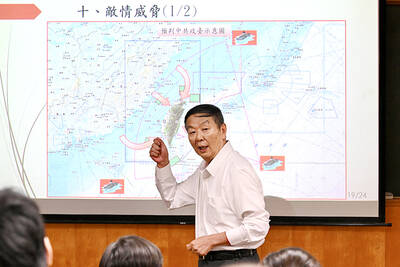
RETHINK? The defense ministry and Navy Command Headquarters could take over the indigenous submarine project and change its production timeline, a source said Admiral Huang Shu-kuang’s (黃曙光) resignation as head of the Indigenous Submarine Program and as a member of the National Security Council could affect the production of submarines, a source said yesterday. Huang in a statement last night said he had decided to resign due to national security concerns while expressing the hope that it would put a stop to political wrangling that only undermines the advancement of the nation’s defense capabilities. Taiwan People’s Party Legislator Vivian Huang (黃珊珊) yesterday said that the admiral, her older brother, felt it was time for him to step down and that he had completed what he

Taiwan has experienced its most significant improvement in the QS World University Rankings by Subject, data provided on Sunday by international higher education analyst Quacquarelli Symonds (QS) showed. Compared with last year’s edition of the rankings, which measure academic excellence and influence, Taiwanese universities made great improvements in the H Index metric, which evaluates research productivity and its impact, with a notable 30 percent increase overall, QS said. Taiwanese universities also made notable progress in the Citations per Paper metric, which measures the impact of research, achieving a 13 percent increase. Taiwanese universities gained 10 percent in Academic Reputation, but declined 18 percent
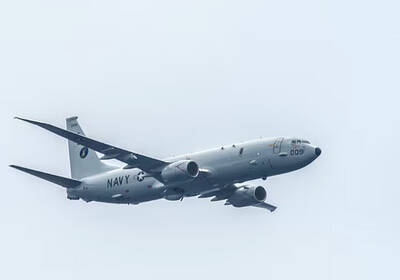
CHINA REACTS: The patrol and reconnaissance plane ‘transited the Taiwan Strait in international airspace,’ the 7th Fleet said, while Taipei said it saw nothing unusual The US 7th Fleet yesterday said that a US Navy P-8A Poseidon flew through the Taiwan Strait, a day after US and Chinese defense heads held their first talks since November 2022 in an effort to reduce regional tensions. The patrol and reconnaissance plane “transited the Taiwan Strait in international airspace,” the 7th Fleet said in a news release. “By operating within the Taiwan Strait in accordance with international law, the United States upholds the navigational rights and freedoms of all nations.” In a separate statement, the Ministry of National Defense said that it monitored nearby waters and airspace as the aircraft
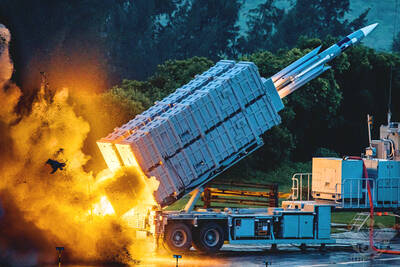
UNDER DISCUSSION: The combatant command would integrate fast attack boat and anti-ship missile groups to defend waters closest to the coastline, a source said The military could establish a new combatant command as early as 2026, which would be tasked with defending Taiwan’s territorial waters 24 nautical miles (44.4km) from the nation’s coastline, a source familiar with the matter said yesterday. The new command, which would fall under the Naval Command Headquarters, would be led by a vice admiral and integrate existing fast attack boat and anti-ship missile groups, along with the Naval Maritime Surveillance and Reconnaissance Command, said the source, who asked to remain anonymous. It could be launched by 2026, but details are being discussed and no final timetable has been announced, the source


 RSS
RSS