


The UN's highest court yesterday exonerated Serbia of direct responsibility for the mass slaughter of Bosnian Muslims at Srebrenica during the 1992-1995 Bosnia war, but ruled that it failed to prevent genocide.
In a landmark judgment, the International Court of Justice (ICJ) said Serbia also failed to comply with its obligations to punish those who carried out the genocide in July 1995, and ordered Belgrade to hand over suspects for trial by a separate UN court.
However, it rejected Bosnia's claim for monetary reparations.
"Financial compensation is not the appropriate form of reparation for the breach of the obligation to prevent genocide," the judgment said.
The case before the ICJ, also known as the World Court, was the first time an entire nation was being held to judicial account for the ultimate crime.
It specifically demanded that Serbia hand over for trial General Ratko Mladic, the general who oversaw the Bosnian Serb onslaught at Srebrenica, to the International Criminal Tribunal for the former Yugoslavia. Serbia has said it has been unable to arrest Mladic since his indictment 12 years ago.
Key to the court's findings was its conclusion that no one in Serbia, or any official organ of the state, could be shown to have had the deliberate intention to "destroy in whole or in part" the Bosnian Muslim population -- a critical element in the 1948 Genocide Convention.
The judges found that Serbia, though it supported the Bosnian Serbs, fell short of having effective control over the Bosnian army and the paramilitary units that carried out the massacre. It also rejected Bosnia's argument that the accumulated pattern of atrocities during the war, fueled by Serb nationalism and driven by Serbian weapons and money, was tantamount to responsibility for genocide.
Unusually for such an important case, the judges were in accord, voting overwhelmingly in unison on the various points of the decision with only one or two dissenters.
By 13-2, the court found that Serbia had the power to foresee and prevent the Srebrenica slaughter -- the worst on European soil since World War II -- and failed to use it. By 14-1 -- with only the Serbian judge against -- demanded Mladic's transfer.
In Bosnia, the clearing of Serbia of direct blame was met with anger.
"Shame on the people who reached such a verdict. How can they say not guilty of genocide when there are photos, video footage. They are again torturing our people, these mothers," said Zinaida Mujic, representative of the Mothers of Srebrenica association, who lost two sons in the war.
In Brussels, Friso Roscam Abbing, EU Commission spokesman, urged both sides to respect the judgment "to ensure justice and enable reconciliation to start." The EU has made Serbia's hopes for membership conditional on its cooperation in handing over Mladic and other fugitives.
Reading a summary of the ruling for nearly three hours, court president Judge Rosalyn Higgins said it had been clear in Belgrade there was a serious risk of a massive slaughter in Srebrenica, when some 7,000 Bosnian Muslims were killed.
Serbia's claim that it was powerless to prevent the massacres "hardly tallies with their known influence" over the Bosnian Serb army, the ruling said.
In a key ruling at the outset, Higgins rejected Serbia's argument that the court had no jurisdiction in the case. It said the former Yugoslavia had the obligation to abide by the 1948 Genocide Convention throughout the war, even though its membership in the UN had been suspended in 1992.
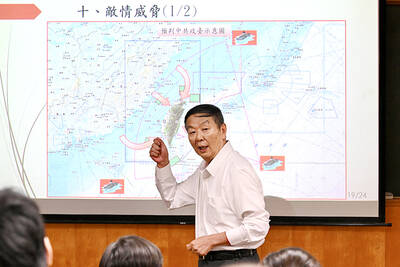
RETHINK? The defense ministry and Navy Command Headquarters could take over the indigenous submarine project and change its production timeline, a source said Admiral Huang Shu-kuang’s (黃曙光) resignation as head of the Indigenous Submarine Program and as a member of the National Security Council could affect the production of submarines, a source said yesterday. Huang in a statement last night said he had decided to resign due to national security concerns while expressing the hope that it would put a stop to political wrangling that only undermines the advancement of the nation’s defense capabilities. Taiwan People’s Party Legislator Vivian Huang (黃珊珊) yesterday said that the admiral, her older brother, felt it was time for him to step down and that he had completed what he

Taiwan has experienced its most significant improvement in the QS World University Rankings by Subject, data provided on Sunday by international higher education analyst Quacquarelli Symonds (QS) showed. Compared with last year’s edition of the rankings, which measure academic excellence and influence, Taiwanese universities made great improvements in the H Index metric, which evaluates research productivity and its impact, with a notable 30 percent increase overall, QS said. Taiwanese universities also made notable progress in the Citations per Paper metric, which measures the impact of research, achieving a 13 percent increase. Taiwanese universities gained 10 percent in Academic Reputation, but declined 18 percent
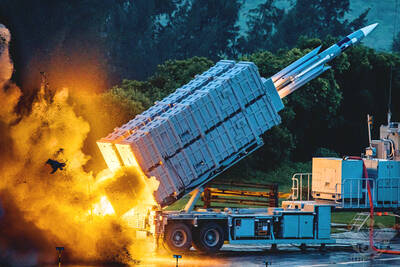
UNDER DISCUSSION: The combatant command would integrate fast attack boat and anti-ship missile groups to defend waters closest to the coastline, a source said The military could establish a new combatant command as early as 2026, which would be tasked with defending Taiwan’s territorial waters 24 nautical miles (44.4km) from the nation’s coastline, a source familiar with the matter said yesterday. The new command, which would fall under the Naval Command Headquarters, would be led by a vice admiral and integrate existing fast attack boat and anti-ship missile groups, along with the Naval Maritime Surveillance and Reconnaissance Command, said the source, who asked to remain anonymous. It could be launched by 2026, but details are being discussed and no final timetable has been announced, the source
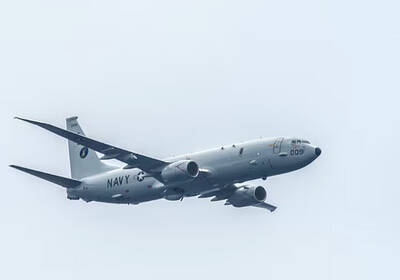
CHINA REACTS: The patrol and reconnaissance plane ‘transited the Taiwan Strait in international airspace,’ the 7th Fleet said, while Taipei said it saw nothing unusual The US 7th Fleet yesterday said that a US Navy P-8A Poseidon flew through the Taiwan Strait, a day after US and Chinese defense heads held their first talks since November 2022 in an effort to reduce regional tensions. The patrol and reconnaissance plane “transited the Taiwan Strait in international airspace,” the 7th Fleet said in a news release. “By operating within the Taiwan Strait in accordance with international law, the United States upholds the navigational rights and freedoms of all nations.” In a separate statement, the Ministry of National Defense said that it monitored nearby waters and airspace as the aircraft


 RSS
RSS