


Specialists have confirmed that "sugar chips" that had been developed by Academia Sinica President Wong Chi-huey (翁啟惠) and his US research team to track protein glycosylation are also capable of detecting cancer within a second.
The sugar probes and sugar chips, developed by Wong and researchers at the Scripps Research Institute four years ago, can detect cancer within a second with 100 percent accuracy, as well as the HIV and H5N1 viruses, Academia Sinica's ENews reported on Tuesday.
The details about the innovative microchips -- which show great potential as a high-throughput diagnostic tool for the analysis of post-translational protein glycosylation in disease -- were published online in the journal Nature Protocols on Jan. 31. The findings were also scheduled to appear in the Proceedings of the National Academy of Sciences of the United States on Monday.
Wong, who is the world's most cited chemist specializing on enzymes and who assumed the post of Academia Sinica president last October, said that more than 80 percent of human proteins contained sugars called glycoproteins, and that the process of protein glycosylation was known to play a central role in mediating protein function in living organisms.
He said altered glycosylation was often associated with inflammation and cancer metastasis and added that the detailed correlation between glycosylation and biological or pathological status could provide information for diagnosis and treatment of diseases, particularly cancers.
Wong added that by spreading a drop of human blood on the sugar chip, researchers could almost instantly determine the kind of cancer a patient is suffering from.
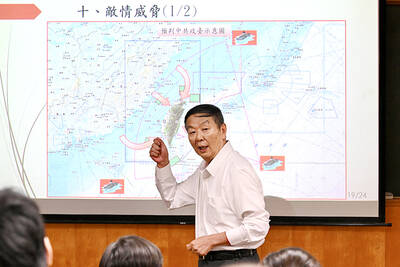
RETHINK? The defense ministry and Navy Command Headquarters could take over the indigenous submarine project and change its production timeline, a source said Admiral Huang Shu-kuang’s (黃曙光) resignation as head of the Indigenous Submarine Program and as a member of the National Security Council could affect the production of submarines, a source said yesterday. Huang in a statement last night said he had decided to resign due to national security concerns while expressing the hope that it would put a stop to political wrangling that only undermines the advancement of the nation’s defense capabilities. Taiwan People’s Party Legislator Vivian Huang (黃珊珊) yesterday said that the admiral, her older brother, felt it was time for him to step down and that he had completed what he
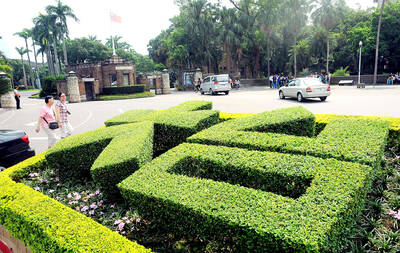
Taiwan has experienced its most significant improvement in the QS World University Rankings by Subject, data provided on Sunday by international higher education analyst Quacquarelli Symonds (QS) showed. Compared with last year’s edition of the rankings, which measure academic excellence and influence, Taiwanese universities made great improvements in the H Index metric, which evaluates research productivity and its impact, with a notable 30 percent increase overall, QS said. Taiwanese universities also made notable progress in the Citations per Paper metric, which measures the impact of research, achieving a 13 percent increase. Taiwanese universities gained 10 percent in Academic Reputation, but declined 18 percent

UNDER DISCUSSION: The combatant command would integrate fast attack boat and anti-ship missile groups to defend waters closest to the coastline, a source said The military could establish a new combatant command as early as 2026, which would be tasked with defending Taiwan’s territorial waters 24 nautical miles (44.4km) from the nation’s coastline, a source familiar with the matter said yesterday. The new command, which would fall under the Naval Command Headquarters, would be led by a vice admiral and integrate existing fast attack boat and anti-ship missile groups, along with the Naval Maritime Surveillance and Reconnaissance Command, said the source, who asked to remain anonymous. It could be launched by 2026, but details are being discussed and no final timetable has been announced, the source
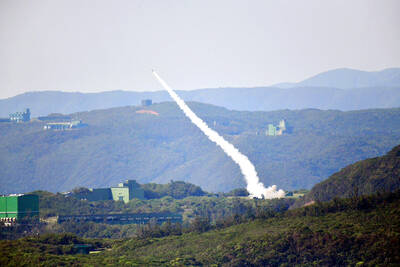
SHOT IN THE ARM: The new system can be integrated with Avenger and Stinger missiles to bolster regional air defense capabilities, a defense ministry report said Domestically developed Land Sword II (陸射劍二) missiles were successfully launched and hit target drones during a live-fire exercise at the Jiupeng Military Base in Pingtung County yesterday. The missiles, developed by the Chungshan Institute of Science and Technology (CSIST), were originally scheduled to launch on Tuesday last week, after the Tomb Sweeping Day holiday long weekend, but were postponed to yesterday due to weather conditions. Local residents and military enthusiasts gathered outside the base to watch the missile tests, with the first one launching at 9:10am. The Land Sword II system, which is derived from the Sky Sword II (天劍二) series, was turned


 RSS
RSS