


The world is inching closer to nuclear Armageddon, a group of prominent scientists and security experts said on Friday.
The Bulletin of the Atomic Scientists has kept a Doomsday clock since 1947 as a reminder of the dangers of nuclear proliferation.
The clock will be moved forward on Wednesday at simultaneous events in Washington and London whose speakers will include physicist Stephen Hawking, the Chicago-based periodical said in a statement.
The Bulletin warned that the world had entered a "Second Nuclear Age marked by grave threats."
Nuclear ambitions
It cited the nuclear ambitions of Iran and North Korea; escalating terrorism; unsecured nuclear materials in Russia and elsewhere; the continuing "launch-ready" status of 2,000 of the 25,000 nuclear weapons held by the US and Russia; and "new pressure from climate change for expanded civilian nuclear power that could increase proliferation risks."
First set at seven minutes to midnight -- a phrase that has become part of pop culture -- the clock has been moved 17 times in response to global events.
Recent shift
The most recent shift was in 2002 when it moved two minutes forward because the US withdrew from the Anti-Ballistic Missile Treaty and terrorists were known to be seeking nuclear and biological weapons.
It currently stands once again at seven minutes to midnight, the closest to danger since the end of the Cold War.
Founded in 1945 by scientists who had helped develop the atomic bomb and were deeply concerned about the use of nuclear weapons, the Bulletin of the Atomic Scientists counts 17 Nobel laureates among its boards of directors and sponsors.
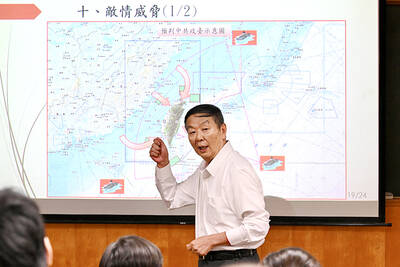
RETHINK? The defense ministry and Navy Command Headquarters could take over the indigenous submarine project and change its production timeline, a source said Admiral Huang Shu-kuang’s (黃曙光) resignation as head of the Indigenous Submarine Program and as a member of the National Security Council could affect the production of submarines, a source said yesterday. Huang in a statement last night said he had decided to resign due to national security concerns while expressing the hope that it would put a stop to political wrangling that only undermines the advancement of the nation’s defense capabilities. Taiwan People’s Party Legislator Vivian Huang (黃珊珊) yesterday said that the admiral, her older brother, felt it was time for him to step down and that he had completed what he
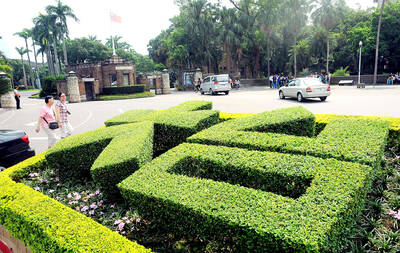
Taiwan has experienced its most significant improvement in the QS World University Rankings by Subject, data provided on Sunday by international higher education analyst Quacquarelli Symonds (QS) showed. Compared with last year’s edition of the rankings, which measure academic excellence and influence, Taiwanese universities made great improvements in the H Index metric, which evaluates research productivity and its impact, with a notable 30 percent increase overall, QS said. Taiwanese universities also made notable progress in the Citations per Paper metric, which measures the impact of research, achieving a 13 percent increase. Taiwanese universities gained 10 percent in Academic Reputation, but declined 18 percent
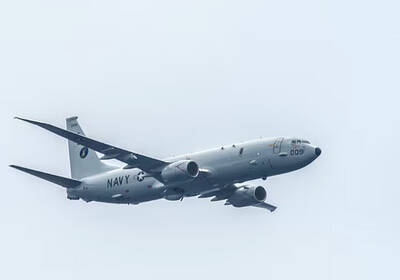
CHINA REACTS: The patrol and reconnaissance plane ‘transited the Taiwan Strait in international airspace,’ the 7th Fleet said, while Taipei said it saw nothing unusual The US 7th Fleet yesterday said that a US Navy P-8A Poseidon flew through the Taiwan Strait, a day after US and Chinese defense heads held their first talks since November 2022 in an effort to reduce regional tensions. The patrol and reconnaissance plane “transited the Taiwan Strait in international airspace,” the 7th Fleet said in a news release. “By operating within the Taiwan Strait in accordance with international law, the United States upholds the navigational rights and freedoms of all nations.” In a separate statement, the Ministry of National Defense said that it monitored nearby waters and airspace as the aircraft
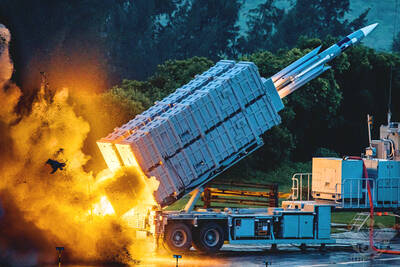
UNDER DISCUSSION: The combatant command would integrate fast attack boat and anti-ship missile groups to defend waters closest to the coastline, a source said The military could establish a new combatant command as early as 2026, which would be tasked with defending Taiwan’s territorial waters 24 nautical miles (44.4km) from the nation’s coastline, a source familiar with the matter said yesterday. The new command, which would fall under the Naval Command Headquarters, would be led by a vice admiral and integrate existing fast attack boat and anti-ship missile groups, along with the Naval Maritime Surveillance and Reconnaissance Command, said the source, who asked to remain anonymous. It could be launched by 2026, but details are being discussed and no final timetable has been announced, the source


 RSS
RSS