


With speculation rife over how the anti-Chen campaign will play out in the legislature when it begins its session today, some opposition lawmakers persisted yesterday in their push for a "no confidence" vote to oust the premier.
Premier Su Tseng-chang (蘇貞昌) yesterday said that if the Chinese Nationalist Party (KMT) were to initiate a no-confidence vote against him, he would respect the move because it is the party's constitutional right to do so.
However, he hoped that opposition parties would put national stability before partisan interest. He said that he had been determined to do a good job since he took office in February.
Su made the remarks after addressing the Democratic Progressive Party's (DPP) caucus meeting yesterday afternoon. The meeting was held to discuss the government's priority bills for the legislative session which opens today.
Su said that he was happy that the two demonstrations -- the "siege" staged by anti-Chen Shui-bian (
When asked whether he considered the proposal by some KMT legislators to bring down the government an "unexpected calamity," he said that any man in his position was bound to encounter such events.
Commenting on the anti-Chen campaign, Su called on the public to follow constitutional procedures if they wanted to see a duly-elected president step down before his term expired.
DPP resistance
Meanwhile, DPP legislators expressed their opposition to a no-confidence vote.
Caucus whip Chen Chin-jun (
"We would then recommend that the president dissolve the legislature and let the public decide who is fit to represent them," he said.
Chen Chin-jun said that the KMT's plan to kill two birds with one stone, thinking it could both bring down the government and win the snap elections that would be called if the legislature were dissolved.
Describing the Sept. 15 "siege" as a "new wave of social movement," Chen Chin-jun called on his party to take the anti-Chen protest seriously.
"We must reflect on our behavior and listen to their voice," he said. "We might please our core supporters by saying that the anti-Chen campaign was incited by the pan-blue camp, that they are China's spokespeople and that they are pawns used by China to attack the Taiwanese people -- but then what?"
DPP caucus whip Yeh Yi-ching (葉宜津) said that her caucus respected legal behavior, but that a no-confidence vote in the premier would create political instability.
"I believe the public doesn't want to see political unrest," she said.
Because Chen won re-election in 2004 by a razor-thin margin, Yeh said that she wondered whether it was necessary to increase the threshold for victory in presidential elections to avoid political confrontation.
DPP Chairman Yu Shyi-kun, who also attended yesterday's caucus meeting, said that Legislative Speaker Wang Jin-pyng (
Yu described the three months since the legislature voted down a KMT-initiated recall vote as the party's "most difficult days."
He described the anti-Chen campaign as "political strife" and "fighting over national identification" rather than a "civil movement," as was described by Chen Chin-jun.
Meanwhile, KMT officials yesterday insisted that the party had not decided to pursue the no-confidence motion initiated by KMT Legislator Chu Chun-hsiao (朱俊曉).
Asked yesterday about the proposal, Wang Jin-pyng said: "It's not the party's policy yet."
"A motion to topple the Cabinet was proposed by legislators of the Non-Partisan Solidarity Union long ago. Now, even though some KMT legislators have come up with the motion, we don't know yet whether it would become the party's policy," Wang said.
Wang told reporters that he and KMT Chairman Ma Ying-jeou (
"If the president decided to disband the legislature after the legislature passed a vote of no-confidence, we would become a country without a legislature," Wang said, referring to the lack of a legislative redistricting plan.
According to the latest round of constitutional amendments more than a year ago, a new system must be adopted for the next legislative election, whenever it is held, employing new districts. However, a re-districting plan has not been approved.
Under the new system, the number of legislative seats will be slashed from 225 to 113 and a "single member, two vote" method -- with one vote cast for a candidate and one for a party -- will replace the current districts.
Wang said that he and Ma believed that the president would dissolve the legislature if his premier was ousted through a no-confidence vote, which would necessitate a new election in the legislature.
Ma yesterday restated his stance on the matter, saying that the party would only decide what to do after reaching consensus within the party.
RETHINK? The defense ministry and Navy Command Headquarters could take over the indigenous submarine project and change its production timeline, a source said Admiral Huang Shu-kuang’s (黃曙光) resignation as head of the Indigenous Submarine Program and as a member of the National Security Council could affect the production of submarines, a source said yesterday. Huang in a statement last night said he had decided to resign due to national security concerns while expressing the hope that it would put a stop to political wrangling that only undermines the advancement of the nation’s defense capabilities. Taiwan People’s Party Legislator Vivian Huang (黃珊珊) yesterday said that the admiral, her older brother, felt it was time for him to step down and that he had completed what he

Taiwan has experienced its most significant improvement in the QS World University Rankings by Subject, data provided on Sunday by international higher education analyst Quacquarelli Symonds (QS) showed. Compared with last year’s edition of the rankings, which measure academic excellence and influence, Taiwanese universities made great improvements in the H Index metric, which evaluates research productivity and its impact, with a notable 30 percent increase overall, QS said. Taiwanese universities also made notable progress in the Citations per Paper metric, which measures the impact of research, achieving a 13 percent increase. Taiwanese universities gained 10 percent in Academic Reputation, but declined 18 percent

UNDER DISCUSSION: The combatant command would integrate fast attack boat and anti-ship missile groups to defend waters closest to the coastline, a source said The military could establish a new combatant command as early as 2026, which would be tasked with defending Taiwan’s territorial waters 24 nautical miles (44.4km) from the nation’s coastline, a source familiar with the matter said yesterday. The new command, which would fall under the Naval Command Headquarters, would be led by a vice admiral and integrate existing fast attack boat and anti-ship missile groups, along with the Naval Maritime Surveillance and Reconnaissance Command, said the source, who asked to remain anonymous. It could be launched by 2026, but details are being discussed and no final timetable has been announced, the source
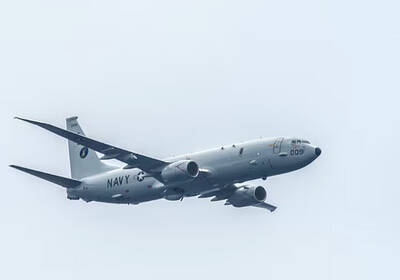
CHINA REACTS: The patrol and reconnaissance plane ‘transited the Taiwan Strait in international airspace,’ the 7th Fleet said, while Taipei said it saw nothing unusual The US 7th Fleet yesterday said that a US Navy P-8A Poseidon flew through the Taiwan Strait, a day after US and Chinese defense heads held their first talks since November 2022 in an effort to reduce regional tensions. The patrol and reconnaissance plane “transited the Taiwan Strait in international airspace,” the 7th Fleet said in a news release. “By operating within the Taiwan Strait in accordance with international law, the United States upholds the navigational rights and freedoms of all nations.” In a separate statement, the Ministry of National Defense said that it monitored nearby waters and airspace as the aircraft


 RSS
RSS