


Iran yesterday threatened to trash an international proposal over its nuclear program if the UN Security Council passes a resolution demanding that Tehran freeze sensitive uranium enrichment.
Foreign ministry spokesman Hamid Reza Asefi said Tehran could "revise" its policies -- implicitly warning that future access for UN inspectors could end -- and said the proposed UN resolution would "worsen the crisis in the region."
"By putting pressure [on] and trying to intimidate Iran, no country will achieve anything. On the contrary, the situation will worsen," Asefi said.
"If tomorrow they pass a resolution against Iran, the package will not be on the agenda any- more," he said of an international proposal offering incentives to Iran in return for a suspension of uranium enrichment.
The proposal was drawn up by the five permanent UN Security Council members plus Germany.
With Iran seen to be dragging its feet before giving an answer -- and saying it will take until Aug. 22 to reply -- the council is now poised to pass a resolution giving Tehran until Aug. 31 to stop enriching uranium.
Enrichment work is at the focus of fears the Islamic republic could acquire nuclear weapons, although Iran insists it wants to enrich uranium only to the levels needed to make reactor fuel.
"The Europeans must be aware that we will revise our policies and react accordingly," Asefi said. "Issuing this resolution will worsen the crisis in the region."
When asked to elaborate on what specific measures Iran might take, Asefi replied: "They know what I am talking about."
Iran has already warned it could halt cooperation with inspectors from the UN's International Atomic Energy Agency (IAEA) and even quit the nuclear Non-Proliferation Treaty.
A text of the proposed resolution was distributed to the 15 council nations on Friday, and US Ambassador John Bolton said a vote could be held early this week.
If Iran continues enriching uranium, "the next step will be the consideration of sanctions in the Security Council, and it would be our intention to move forcefully to get those sanctions adopted," Bolton said.
The first stage would be political and economic sanctions, diplomats stressed, pointing to a vote within a few days.
"My hope is that we will be able to adopt it by Monday," said French Ambassador Jean-Marc de La Sabliere, whose country holds the council presidency this month.
Moscow's ambassador, Vitaly Churkin, stressed the new resolution would not threaten sanctions and that it was "an invitation to dialogue" with Iran.
But he also acknowledged that if Iran did not respond, the council would then consider "measures of pressure, like sanctions" under Article 41 of Chapter Seven of the UN Charter. Article 41 does not allow the use of force.
The draft resolution calls on Iran to follow IAEA directives "without further delay" and highlights the three years the IAEA has spent trying to get information about Iran's nuclear program. It calls on the IAEA's director to report by Aug. 31 on whether Iran has complied.
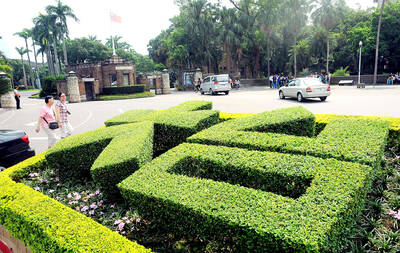
Taiwan has experienced its most significant improvement in the QS World University Rankings by Subject, data provided on Sunday by international higher education analyst Quacquarelli Symonds (QS) showed. Compared with last year’s edition of the rankings, which measure academic excellence and influence, Taiwanese universities made great improvements in the H Index metric, which evaluates research productivity and its impact, with a notable 30 percent increase overall, QS said. Taiwanese universities also made notable progress in the Citations per Paper metric, which measures the impact of research, achieving a 13 percent increase. Taiwanese universities gained 10 percent in Academic Reputation, but declined 18 percent

Chinese President Xi Jinping (習近平) yesterday met with former president Ma Ying-jeou (馬英九) at the Great Hall of the People in Beijing, with Xi’s opening statement once more emphasizing that people on both sides of the Taiwan Strait are Chinese and that foreign intervention cannot change their inevitable unification. Xi said that 5,000 years of history of zhonghua minzu (中華民族, ethnic Chinese group) have seen their ancestors move to Taiwan to establish new lives, while also documenting them fighting side-by-side against foreign forces and finally freeing Taiwan. “Both sides are Chinese,” and there are no issues that cannot be worked through, he
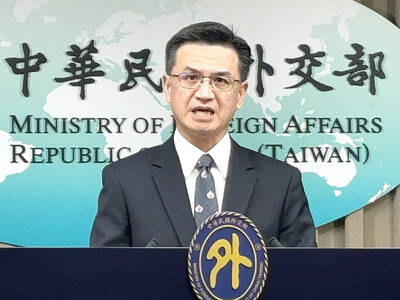
BULLY TACTICS: Beijing has continued its incursions into Taiwan’s airspace even as Xi Jinping talked about Taiwan being part of the Chinese family and nation China should stop its coercion of Taiwan and respect mainstream public opinion in Taiwan about sovereignty if its expression of goodwill is genuine, the Ministry of Foreign Affairs (MOFA) said yesterday. Ministry spokesman Jeff Liu (劉永健) made the comment in response to media queries about a meeting between former president Ma Ying-jeou (馬英九) and Chinese President Xi Jinping (習近平) the previous day. Ma voiced support for the so-called “1992 consensus,” while Xi said that although the two sides of the Taiwan Strait have “different systems,” this does not change the fact that they are “part of the same country,” and that “external
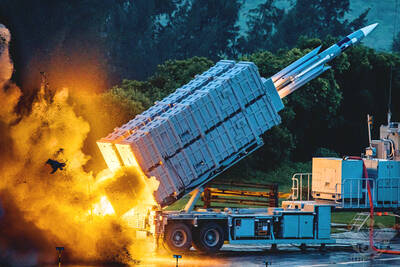
UNDER DISCUSSION: The combatant command would integrate fast attack boat and anti-ship missile groups to defend waters closest to the coastline, a source said The military could establish a new combatant command as early as 2026, which would be tasked with defending Taiwan’s territorial waters 24 nautical miles (44.4km) from the nation’s coastline, a source familiar with the matter said yesterday. The new command, which would fall under the Naval Command Headquarters, would be led by a vice admiral and integrate existing fast attack boat and anti-ship missile groups, along with the Naval Maritime Surveillance and Reconnaissance Command, said the source, who asked to remain anonymous. It could be launched by 2026, but details are being discussed and no final timetable has been announced, the source


 RSS
RSS