


Premier Su Tseng-chang (蘇貞昌) yesterday said that the government would study the conclusions of the meeting between former Chinese Nationalist Party (KMT) chairman Lien Chan (連戰) and Chinese President Hu Jintao (胡錦濤) and look for any possible benefits for Taiwan.
While President Chen Shui-bian (陳水扁) and Vice President Annette Lu (呂秀蓮) were critical of the Lien-Hu meeting, Su's attitude yesterday was seen as a possible solution to the legislative stalemate between the pan-green and the pan-blue camps.
"The premier emphasized that Lien and Hu's meeting was non-official, so whatever conclusions it came to would not be legally binding on the government. But we will view the `conclusions' as suggestions," said Government Information Office Minister and Cabinet Spokesman Cheng Wen-tsang (鄭文燦).
`Seriously consider'
"The government will seriously consider any suggestions that we view as being good for the people," he said.
The spokesman made the remarks during the weekly post-Cabinet meeting press conference yesterday morning.
Talking about whether the government would lift more restrictions on doing business with China and allow more Chinese tourists, Cheng quoted Su as saying that the main concern for the government was Taiwan's capacity to handle so many Chinese tourists.
"A hotel manager needs to consider whether all his rooms are booked and whether his employees would be able to maintain a good level of service," said Cheng.
Su also requested that all government officials mark "ROC (Taiwan)" on all products and documents which are given to foreign allies as aid in the future.
Rrecognize Taiwan
"We want to let the world know and recognize the kindness of Taiwanese people and their willingness to devote themselves to international society. We want our voices to be heard. We do not want our efforts to be buried," Cheng said.
He said that the premier made the request during yesterday's Cabinet meeting, after he heard a briefing from the Ministry of Foreign Affairs about Taiwan's plans to help Guatemala preserve and protect their historical relics. Cheng quoted Su as saying that this request has nothing to do with promoting the idea of Taiwanese independence.
"It is only a friendly reminder to our friends that the `Republic of China is Taiwan, and not China,'" he said.
Cheng said that Su was very impressed by Taiwan's diplomats and other technicians and farmers who are currently far away from home dedicating themselves to Taiwan's cause and helping Taiwan's foreign allies. But he said he was very sad when foreigners confused China with Taiwan and thanked China for the help, when the aid had actually come from Taiwan.
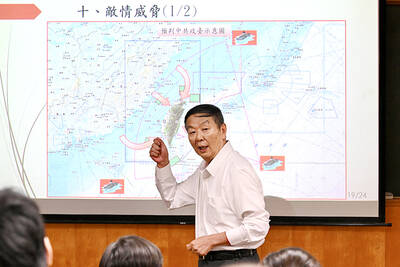
RETHINK? The defense ministry and Navy Command Headquarters could take over the indigenous submarine project and change its production timeline, a source said Admiral Huang Shu-kuang’s (黃曙光) resignation as head of the Indigenous Submarine Program and as a member of the National Security Council could affect the production of submarines, a source said yesterday. Huang in a statement last night said he had decided to resign due to national security concerns while expressing the hope that it would put a stop to political wrangling that only undermines the advancement of the nation’s defense capabilities. Taiwan People’s Party Legislator Vivian Huang (黃珊珊) yesterday said that the admiral, her older brother, felt it was time for him to step down and that he had completed what he
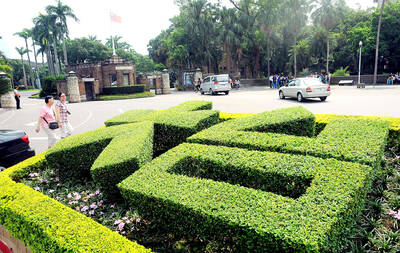
Taiwan has experienced its most significant improvement in the QS World University Rankings by Subject, data provided on Sunday by international higher education analyst Quacquarelli Symonds (QS) showed. Compared with last year’s edition of the rankings, which measure academic excellence and influence, Taiwanese universities made great improvements in the H Index metric, which evaluates research productivity and its impact, with a notable 30 percent increase overall, QS said. Taiwanese universities also made notable progress in the Citations per Paper metric, which measures the impact of research, achieving a 13 percent increase. Taiwanese universities gained 10 percent in Academic Reputation, but declined 18 percent

UNDER DISCUSSION: The combatant command would integrate fast attack boat and anti-ship missile groups to defend waters closest to the coastline, a source said The military could establish a new combatant command as early as 2026, which would be tasked with defending Taiwan’s territorial waters 24 nautical miles (44.4km) from the nation’s coastline, a source familiar with the matter said yesterday. The new command, which would fall under the Naval Command Headquarters, would be led by a vice admiral and integrate existing fast attack boat and anti-ship missile groups, along with the Naval Maritime Surveillance and Reconnaissance Command, said the source, who asked to remain anonymous. It could be launched by 2026, but details are being discussed and no final timetable has been announced, the source
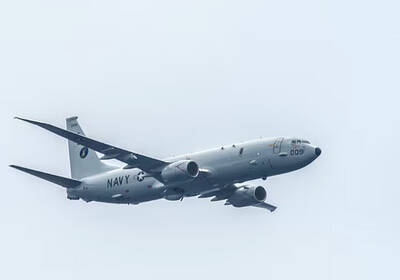
CHINA REACTS: The patrol and reconnaissance plane ‘transited the Taiwan Strait in international airspace,’ the 7th Fleet said, while Taipei said it saw nothing unusual The US 7th Fleet yesterday said that a US Navy P-8A Poseidon flew through the Taiwan Strait, a day after US and Chinese defense heads held their first talks since November 2022 in an effort to reduce regional tensions. The patrol and reconnaissance plane “transited the Taiwan Strait in international airspace,” the 7th Fleet said in a news release. “By operating within the Taiwan Strait in accordance with international law, the United States upholds the navigational rights and freedoms of all nations.” In a separate statement, the Ministry of National Defense said that it monitored nearby waters and airspace as the aircraft


 RSS
RSS