


Iran faced growing international pressure over its nuclear plans yesterday as hopes faded of striking a deal with Russia that would ease Western suspicions that it is trying to build an atomic bomb.
Russian and Iranian negotiators discussed for two days a Moscow proposal to enrich uranium for Tehran, seen as one of a dwindling number of diplomatic options for defusing the nuclear row before Western governments seek UN sanctions.
The top Iranian negotiator at the talks described the outcome of the two-day meeting as "positive" yesterday as he left for Tehran, the Interfax news agency reported.
"I assess our negotiations as positive. There are elements in these negotiations which give us grounds for hope that we will reach an agreement," Interfax quoted Ali Hosseinitash as saying.
Hosseinitash, deputy secretary of the Supreme National Security Council, did not elaborate. He said that the talks had covered a wider range of issues than the Russian proposal, focusing in particular on the March 6 meeting of the UN nuclear watchdog, the International Atomic Energy Agency.
Under Moscow's plan, Iran's enrichment activities would take place on Russian soil to ensure no uranium is diverted for nuclear weapons. Enrichment is a process that can produce either fuel for a nuclear reactor or material for a warhead.
However, Hosseinitash and other Iranian officials have rejected Russia's demands that Iran restore a freeze on uranium enrichment it broke last month and made clear that Tehran did not intend to renounce its right to produce nuclear fuel domestically.
Meanwhile, US officials suggest Iran is discussing the Russian plan merely to gain time, a view shared by many Russian commentators.
"Their aim is to haggle, to put off as long as possible the hour when sanctions from the international community become unavoidable," the daily Izvestia wrote.
Tehran has said it will consider a joint venture with Russia and possibly others to enrich uranium for power stations, but insists on a right to pursue enrichment at home as well. It says it wants nuclear fuel only to produce electricity, not bombs.
If the dispute is not resolved, Iran may face action by the UN Security Council, which can impose diplomatic or economic sanctions.
German Foreign Minister Frank-Walter Steinmeier made clear the patience of Berlin, which has so far taken a more cautious line than Washington, was not endless.
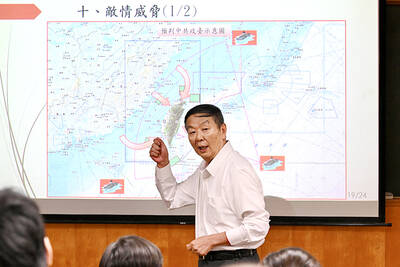
RETHINK? The defense ministry and Navy Command Headquarters could take over the indigenous submarine project and change its production timeline, a source said Admiral Huang Shu-kuang’s (黃曙光) resignation as head of the Indigenous Submarine Program and as a member of the National Security Council could affect the production of submarines, a source said yesterday. Huang in a statement last night said he had decided to resign due to national security concerns while expressing the hope that it would put a stop to political wrangling that only undermines the advancement of the nation’s defense capabilities. Taiwan People’s Party Legislator Vivian Huang (黃珊珊) yesterday said that the admiral, her older brother, felt it was time for him to step down and that he had completed what he

Taiwan has experienced its most significant improvement in the QS World University Rankings by Subject, data provided on Sunday by international higher education analyst Quacquarelli Symonds (QS) showed. Compared with last year’s edition of the rankings, which measure academic excellence and influence, Taiwanese universities made great improvements in the H Index metric, which evaluates research productivity and its impact, with a notable 30 percent increase overall, QS said. Taiwanese universities also made notable progress in the Citations per Paper metric, which measures the impact of research, achieving a 13 percent increase. Taiwanese universities gained 10 percent in Academic Reputation, but declined 18 percent
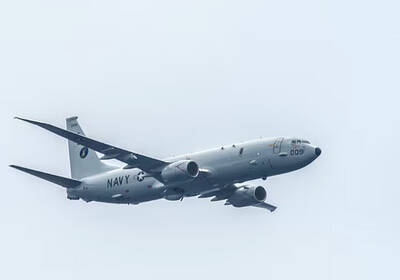
CHINA REACTS: The patrol and reconnaissance plane ‘transited the Taiwan Strait in international airspace,’ the 7th Fleet said, while Taipei said it saw nothing unusual The US 7th Fleet yesterday said that a US Navy P-8A Poseidon flew through the Taiwan Strait, a day after US and Chinese defense heads held their first talks since November 2022 in an effort to reduce regional tensions. The patrol and reconnaissance plane “transited the Taiwan Strait in international airspace,” the 7th Fleet said in a news release. “By operating within the Taiwan Strait in accordance with international law, the United States upholds the navigational rights and freedoms of all nations.” In a separate statement, the Ministry of National Defense said that it monitored nearby waters and airspace as the aircraft
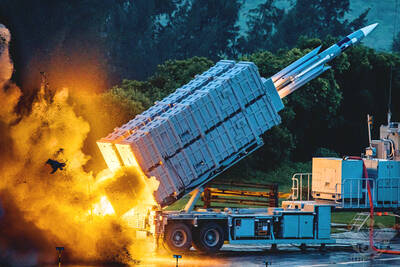
UNDER DISCUSSION: The combatant command would integrate fast attack boat and anti-ship missile groups to defend waters closest to the coastline, a source said The military could establish a new combatant command as early as 2026, which would be tasked with defending Taiwan’s territorial waters 24 nautical miles (44.4km) from the nation’s coastline, a source familiar with the matter said yesterday. The new command, which would fall under the Naval Command Headquarters, would be led by a vice admiral and integrate existing fast attack boat and anti-ship missile groups, along with the Naval Maritime Surveillance and Reconnaissance Command, said the source, who asked to remain anonymous. It could be launched by 2026, but details are being discussed and no final timetable has been announced, the source


 RSS
RSS