


South Korean researcher Hwang Woo-suk apologized yesterday and resigned from a university after the school announced that he fabricated results in stem-cell research that had raised hopes of new cures for hard-to-treat diseases.
A university panel, releasing initial findings of a probe, accused Hwang of damaging the scientific community with his deception, while South Korea's government rued the scandal surrounding the country's star scientist and said it may pull its funding for his research.
"I sincerely apologize to the people for creating a shock and disappointment," Hwang told reporters as he was leaving his office at Seoul National University, considered the country's top institution of higher learning.
"With an apologetic heart ... I step down as professor," he said.
However, Hwang still maintained that he had produced the technology to create patient-matched stem cells as he claimed to do in a May article in the journal Science.
"I emphasize that patient-specific stem cells belong to South Korea and you are going to see this," said Hwang, a veterinarian.
Earlier yesterday, a panel of Seoul National University experts said Hwang had faked results of at least nine of 11 stem cell lines he claimed to have created in the May paper -- the first confirmation of allegations that have cast a shadow over all his purported breakthroughs in cloning and stem-cell technology.
"This kind of error is a grave act that damages the foundation of science," the panel said.
The South Korean government, which had strongly supported Hwang and designated him the country's first "top scientist," said yesterday it was "miserable" over the reported results of the investigation and will start its own probe over ethics breaches.
recovery impossible
Choi Seong-sik, vice minister of science and technology, said it's impossible to recover money already spent on Hwang, a total 40.5 billion won (US$39.9 million) for research and facilities since 1998. But his ministry, which admitted errors in its handling of Hwang's projects, will look at ending other funding and withdraw the "top scientist" designation.
Still, the government said it would support other research.
The university panel said yesterday it found that "the laboratory data for 11 stem cell lines reported in the paper were all data made using two stem cell lines in total."
To create fake DNA results purporting to show a match, Hwang's team split cells from one patient into two test tubes for the analysis -- rather than actually match cloned cells to a patient's original cells, the university said.
``Based on these facts, the data in the Science paper cannot be some error from a simple mistake, but can only be seen as a deliberate fabrication to make it look like 11 stem-cell lines using results from just two,'' the panel said.
``There is no way but that Professor Hwang has been involved,'' the university's dean of research affairs, Roe Jung-hye told a news conference, adding that Hwang ``somewhat admits to this.''
The panel said DNA tests expected to be completed within a few days would confirm if the remaining two stem-cell lines it had found were actually successfully cloned from a patient.
The earlier claims of patient-matched stem cells were seen by scientists worldwide as a key step to creating tailored therapies for hard-to-treat diseases, such as paralysis or diabetes.
In light of the revelations, the panel said it would now also investigate Hwang's other landmark papers -- which include another Science article last year on the world's first cloned human embryos, and an August paper in the journal Nature on the first-ever cloned dog. The journals already are reviewing all the work.
Professor Alan Trounson, a top stem-cell researcher at Australia's Monash University, said the scandal showed scientists were rigorously checking one another's results. But he predicted the fallout would also stain any other scientists linked to Hwang's work, also saying that the South Korean's claim to have cloned a dog was ``very much in doubt now.''
South Koreans reacted with sorrow, shock and shame as the scientist they once hailed as a national hero resigned from his post.
"This is our shame," said Oh Chang-hwan, a senior consultant at SK Securities.
negative impact
"This case will have a negative impact on the confidence of Korean science. More importantly, it will deprive the disabled of their hopes that they may be able to recover some day with the help of Professor Hwang's breakthroughs," Oh said.
Hwang's research was billed as fulfilling one of the basic promises of embryonic stem-cell science -- growing patient-specific tissue that could be transplanted to repair damaged body parts.
South Korea even commissioned stamps highlighting the potential of Hwang's research that showed a person rising from a wheelchair, standing and embracing a loved one.
"The disabled who had hopes for Dr. Hwang's research will be unhappy with the results," said Kim Ji-min, 28, an office worker.
Also see story:
Sooner or later, the dilemmas of embryo research will hit home
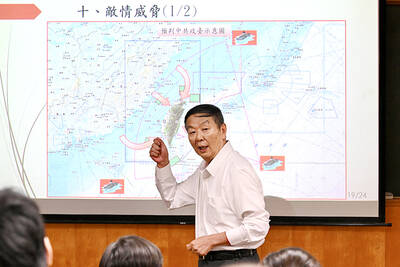
RETHINK? The defense ministry and Navy Command Headquarters could take over the indigenous submarine project and change its production timeline, a source said Admiral Huang Shu-kuang’s (黃曙光) resignation as head of the Indigenous Submarine Program and as a member of the National Security Council could affect the production of submarines, a source said yesterday. Huang in a statement last night said he had decided to resign due to national security concerns while expressing the hope that it would put a stop to political wrangling that only undermines the advancement of the nation’s defense capabilities. Taiwan People’s Party Legislator Vivian Huang (黃珊珊) yesterday said that the admiral, her older brother, felt it was time for him to step down and that he had completed what he
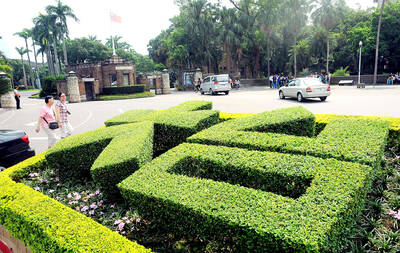
Taiwan has experienced its most significant improvement in the QS World University Rankings by Subject, data provided on Sunday by international higher education analyst Quacquarelli Symonds (QS) showed. Compared with last year’s edition of the rankings, which measure academic excellence and influence, Taiwanese universities made great improvements in the H Index metric, which evaluates research productivity and its impact, with a notable 30 percent increase overall, QS said. Taiwanese universities also made notable progress in the Citations per Paper metric, which measures the impact of research, achieving a 13 percent increase. Taiwanese universities gained 10 percent in Academic Reputation, but declined 18 percent
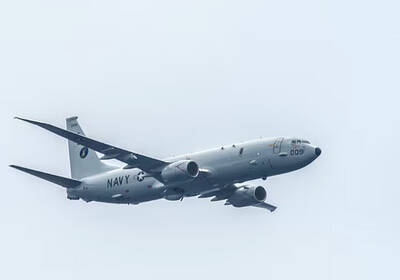
CHINA REACTS: The patrol and reconnaissance plane ‘transited the Taiwan Strait in international airspace,’ the 7th Fleet said, while Taipei said it saw nothing unusual The US 7th Fleet yesterday said that a US Navy P-8A Poseidon flew through the Taiwan Strait, a day after US and Chinese defense heads held their first talks since November 2022 in an effort to reduce regional tensions. The patrol and reconnaissance plane “transited the Taiwan Strait in international airspace,” the 7th Fleet said in a news release. “By operating within the Taiwan Strait in accordance with international law, the United States upholds the navigational rights and freedoms of all nations.” In a separate statement, the Ministry of National Defense said that it monitored nearby waters and airspace as the aircraft
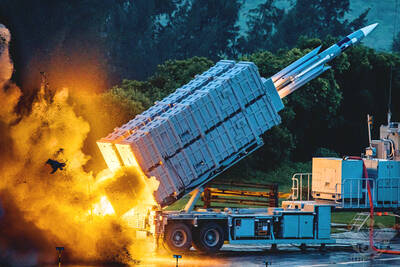
UNDER DISCUSSION: The combatant command would integrate fast attack boat and anti-ship missile groups to defend waters closest to the coastline, a source said The military could establish a new combatant command as early as 2026, which would be tasked with defending Taiwan’s territorial waters 24 nautical miles (44.4km) from the nation’s coastline, a source familiar with the matter said yesterday. The new command, which would fall under the Naval Command Headquarters, would be led by a vice admiral and integrate existing fast attack boat and anti-ship missile groups, along with the Naval Maritime Surveillance and Reconnaissance Command, said the source, who asked to remain anonymous. It could be launched by 2026, but details are being discussed and no final timetable has been announced, the source


 RSS
RSS