


Chinese officials worked feverishly yesterday to ensure safe water supplies to a city in southern China threatened by a toxic slick, the second major water pollution crisis in recent weeks.
The incident follows a chemical spill in a river in northeast China last month that left millions without water for four days, highlighting the seriousness of water pollution in China and raising questions about Beijing's ability to handle its rapid pace of development.
The latest toxic slick was caused by an excessive discharge of cadmium from a state-owned smelting works in the Beijiang river, a major source of drinking water for cities in the northern part of Guangdong Province, Xinhua news agency said.
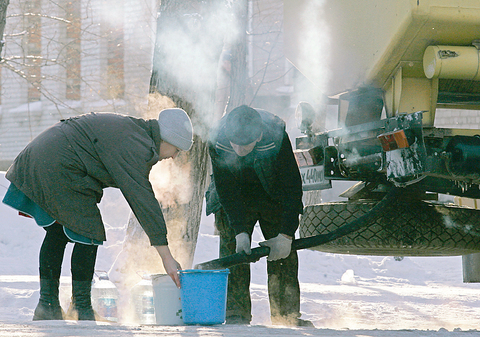
PHOTO: AP
Waste discharges increased the volume of cadmium in the river at Shaoguan to nearly 10 times above safety levels, "seriously endangering" the safety of water downstream, Xinhua cited the local government as saying.
It did not say when the discharge occurred, but provincial environmental officials were sent to the area on Sunday, Xinhua said.
Officials in Yingde, a city with a population of one million some 90km downstream from Shaoguan, said yesterday they had lowered a dam gate to block the slick from flowing to the part of the river supplying water to Yingde's urban areas.
They were now working around the clock to build a pipeline to divert clean water from a local reservoir, to provide potable water to the 100,000 residents there.
"We've worked the whole night last night and expect to complete it in 48 hours," said an official from Yingde's Water Resources Bureau.
Cadmium is a chemical used in protective plating. Serious exposure can cause diarrhea, stomach pains, severe vomiting, bone fractures, reproductive failure and damage to the central nervous system and the immune system.
The Guangdong provincial government has decided to release water from a reservoir in the upper reaches of the river to dilute the pollution so that the water will be safe enough to drink, Xinhua quoted experts as saying.
Water carriers, including 15 fire engines, were also ferrying in drinking water, it said.
A Yingde official said the city was confident it would not need to cut off the water supply.
"There are three rivers flowing to the city. Even if Beijiang's water is unsafe, we can use water from the other rivers," the official said.
In related news, residents of Khabarovsk anxiously counted the hours yesterday as a toxic benzene slick approached the Russian city's waterways, pinning their hopes on filters and makeshift dams set up to protect the 600,000 residents from poisoning.
Chinese workers assisted by Russian helicopters worked feverishly through the night to complete work on a makeshift dam to prevent the contaminated water flowing down the Amur River from entering a channel that feeds municipal water treatment facilities.
The dam, one of two erected upstream from Khabarovsk, was completed in the early hours of yesterday after old passenger buses and railway cars filled with sand were shipped to the area and dropped into the channel to seal off the Kazakevich channel, regional officials said.
"By midday, construction of the dam on the Kazakevich channel was fully completed," the regional office of the federal emergency situations ministry said in a statement.
Official accounts of the benzene concentration in the waters of the Amur upstream from Khabarovsk and of exactly when the poison slick could be expected to reach the city, varied, but most predicted the slick would hit the city late yesterday or early today.
The Amur River splits into a maze of small branches that flow through or near Khabarovsk before rejoining again downstream from the city and officials said the impact of the spill on the city could depend on currents and concentrations of chemicals in waters that entered the city.
The emergency situations ministry said the water was being turned off briefly in an area south of Khabarovsk for a technical check, but officials said they had no plans to shut down water supplies in Khabarovsk.
"The latest tests show no sign" of toxicity in waters anywhere in the city and any benzene that does enter urban waterways "can be handled by the charcoal filters that we have in place," a spokesman for the regional emergency situations ministry office said.
The spill was caused by an explosion at a chemical factory in China on Nov. 13 that resulted in 90 tonnes of benzene, a known carcinogen, being dumped in the Songhua River, a tributary of the Amur.
also see story:
China's growth harms people and rivers, experts say
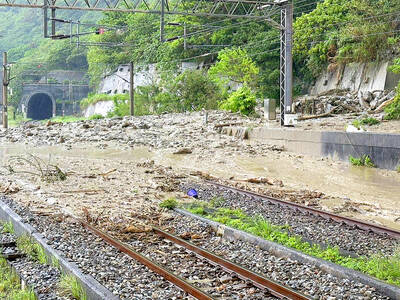
ROLLER-COASTER RIDE: More than five earthquakes ranging from magnitude 4.4 to 5.5 on the Richter scale shook eastern Taiwan in rapid succession yesterday afternoon Back-to-back weather fronts are forecast to hit Taiwan this week, resulting in rain across the nation in the coming days, the Central Weather Administration said yesterday, as it also warned residents in mountainous regions to be wary of landslides and rockfalls. As the first front approached, sporadic rainfall began in central and northern parts of Taiwan yesterday, the agency said, adding that rain is forecast to intensify in those regions today, while brief showers would also affect other parts of the nation. A second weather system is forecast to arrive on Thursday, bringing additional rain to the whole nation until Sunday, it

CONDITIONAL: The PRC imposes secret requirements that the funding it provides cannot be spent in states with diplomatic relations with Taiwan, Emma Reilly said China has been bribing UN officials to obtain “special benefits” and to block funding from countries that have diplomatic ties with Taiwan, a former UN employee told the British House of Commons on Tuesday. At a House of Commons Foreign Affairs Committee hearing into “international relations within the multilateral system,” former Office of the UN High Commissioner for Human Rights (OHCHR) employee Emma Reilly said in a written statement that “Beijing paid bribes to the two successive Presidents of the [UN] General Assembly” during the two-year negotiation of the Sustainable Development Goals. Another way China exercises influence within the UN Secretariat is
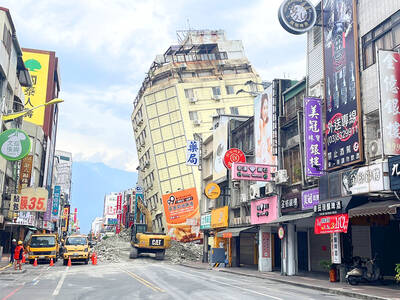
LANDSLIDES POSSIBLE: The agency advised the public to avoid visiting mountainous regions due to more expected aftershocks and rainfall from a series of weather fronts A series of earthquakes over the past few days were likely aftershocks of the April 3 earthquake in Hualien County, with further aftershocks to be expected for up to a year, the Central Weather Administration (CWA) said yesterday. Based on the nation’s experience after the quake on Sept. 21, 1999, more aftershocks are possible over the next six months to a year, the agency said. A total of 103 earthquakes of magnitude 4 on the local magnitude scale or higher hit Hualien County from 5:08pm on Monday to 10:27am yesterday, with 27 of them exceeding magnitude 5. They included two, of magnitude

Taiwan’s first drag queen to compete on the internationally acclaimed RuPaul’s Drag Race, Nymphia Wind (妮妃雅), was on Friday crowned the “Next Drag Superstar.” Dressed in a sparkling banana dress, Nymphia Wind swept onto the stage for the final, and stole the show. “Taiwan this is for you,” she said right after show host RuPaul announced her as the winner. “To those who feel like they don’t belong, just remember to live fearlessly and to live their truth,” she said on stage. One of the frontrunners for the past 15 episodes, the 28-year-old breezed through to the final after weeks of showcasing her unique


 RSS
RSS