


Trade negotiators failed to tackle the toughest issues in a draft agreement circulated at WTO talks yesterday, showing that only modest progress was being made as the meeting entered its final hours.
The text, which will likely be revised further before the six-day conference ends today, touches on a broad array of topics ranging from cutting agricultural subsidies to opening markets to services like insurance and banking. But it was riddled with loopholes and gaps that might be hard to close with little time left.
One of the most contentious issues was setting a deadline for ending government payments to domestic producers to promote exports. The draft suggested that such subsidies be eliminated by 2010 -- a date that will likely meet with opposition from the EU.
In a victory for West African cotton growers, the draft calls for rich nations to end export subsidies for cotton next year. This represents a US concession to demands by African and other developing countries that say government support for farmers in rich countries is driving many poor farmers out of work.
The text also showed progress on the issue of granting duty-free and quota-free access for goods from the world's poorest countries, suggesting that all developed nations would agree to the proposal, although the small print still leaves rich countries with some possible opt outs.
But in other vital areas, major gaps remained. In particular, there was no date by which members would agree to a precise method for reducing agricultural trade barriers, a key demand of poorer nations.
A dispute over how much wealthy nations should cut their tariffs and farm subsidies has been a major obstacle during the meeting, with many delegates pinning the blame on the EU's refusal to further open up its farming market to imports. The EU, however, says it has made ambitious offers to cut its trade barriers and wants developing nations to agree to lowering their tariffs on manufactured goods and services.
US Trade Representative Rob Portman said he didn't expect any big breakthroughs but said he was hopeful for some modest progress, including an agreement on an end date for export subsidies.
"The US had hoped for more in Hong Kong, but we came here with relatively low expectations because of the inability to resolve the agriculture subsidy issues," he said.
The Hong Kong meeting was originally meant to produce a detailed outline for a global free trade agreement by the end of next year. But the six-day meeting appeared doomed even before it began due to the impasse over agricultural trade.
A failure in Hong Kong could seriously undermine the WTO's credibility. Previous trade-liberalization talks in Cancun, Mexico, in 2003 and Seattle in 1999 collapsed in disarray. And the current Doha round of talks, started in 2001 in Qatar's capital, is already two years behind schedule.
also see stories:
HK police besieged in WTO clash
Editorial: Same old story at WTO summit
Catch up with the WTO chief on his blog
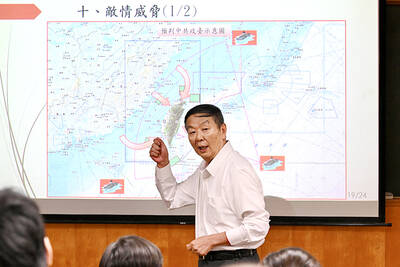
RETHINK? The defense ministry and Navy Command Headquarters could take over the indigenous submarine project and change its production timeline, a source said Admiral Huang Shu-kuang’s (黃曙光) resignation as head of the Indigenous Submarine Program and as a member of the National Security Council could affect the production of submarines, a source said yesterday. Huang in a statement last night said he had decided to resign due to national security concerns while expressing the hope that it would put a stop to political wrangling that only undermines the advancement of the nation’s defense capabilities. Taiwan People’s Party Legislator Vivian Huang (黃珊珊) yesterday said that the admiral, her older brother, felt it was time for him to step down and that he had completed what he
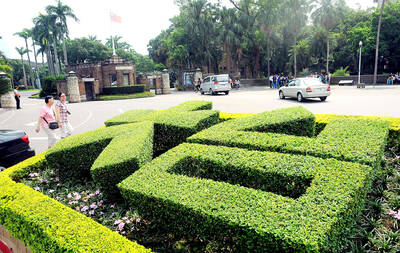
Taiwan has experienced its most significant improvement in the QS World University Rankings by Subject, data provided on Sunday by international higher education analyst Quacquarelli Symonds (QS) showed. Compared with last year’s edition of the rankings, which measure academic excellence and influence, Taiwanese universities made great improvements in the H Index metric, which evaluates research productivity and its impact, with a notable 30 percent increase overall, QS said. Taiwanese universities also made notable progress in the Citations per Paper metric, which measures the impact of research, achieving a 13 percent increase. Taiwanese universities gained 10 percent in Academic Reputation, but declined 18 percent
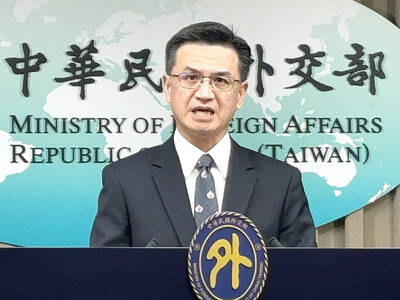
BULLY TACTICS: Beijing has continued its incursions into Taiwan’s airspace even as Xi Jinping talked about Taiwan being part of the Chinese family and nation China should stop its coercion of Taiwan and respect mainstream public opinion in Taiwan about sovereignty if its expression of goodwill is genuine, the Ministry of Foreign Affairs (MOFA) said yesterday. Ministry spokesman Jeff Liu (劉永健) made the comment in response to media queries about a meeting between former president Ma Ying-jeou (馬英九) and Chinese President Xi Jinping (習近平) the previous day. Ma voiced support for the so-called “1992 consensus,” while Xi said that although the two sides of the Taiwan Strait have “different systems,” this does not change the fact that they are “part of the same country,” and that “external
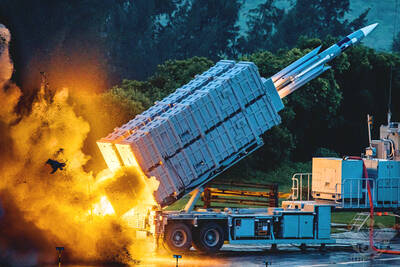
UNDER DISCUSSION: The combatant command would integrate fast attack boat and anti-ship missile groups to defend waters closest to the coastline, a source said The military could establish a new combatant command as early as 2026, which would be tasked with defending Taiwan’s territorial waters 24 nautical miles (44.4km) from the nation’s coastline, a source familiar with the matter said yesterday. The new command, which would fall under the Naval Command Headquarters, would be led by a vice admiral and integrate existing fast attack boat and anti-ship missile groups, along with the Naval Maritime Surveillance and Reconnaissance Command, said the source, who asked to remain anonymous. It could be launched by 2026, but details are being discussed and no final timetable has been announced, the source


 RSS
RSS