


Iran's dramatic shift to the right spells trouble for already tense nuclear negotiations, analysts and diplomats said, with the Islamic regime now expected to take a far more aggressive stance over its ambition to possess sensitive enrichment technology.
While the victory of Revolutionary Guards veteran Mahmood Ahmadinejad has come as a shock, equally damaging to the prospects of the kind of deal Britain, France and Germany are seeking is the humiliating defeat and uncertain future for moderate cleric Akbar Hashemi Rafsanjani.
"I think Rafsanjani wanted a deal. Up to now he has been allowed to handle the issue, and I believe he truly wanted to go down in history as the man who solved the problem with the United States," a senior Western diplomat told reporters. "He was using the nuclear issue as a bargaining chip. It would have taken a long time, but I think the chance was there."
But in the wake of such a stunning loss at the polls, Rafsanjani's ability to employ a moderating influence within the regime hierarchy -- and particularly with supreme leader Ayatollah Ali Khamenei -- looks in doubt.
"The right-wing now have total control. They are not necessarily the kind of people who want a deal," the diplomat said, speaking on condition that he not be named.
At the core of the nuclear issue is Iran's ambition to make its own nuclear fuel by enriching uranium, a process that can also be used to make the core of a nuclear bomb. Iran insists it only wants to generate electricity.
Iran has frozen its fuel cycle work and has entered into long-term talks with the EU-3, who are trying to convince Iran to abandon such activities altogether in a "Libya-style deal" that offers incentives in return.
Rafsanjani, an ex-president and savvy deal-maker, has stuck by Iran's suspension and by the talks -- as has his key loyalist and top negotiator Hassan Rowhani.
The president is only Iran's number-two on paper, and often lower than that in practice. But Ahmadinejad would bolster the ranks of right-wingers who argue that Iran has a "legitimate right" to press on with nuclear work and, more importantly, should do so regardless of the consequences.
French Foreign Minister Philippe Douste-Blazy said he hoped "the newly elected Iranian authorities will continue the work that we European diplomats began with the aim of suspending nuclear activities."
But Ahmadinejad has complained that "those who are handling the talks are terrified, and before they even sit down at the negotiating table they retreat 500 kilometers."
"A popular and fundamentalist government will quickly change that," he said last week, boasting that "no country, no matter how powerful they are, can attack Iran."
"We spend US$30 billion on imports, and this is an immense means of pressure in negotiations. It is we who should impose our conditions on them and not they on us," he said in a broadcast.
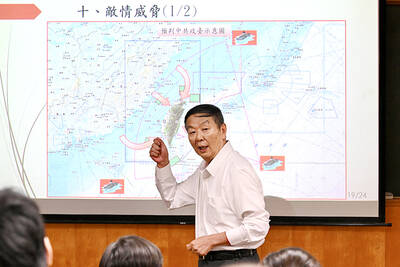
RETHINK? The defense ministry and Navy Command Headquarters could take over the indigenous submarine project and change its production timeline, a source said Admiral Huang Shu-kuang’s (黃曙光) resignation as head of the Indigenous Submarine Program and as a member of the National Security Council could affect the production of submarines, a source said yesterday. Huang in a statement last night said he had decided to resign due to national security concerns while expressing the hope that it would put a stop to political wrangling that only undermines the advancement of the nation’s defense capabilities. Taiwan People’s Party Legislator Vivian Huang (黃珊珊) yesterday said that the admiral, her older brother, felt it was time for him to step down and that he had completed what he
Taiwan has experienced its most significant improvement in the QS World University Rankings by Subject, data provided on Sunday by international higher education analyst Quacquarelli Symonds (QS) showed. Compared with last year’s edition of the rankings, which measure academic excellence and influence, Taiwanese universities made great improvements in the H Index metric, which evaluates research productivity and its impact, with a notable 30 percent increase overall, QS said. Taiwanese universities also made notable progress in the Citations per Paper metric, which measures the impact of research, achieving a 13 percent increase. Taiwanese universities gained 10 percent in Academic Reputation, but declined 18 percent
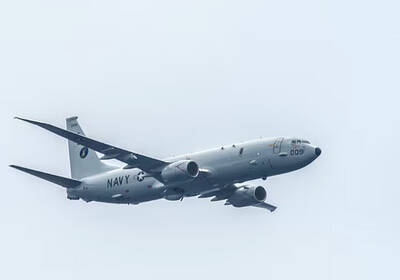
CHINA REACTS: The patrol and reconnaissance plane ‘transited the Taiwan Strait in international airspace,’ the 7th Fleet said, while Taipei said it saw nothing unusual The US 7th Fleet yesterday said that a US Navy P-8A Poseidon flew through the Taiwan Strait, a day after US and Chinese defense heads held their first talks since November 2022 in an effort to reduce regional tensions. The patrol and reconnaissance plane “transited the Taiwan Strait in international airspace,” the 7th Fleet said in a news release. “By operating within the Taiwan Strait in accordance with international law, the United States upholds the navigational rights and freedoms of all nations.” In a separate statement, the Ministry of National Defense said that it monitored nearby waters and airspace as the aircraft
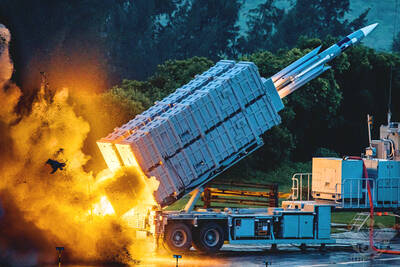
UNDER DISCUSSION: The combatant command would integrate fast attack boat and anti-ship missile groups to defend waters closest to the coastline, a source said The military could establish a new combatant command as early as 2026, which would be tasked with defending Taiwan’s territorial waters 24 nautical miles (44.4km) from the nation’s coastline, a source familiar with the matter said yesterday. The new command, which would fall under the Naval Command Headquarters, would be led by a vice admiral and integrate existing fast attack boat and anti-ship missile groups, along with the Naval Maritime Surveillance and Reconnaissance Command, said the source, who asked to remain anonymous. It could be launched by 2026, but details are being discussed and no final timetable has been announced, the source


 RSS
RSS