


Environmental group Greenpeace warned yesterday that illegal genetically engineered (GE) rice might contaminate China's exports to other countries.
China, the sixth-largest exporter of the world's most widely consumed staple crop, is reportedly about to decide whether to commercialize GE rice, but global food chains could be at risk even now, according to Greenpeace.
"We can't rule out the possibility that GE rice could contaminate rice exports from China," Sze Pang Cheung, a Greenpeace campaign manager, told a briefing in Beijing.
China is expected to ship 1.5 million tonnes of rice to foreign markets this year, up from one million tonnes last year, according to the UN Food and Agriculture Organization.
NO EVIDENCE
While there is no concrete evidence of GE rice in Chinese exports, there are two possible ways of contamination, he said.
"One, it will contaminate processed rice and go overseas, and the other possibility is that [it] could be used as ingredients for rice products or products which include rice ingredients," he said.
Japan, South Korea and the EU have already raised concerns with the Chinese government regarding the possible contamination of Chinese rice exports, according to Greenpeace.
The Greenpeace announcement came just weeks after the organization sounded the alarm over the proliferation of illegal GE rice in the central Chinese province of Hubei.
CONSUMPTION
Adding to the concerns, samples of the Hubei rice have now been found with traders in the huge city of Guangzhou, north of Hong Kong.
"They mainly sell to factories, canteens as well as fastfood chains. So we're sure people are consuming it unknowingly," Sze said.
"Immediate recall actions are needed if we are to prevent consumers from exposure to risks of untested GE rice," he said.
GE rice is popular with some Hubei farmers as it is engineered to produce an inbuilt pesticide, but the majority of them would not dream of eating it themselves, according to Greenpeace, citing findings from a field trip.
"Most of the farmers we met don't eat this rice. They would explain that it is because they are afraid that this rice will harm their health," Sze said.
While the precise impact on human health from the GE rice remains uncertain, experiments with mice have yielded an allergenic reaction, according to Sze.
"Based on this we believe there is a serious health concern there," he said.
Greenpeace yesterday also presented what it said was conclusive evidence of the source of the contamination.
COOL REACTION
"Some GE rice seeds that were sold in the markets were advertised as a product of New Technology Company of Huazhong Agriculture University," Sze said.
"This company is owned by the same university that is responsible for field trials of GE rice in Hubei."
Up to 29 tonnes of GE rice seeds have been sold in Hubei this year, and if no recall action is taken, the seeds could produce up to 14,500 tonnes of GE rice when harvested, according to Greenpeace estimates.
After its recent Hubei findings, which had been supported by laboratory findings in Germany, Greenpeace met a cool reaction from the Chinese authorities.
"The response was that China has its own inspection system, and they don't recognize testing results done by a laboratory in Germany," Sze said.
He said Greenpeace was "very disappointed" that the ministry of agriculture has not taken any kind of action against the illegal activities.
"We think it is unacceptable and irresponsible that they are not taking this issue seriously, because rice is the most important staple crop in China," he said.
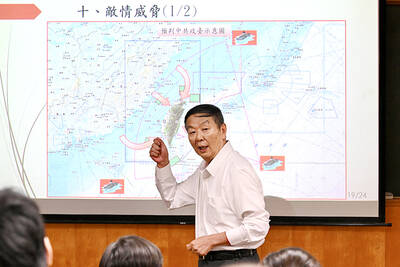
RETHINK? The defense ministry and Navy Command Headquarters could take over the indigenous submarine project and change its production timeline, a source said Admiral Huang Shu-kuang’s (黃曙光) resignation as head of the Indigenous Submarine Program and as a member of the National Security Council could affect the production of submarines, a source said yesterday. Huang in a statement last night said he had decided to resign due to national security concerns while expressing the hope that it would put a stop to political wrangling that only undermines the advancement of the nation’s defense capabilities. Taiwan People’s Party Legislator Vivian Huang (黃珊珊) yesterday said that the admiral, her older brother, felt it was time for him to step down and that he had completed what he
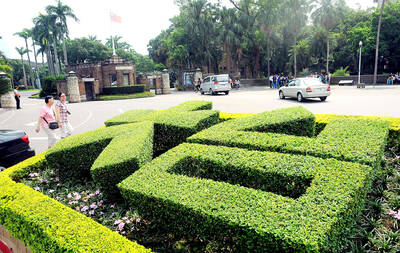
Taiwan has experienced its most significant improvement in the QS World University Rankings by Subject, data provided on Sunday by international higher education analyst Quacquarelli Symonds (QS) showed. Compared with last year’s edition of the rankings, which measure academic excellence and influence, Taiwanese universities made great improvements in the H Index metric, which evaluates research productivity and its impact, with a notable 30 percent increase overall, QS said. Taiwanese universities also made notable progress in the Citations per Paper metric, which measures the impact of research, achieving a 13 percent increase. Taiwanese universities gained 10 percent in Academic Reputation, but declined 18 percent
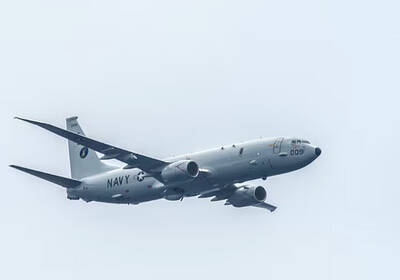
CHINA REACTS: The patrol and reconnaissance plane ‘transited the Taiwan Strait in international airspace,’ the 7th Fleet said, while Taipei said it saw nothing unusual The US 7th Fleet yesterday said that a US Navy P-8A Poseidon flew through the Taiwan Strait, a day after US and Chinese defense heads held their first talks since November 2022 in an effort to reduce regional tensions. The patrol and reconnaissance plane “transited the Taiwan Strait in international airspace,” the 7th Fleet said in a news release. “By operating within the Taiwan Strait in accordance with international law, the United States upholds the navigational rights and freedoms of all nations.” In a separate statement, the Ministry of National Defense said that it monitored nearby waters and airspace as the aircraft

UNDER DISCUSSION: The combatant command would integrate fast attack boat and anti-ship missile groups to defend waters closest to the coastline, a source said The military could establish a new combatant command as early as 2026, which would be tasked with defending Taiwan’s territorial waters 24 nautical miles (44.4km) from the nation’s coastline, a source familiar with the matter said yesterday. The new command, which would fall under the Naval Command Headquarters, would be led by a vice admiral and integrate existing fast attack boat and anti-ship missile groups, along with the Naval Maritime Surveillance and Reconnaissance Command, said the source, who asked to remain anonymous. It could be launched by 2026, but details are being discussed and no final timetable has been announced, the source


 RSS
RSS