


The US trade deficit unexpectedly narrowed in March to its lowest point in six months, as consumers cut back on purchases of imports, and businesses and farmers increased their sales in foreign markets.
The monthly trade deficit dropped by 9 percent, to US$55 billion, the Commerce Department reported Wednesday, a surprise after most analysts predicted US$61 billion.
"This is good news," said Robert Scott, economist at the Economic Policy Institute. "What we're beginning to see over the last three months is a leveling-out of the trade deficit. But the numbers have been jumping all over the place, so you can't expect it to last."
Despite this improved figure, the trade deficit was growing at a faster rate than last year, which set an annual record of US$617.08 billion.
The deficit dropped from US$60.6 billion in February, despite a US$600 million increase in petroleum imports. Rising oil prices and the weakening dollar are expected to play competing roles in the volatile trade figures this year.
Few analysts, however, were willing to credit the weakened dollar for the improved trade picture.
"If we were reaping the benefit from a weak dollar, we would be seeing a much stronger growth in our export market," said Robert DiClemente, chief US economist at Citigroup.
Instead, while exports rose by US$1.5 billion, including sales of airplanes, food and a range of capital goods, the biggest reason for the drop in the monthly trade deficit was the US$4 billion decline in imports.
The huge drop in the purchase of imported consumer goods, from automobiles to clothing, confounded many analysts, who suggested this may be a result of full inventories and, possibly, a stagnation in wages.
Part of the surprise was the drop in the deficit with China.
Analysts had expected the flood of imported clothing and textiles from China to remain strong in March, but the imports dropped by 21 percent from February. Even with that decline, Chinese textile imports for the first three months of this year are up 54 percent compared with the period last year.
The US textile industry has persuaded the administration to investigate imposing temporary quotas on the import of Chinese textiles, saying the surge of imports since the lifting of global quotas unduly threatens manufacturing plants and jobs in the US.
Critics of the administration's trade policies have blamed China for much of the record trade deficit and have called on the administration to be more aggressive in enforcing trade laws.
The Chamber of Commerce estimates that the US loses US$200 billion a year from pirating and counterfeiting caused by China's weak protection of intellectual-property rights.
Lawmakers in Congress have introduced legislation to levy tariffs as high as 27 percent against Chinese goods to pressure China to revalue its currency.
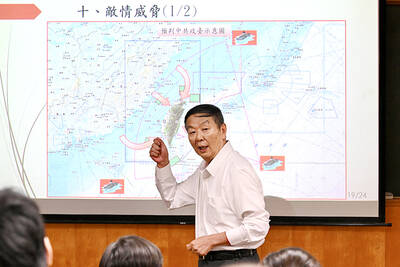
RETHINK? The defense ministry and Navy Command Headquarters could take over the indigenous submarine project and change its production timeline, a source said Admiral Huang Shu-kuang’s (黃曙光) resignation as head of the Indigenous Submarine Program and as a member of the National Security Council could affect the production of submarines, a source said yesterday. Huang in a statement last night said he had decided to resign due to national security concerns while expressing the hope that it would put a stop to political wrangling that only undermines the advancement of the nation’s defense capabilities. Taiwan People’s Party Legislator Vivian Huang (黃珊珊) yesterday said that the admiral, her older brother, felt it was time for him to step down and that he had completed what he

Taiwan has experienced its most significant improvement in the QS World University Rankings by Subject, data provided on Sunday by international higher education analyst Quacquarelli Symonds (QS) showed. Compared with last year’s edition of the rankings, which measure academic excellence and influence, Taiwanese universities made great improvements in the H Index metric, which evaluates research productivity and its impact, with a notable 30 percent increase overall, QS said. Taiwanese universities also made notable progress in the Citations per Paper metric, which measures the impact of research, achieving a 13 percent increase. Taiwanese universities gained 10 percent in Academic Reputation, but declined 18 percent
UNDER DISCUSSION: The combatant command would integrate fast attack boat and anti-ship missile groups to defend waters closest to the coastline, a source said The military could establish a new combatant command as early as 2026, which would be tasked with defending Taiwan’s territorial waters 24 nautical miles (44.4km) from the nation’s coastline, a source familiar with the matter said yesterday. The new command, which would fall under the Naval Command Headquarters, would be led by a vice admiral and integrate existing fast attack boat and anti-ship missile groups, along with the Naval Maritime Surveillance and Reconnaissance Command, said the source, who asked to remain anonymous. It could be launched by 2026, but details are being discussed and no final timetable has been announced, the source
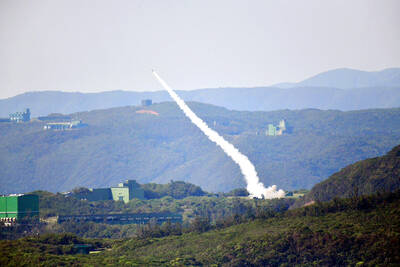
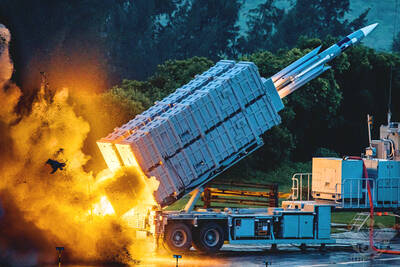
SHOT IN THE ARM: The new system can be integrated with Avenger and Stinger missiles to bolster regional air defense capabilities, a defense ministry report said Domestically developed Land Sword II (陸射劍二) missiles were successfully launched and hit target drones during a live-fire exercise at the Jiupeng Military Base in Pingtung County yesterday. The missiles, developed by the Chungshan Institute of Science and Technology (CSIST), were originally scheduled to launch on Tuesday last week, after the Tomb Sweeping Day holiday long weekend, but were postponed to yesterday due to weather conditions. Local residents and military enthusiasts gathered outside the base to watch the missile tests, with the first one launching at 9:10am. The Land Sword II system, which is derived from the Sky Sword II (天劍二) series, was turned


 RSS
RSS