


Up to 75 percent of all urban Chinese suffer from ill health, and life expectancies are declining for skilled and educated workers, according to a study by the Chinese Red Cross.
A survey of 16 Chinese cities with populations over 1 million by the Red Cross Society of China found that 75 percent of Beijing residents were in poor health, along with 73 percent of those in Shanghai and Guangzhou, the state-run newspaper Shanghai Daily reported.
The findings illustrate a darker side of China's economic success story -- deteriorating public health and a decline in well-being for many Chinese, even in the country's richest cities.
The Red Cross study defined poor health as illness causing reduced levels of energy and fitness but with no specific diagnosis of a disease.
The problem was worst among senior and midlevel managers and well-educated white collar workers, the report said.
"Bad working habits, poor disease prevention, inadequate government funding and lack of health education are the main reasons," it quoted Yang Xiaoduo, a health care expert, as saying.
Death rates among the elite are rising, largely due to poor health habits, lack of exercise and stress.
The Chinese Academy of Sciences reports that the average life span of an educated person was 58, more than 10 years lower than the national average of 72 years.
A separate study found that among the 380,000 information technology professionals working in Zhongguancun -- Beijing's equivalent of Silicon Valley -- the average life expectancy was only 53 years -- five years less than a decade ago, the official Xinhua News Agency reported yesterday.
Xinhua cited rising rates of lung cancer, cardiovascular ill-ness, respiratory illness and strokes.
Economic losses from disease are as high as 400 billion yuan (US$170 billion) a year, the Shanghai Daily said, citing government figures.
Various trends are contributing to the problem.
Urban Chinese are getting fat-ter as they switch from diets heavy in vegetables and staple grains to much higher consumption of fats, meats and sugar.
Physical labor has given way to more sedentary work, and stress levels are rising as workers lose cradle-to-grave employment and struggle to make ends meet in a competitive job market.
Meanwhile, China's industrial boom and soaring vehicle use have contributed to severe air and water pollution in many cities.
The cities are also aging quickly, raising the percentage of people more likely to be suffering from chronic diseases such as diabetes and heart problems.
In Shanghai, 19 percent of the population is over 60 years old. However, by 2030, half the population will be at least 65, the government recently reported.
The government once touted the country's broad provision of basic services, such as medical care and education, as obvious benefits of Communist Party rule. But for many, those services have been dismantled.
Farm families in the countryside can no longer count on the so-called "barefoot doctors" for basic health services. And although city dwellers have access to the country's best medical facilities, the lack of a comprehensive health insurance system means that many cannot afford medical care.
Also See Story:
Imported garbage threatens China
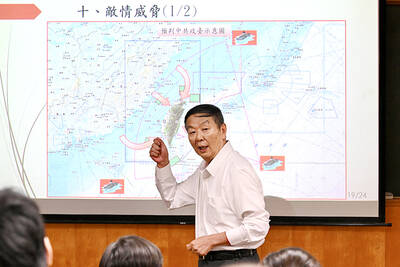
RETHINK? The defense ministry and Navy Command Headquarters could take over the indigenous submarine project and change its production timeline, a source said Admiral Huang Shu-kuang’s (黃曙光) resignation as head of the Indigenous Submarine Program and as a member of the National Security Council could affect the production of submarines, a source said yesterday. Huang in a statement last night said he had decided to resign due to national security concerns while expressing the hope that it would put a stop to political wrangling that only undermines the advancement of the nation’s defense capabilities. Taiwan People’s Party Legislator Vivian Huang (黃珊珊) yesterday said that the admiral, her older brother, felt it was time for him to step down and that he had completed what he
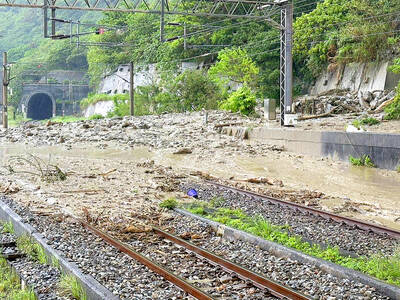
ROLLER-COASTER RIDE: More than five earthquakes ranging from magnitude 4.4 to 5.5 on the Richter scale shook eastern Taiwan in rapid succession yesterday afternoon Back-to-back weather fronts are forecast to hit Taiwan this week, resulting in rain across the nation in the coming days, the Central Weather Administration said yesterday, as it also warned residents in mountainous regions to be wary of landslides and rockfalls. As the first front approached, sporadic rainfall began in central and northern parts of Taiwan yesterday, the agency said, adding that rain is forecast to intensify in those regions today, while brief showers would also affect other parts of the nation. A second weather system is forecast to arrive on Thursday, bringing additional rain to the whole nation until Sunday, it

CONDITIONAL: The PRC imposes secret requirements that the funding it provides cannot be spent in states with diplomatic relations with Taiwan, Emma Reilly said China has been bribing UN officials to obtain “special benefits” and to block funding from countries that have diplomatic ties with Taiwan, a former UN employee told the British House of Commons on Tuesday. At a House of Commons Foreign Affairs Committee hearing into “international relations within the multilateral system,” former Office of the UN High Commissioner for Human Rights (OHCHR) employee Emma Reilly said in a written statement that “Beijing paid bribes to the two successive Presidents of the [UN] General Assembly” during the two-year negotiation of the Sustainable Development Goals. Another way China exercises influence within the UN Secretariat is
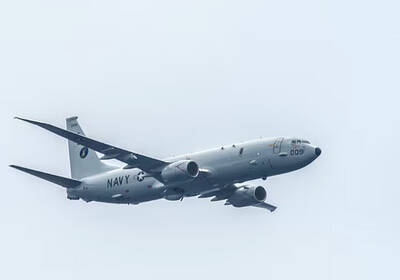
CHINA REACTS: The patrol and reconnaissance plane ‘transited the Taiwan Strait in international airspace,’ the 7th Fleet said, while Taipei said it saw nothing unusual The US 7th Fleet yesterday said that a US Navy P-8A Poseidon flew through the Taiwan Strait, a day after US and Chinese defense heads held their first talks since November 2022 in an effort to reduce regional tensions. The patrol and reconnaissance plane “transited the Taiwan Strait in international airspace,” the 7th Fleet said in a news release. “By operating within the Taiwan Strait in accordance with international law, the United States upholds the navigational rights and freedoms of all nations.” In a separate statement, the Ministry of National Defense said that it monitored nearby waters and airspace as the aircraft


 RSS
RSS