


Canada's ruling Liberals hung on to power after Monday's federal election, but lost their comfortable majority in parliament and cannot now govern without the support of the left-leaning New Democrats.
The Liberals of Prime Minister Paul Martin, in power for a decade, did better than many had predicted. But they paid the price for voter fatigue and a scandal over government spending and won just 135 of the 308 seats in parliament.
The result gives Canada its first minority government in 25 years -- a potentially unstable scenario that could lead to another election within a couple of years.
The preliminary tally, reported by Elections Canada, gives 99 seats to the opposition Conservatives and 19 to the New Democrats.
This means the Liberals and New Democrats, who have co-operated in previous minority governments, are just one seat short of the 155 needed for a majority. But the close vote means recounts are likely in several districts, so the final tally could change.
"We as Liberals have lost votes, we have lost good members of parliament ... Canadians expected, and expect, more from us," Martin told supporters in Montreal.
"As a party and as a government we must do better and we will. I pledge that to you tonight ... This is the first minority government in a generation. It's unfamiliar terrain, but we are up to the challenge, and we will embrace it," he said.
Market reaction was muted and the Canadian dollar barely moved.
"With the Liberals remaining, one would assume that the same kind of fiscal policy will stay in place," said Carlos Leitao, chief economist at BLC Securities in Montreal.
The Liberals promise balanced budgets and more money for healthcare while the New Democrats want more social spending and higher corporate taxes.
"Over the last week Paul Martin made many commitments to Canadians that he would protect public healthcare ... that he would start a national childcare program," New Democrat leader Jack Layton said. "My commitment to Canadians tonight is that we will hold him to it with every ounce of energy we have."
The Liberals won 36.7 percent of the vote, down from 40.8 percent in the 2000 election. The Conservatives won 29.6 percent with the New Democrats on 15.7 percent. Voter turnout was 60.3 percent, the lowest since 1898.
The separatist Bloc Quebecois, earlier tipped as a kingmaker, won 54 of the 75 seats in Quebec, but was eclipsed by the New Democrats.
The results were a blow for Martin, who replaced Jean Chretien as prime minister in December, but who never recovered from a February report which showed C$100 million (US$75 million) in government funds had found its way to firms with close ties to the Liberals.
Opinion polls indicated voter anger was so great that the Liberals would end up level with the Conservatives.
But the main losers were the Conservatives, who got far fewer than the 120 seats many had predicted.
Officials said voters had been influenced by Martin's portrayal of Conservative leader Stephen Harper as a right-wing extremist.
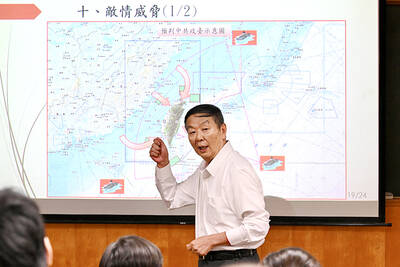
RETHINK? The defense ministry and Navy Command Headquarters could take over the indigenous submarine project and change its production timeline, a source said Admiral Huang Shu-kuang’s (黃曙光) resignation as head of the Indigenous Submarine Program and as a member of the National Security Council could affect the production of submarines, a source said yesterday. Huang in a statement last night said he had decided to resign due to national security concerns while expressing the hope that it would put a stop to political wrangling that only undermines the advancement of the nation’s defense capabilities. Taiwan People’s Party Legislator Vivian Huang (黃珊珊) yesterday said that the admiral, her older brother, felt it was time for him to step down and that he had completed what he
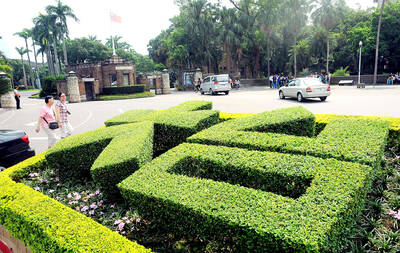
Taiwan has experienced its most significant improvement in the QS World University Rankings by Subject, data provided on Sunday by international higher education analyst Quacquarelli Symonds (QS) showed. Compared with last year’s edition of the rankings, which measure academic excellence and influence, Taiwanese universities made great improvements in the H Index metric, which evaluates research productivity and its impact, with a notable 30 percent increase overall, QS said. Taiwanese universities also made notable progress in the Citations per Paper metric, which measures the impact of research, achieving a 13 percent increase. Taiwanese universities gained 10 percent in Academic Reputation, but declined 18 percent
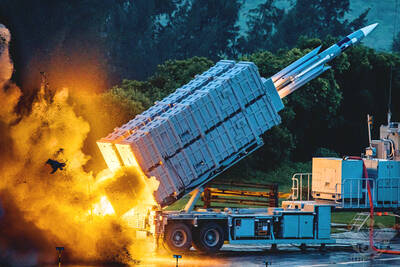
UNDER DISCUSSION: The combatant command would integrate fast attack boat and anti-ship missile groups to defend waters closest to the coastline, a source said The military could establish a new combatant command as early as 2026, which would be tasked with defending Taiwan’s territorial waters 24 nautical miles (44.4km) from the nation’s coastline, a source familiar with the matter said yesterday. The new command, which would fall under the Naval Command Headquarters, would be led by a vice admiral and integrate existing fast attack boat and anti-ship missile groups, along with the Naval Maritime Surveillance and Reconnaissance Command, said the source, who asked to remain anonymous. It could be launched by 2026, but details are being discussed and no final timetable has been announced, the source
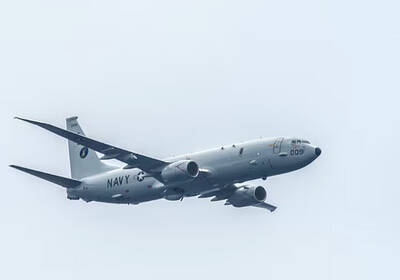
CHINA REACTS: The patrol and reconnaissance plane ‘transited the Taiwan Strait in international airspace,’ the 7th Fleet said, while Taipei said it saw nothing unusual The US 7th Fleet yesterday said that a US Navy P-8A Poseidon flew through the Taiwan Strait, a day after US and Chinese defense heads held their first talks since November 2022 in an effort to reduce regional tensions. The patrol and reconnaissance plane “transited the Taiwan Strait in international airspace,” the 7th Fleet said in a news release. “By operating within the Taiwan Strait in accordance with international law, the United States upholds the navigational rights and freedoms of all nations.” In a separate statement, the Ministry of National Defense said that it monitored nearby waters and airspace as the aircraft


 RSS
RSS