


Stocks continued to drop yesterday as political unrest dragged on, but the decline was stemmed to 2.94 percent, compared to 6.68 percent the previous day, supported by news that President Chen Shui-bian (陳水扁) agreed in principle to a vote recount and by speculation on the intervention of the government, analysts said.
The TAIEX shed 187.03 points, or 2.9 percent, to 6,172.89, with a turnover of NT$249.14 billion, a four-year high, which spurred speculation that the government was defending the market with state-pension or labor-insurance funds.
On the local bourse, losers outnumbered risers 648 to 299, with 27 stocks unchanged.
Overseas investors yesterday shed a net of NT$19.45 billion, while domestic investment-trust investors and proprietary traders sold a net NT$20.05 billion, according to the Taiwan Stock Exchange.
The benchmark index pared its decline by robust gains in DRAM stocks. Powerchip Semiconductor Corp surged NT$1.9, or nearly 6.8 percent, to NT$30, while Nanya Technology Corp rose NT$1.6 to NT$28.2.
Steelmakers also rose, with the state-run China Steel Corp adding NT$1.8 to NT$33.5. Finance and insurance stocks that plunged before the election rebounded slightly and lost a mere 0.46 percent yesterday.
"I think the performance is good enough in view of the domestic and international climates," said George Wu (吳裕良), an analyst at Primasia Securities Co.
In addition to the disputed recount, slumps in major international markets caused by heightened terrorism in the Middle East made investors more wary about putting cash in the market, Wu said.
The proposed nationwide protest by the pan-blue camp on Saturday may also place more pressure on the market throughout the week, Wu said.
Evonne Chang (
Investors last week stockpiled transportation or pan-blue stocks and dumped pan-green stocks with an assumption of a win by the pan-blue camp.
"This is a good time to do some bottom-fishing on these neutral stocks with good fundamentals," Chang suggested.
Local business groups on Monday urged the government to stabilize the market with the National Stabilization Fund. But Vice Minister of Finance Gordon Chen (
"For now, there is no urgent need to activate the National Stabilization Fund judging by the performance of the market ... As the government has promised to deal with the election dispute, the political uncertainty will clear in the short term," Chang said.
Also See Story:
Merrill Lynch says Taiwanese stocks now a risky punt
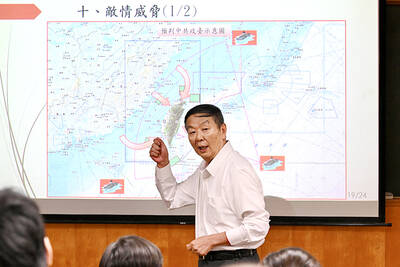
RETHINK? The defense ministry and Navy Command Headquarters could take over the indigenous submarine project and change its production timeline, a source said Admiral Huang Shu-kuang’s (黃曙光) resignation as head of the Indigenous Submarine Program and as a member of the National Security Council could affect the production of submarines, a source said yesterday. Huang in a statement last night said he had decided to resign due to national security concerns while expressing the hope that it would put a stop to political wrangling that only undermines the advancement of the nation’s defense capabilities. Taiwan People’s Party Legislator Vivian Huang (黃珊珊) yesterday said that the admiral, her older brother, felt it was time for him to step down and that he had completed what he
Taiwan has experienced its most significant improvement in the QS World University Rankings by Subject, data provided on Sunday by international higher education analyst Quacquarelli Symonds (QS) showed. Compared with last year’s edition of the rankings, which measure academic excellence and influence, Taiwanese universities made great improvements in the H Index metric, which evaluates research productivity and its impact, with a notable 30 percent increase overall, QS said. Taiwanese universities also made notable progress in the Citations per Paper metric, which measures the impact of research, achieving a 13 percent increase. Taiwanese universities gained 10 percent in Academic Reputation, but declined 18 percent
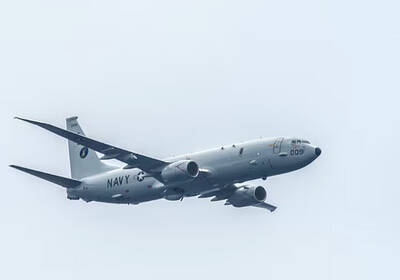
CHINA REACTS: The patrol and reconnaissance plane ‘transited the Taiwan Strait in international airspace,’ the 7th Fleet said, while Taipei said it saw nothing unusual The US 7th Fleet yesterday said that a US Navy P-8A Poseidon flew through the Taiwan Strait, a day after US and Chinese defense heads held their first talks since November 2022 in an effort to reduce regional tensions. The patrol and reconnaissance plane “transited the Taiwan Strait in international airspace,” the 7th Fleet said in a news release. “By operating within the Taiwan Strait in accordance with international law, the United States upholds the navigational rights and freedoms of all nations.” In a separate statement, the Ministry of National Defense said that it monitored nearby waters and airspace as the aircraft
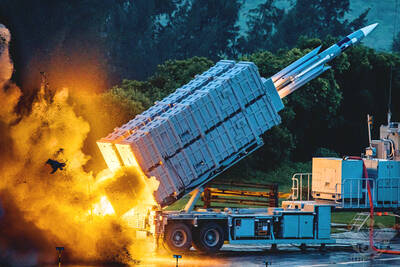
UNDER DISCUSSION: The combatant command would integrate fast attack boat and anti-ship missile groups to defend waters closest to the coastline, a source said The military could establish a new combatant command as early as 2026, which would be tasked with defending Taiwan’s territorial waters 24 nautical miles (44.4km) from the nation’s coastline, a source familiar with the matter said yesterday. The new command, which would fall under the Naval Command Headquarters, would be led by a vice admiral and integrate existing fast attack boat and anti-ship missile groups, along with the Naval Maritime Surveillance and Reconnaissance Command, said the source, who asked to remain anonymous. It could be launched by 2026, but details are being discussed and no final timetable has been announced, the source


 RSS
RSS