


Spanish police believe they have identified six Moroccan Muslim militants who carried out the train bombings that killed 200 in Madrid and helped propel the opposition Socialists into power, media reported yesterday.
With Sunday's shock election result heralding the end of Spanish government support for the occupation of Iraq, Spanish newspapers and radio said one of the Moroccans might have links to last May's Casablanca suicide bombings that killed 45 people.
Media quoted security sources as saying the suspect Jamal Zougam -- arrested in Spain at the weekend -- had been identified by two survivors of the Thursday rush-hour bombs who said they had seen him before the explosions.
Police were looking for the other five, media said, as well as Islamic militants of other nationalities who may have played a part in the attack. The group is believed to be loosely related to Osama bin Laden's al-Qaeda.
El Mundo newspaper, quoting Moroccan intelligence sources, said Zougam had close contact with Sala Eddin Benyaich, arrested for the Casablanca bombing.
Morocco sent a security team to Madrid to help with investigations on Sunday. Moroccan officials have questioned whether there is any link between the Madrid bombers and the radicals who staged the Casablanca bombings.
Witnesses
Spanish police sources said witnesses had identified suspects in photos, but cautioned against their reliability. They were also examining the remains of one of the dead from the train blasts as a potential bomber.
As well as Zougam, Spain arrested two other Moroccans and two Indians on Saturday in connection with the bombings.
Spanish Foreign Minister Ana Palacio was to attend an ecumenical memorial service for victims in the Moroccan capital Rabat later yesterday.
Incoming Socialist leader Jose Luis Rodriguez Zapatero said his first official visit, after taking office in around a month, would be to Morocco as is traditional for Spanish leaders.
National flags decked with black ribbons flew from balconies in Madrid as the nation mourned its worst ever bomb attack. Among the 1,500 wounded, 220 remained in hospital, many fighting for their lives.
Thursday's bombs, which authorities initially blamed on armed Basque separatists ETA, revived popular anger at Prime Minister Jose Maria Aznar's support for the US-led Iraq war.
`Disastrous' occupation
Spain's prime minister-elect said on Monday that he would probably pull Madrid's troops out of the "disastrous" occupation unless the UN takes charge there by mid-year, an unlikely event.
Suspicions of many Spaniards that the ruling center-right Popular Party (PP) was not revealing all it knew about the bombings helped sweep the government out of office.
As signs of involvement by al-Qaeda or its allies grew, analysts said it could be an alarming first case of Islamist militants influencing, by violence, the outcome of a major Western election.
Zapatero denied at a news conference on Monday that his success was a "victory for terrorism," saying: "In Spain, there was a desire for change."
A US official, who asked not to be named, said Washington could push for a new UN resolution before it hands back sovereignty to Iraqis by the end of June, to encourage allies such as Spain to keep their troops in Iraq.
Poland, which works closely with Spain in Iraq, warned pulling out could be seen as weakness after the bombings. Analysts said a withdrawal could further tax an already strained American military.
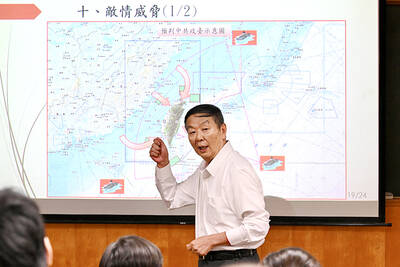
RETHINK? The defense ministry and Navy Command Headquarters could take over the indigenous submarine project and change its production timeline, a source said Admiral Huang Shu-kuang’s (黃曙光) resignation as head of the Indigenous Submarine Program and as a member of the National Security Council could affect the production of submarines, a source said yesterday. Huang in a statement last night said he had decided to resign due to national security concerns while expressing the hope that it would put a stop to political wrangling that only undermines the advancement of the nation’s defense capabilities. Taiwan People’s Party Legislator Vivian Huang (黃珊珊) yesterday said that the admiral, her older brother, felt it was time for him to step down and that he had completed what he

Taiwan has experienced its most significant improvement in the QS World University Rankings by Subject, data provided on Sunday by international higher education analyst Quacquarelli Symonds (QS) showed. Compared with last year’s edition of the rankings, which measure academic excellence and influence, Taiwanese universities made great improvements in the H Index metric, which evaluates research productivity and its impact, with a notable 30 percent increase overall, QS said. Taiwanese universities also made notable progress in the Citations per Paper metric, which measures the impact of research, achieving a 13 percent increase. Taiwanese universities gained 10 percent in Academic Reputation, but declined 18 percent
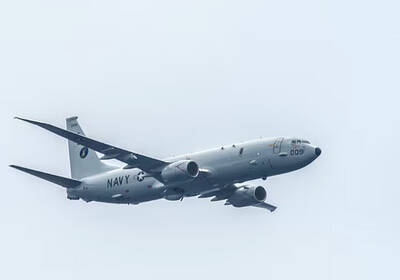
CHINA REACTS: The patrol and reconnaissance plane ‘transited the Taiwan Strait in international airspace,’ the 7th Fleet said, while Taipei said it saw nothing unusual The US 7th Fleet yesterday said that a US Navy P-8A Poseidon flew through the Taiwan Strait, a day after US and Chinese defense heads held their first talks since November 2022 in an effort to reduce regional tensions. The patrol and reconnaissance plane “transited the Taiwan Strait in international airspace,” the 7th Fleet said in a news release. “By operating within the Taiwan Strait in accordance with international law, the United States upholds the navigational rights and freedoms of all nations.” In a separate statement, the Ministry of National Defense said that it monitored nearby waters and airspace as the aircraft
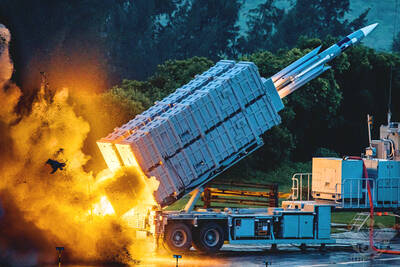
UNDER DISCUSSION: The combatant command would integrate fast attack boat and anti-ship missile groups to defend waters closest to the coastline, a source said The military could establish a new combatant command as early as 2026, which would be tasked with defending Taiwan’s territorial waters 24 nautical miles (44.4km) from the nation’s coastline, a source familiar with the matter said yesterday. The new command, which would fall under the Naval Command Headquarters, would be led by a vice admiral and integrate existing fast attack boat and anti-ship missile groups, along with the Naval Maritime Surveillance and Reconnaissance Command, said the source, who asked to remain anonymous. It could be launched by 2026, but details are being discussed and no final timetable has been announced, the source


 RSS
RSS