


For nearly nine days after an earthquake demolished her city, 97-year-old Sharbanou Mazandarani lay trapped under furniture and crumbled masonry, passing fear-filled days and cold nights.
Mazandarani was not ready to give up. And on Saturday, dogs trained to detect humans in rubble located her and rescuers dug for three hours to pull her out of the rubble unhurt.
"God kept me alive," the petite, wrinkled Mazandarani said as she lay on a bed in a makeshift hospital in Bam, covered to her chin with a blue blanket and a brown print scarf tied around her head.
Rescuers said she asked for a cup of tea soon after her rescue -- and then complained it was too hot to drink.
Normally people can survive up to three days in the rubble of an earthquake. It was unclear whether Mazandarani had food or water while she lay trapped under the ruins.
"No one expected her to be alive. It's a miracle," provincial government spokesman Asadollah Iranmanesh said.
Her rescue was not the only bright spot in the aftermath of the Dec. 26 quake. On Saturday, US doctors said they had delivered four babies at a makeshift hospital.
Meanwhile, the death toll rose to about 35,000, Brigadier-General Hoseyn Fat'ahi of the Islamic Revolution Guards Corps told Iran's official news agency. He said the injured numbered 17,000.
Figures for the overall dead have varied according to differing estimates of the number of bodies still under the rubble and thousands of unregistered burials.
A situation report by the UN Disaster Assessment Coordination Team warned that many survivors were suffering from psychological trauma after the deaths of their loved ones and the destruction of their homes.
On Friday, the US field hospital operated on a young Iranian soldier who tried to commit suicide by shooting himself after discovering the quake had wiped out his family.
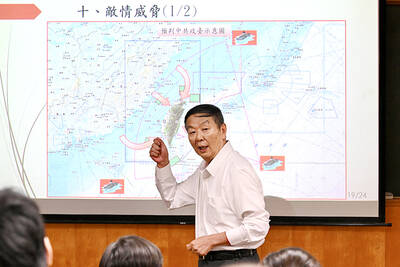
RETHINK? The defense ministry and Navy Command Headquarters could take over the indigenous submarine project and change its production timeline, a source said Admiral Huang Shu-kuang’s (黃曙光) resignation as head of the Indigenous Submarine Program and as a member of the National Security Council could affect the production of submarines, a source said yesterday. Huang in a statement last night said he had decided to resign due to national security concerns while expressing the hope that it would put a stop to political wrangling that only undermines the advancement of the nation’s defense capabilities. Taiwan People’s Party Legislator Vivian Huang (黃珊珊) yesterday said that the admiral, her older brother, felt it was time for him to step down and that he had completed what he

Taiwan has experienced its most significant improvement in the QS World University Rankings by Subject, data provided on Sunday by international higher education analyst Quacquarelli Symonds (QS) showed. Compared with last year’s edition of the rankings, which measure academic excellence and influence, Taiwanese universities made great improvements in the H Index metric, which evaluates research productivity and its impact, with a notable 30 percent increase overall, QS said. Taiwanese universities also made notable progress in the Citations per Paper metric, which measures the impact of research, achieving a 13 percent increase. Taiwanese universities gained 10 percent in Academic Reputation, but declined 18 percent
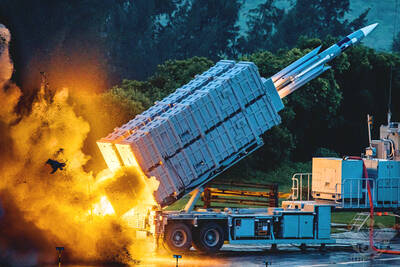
UNDER DISCUSSION: The combatant command would integrate fast attack boat and anti-ship missile groups to defend waters closest to the coastline, a source said The military could establish a new combatant command as early as 2026, which would be tasked with defending Taiwan’s territorial waters 24 nautical miles (44.4km) from the nation’s coastline, a source familiar with the matter said yesterday. The new command, which would fall under the Naval Command Headquarters, would be led by a vice admiral and integrate existing fast attack boat and anti-ship missile groups, along with the Naval Maritime Surveillance and Reconnaissance Command, said the source, who asked to remain anonymous. It could be launched by 2026, but details are being discussed and no final timetable has been announced, the source
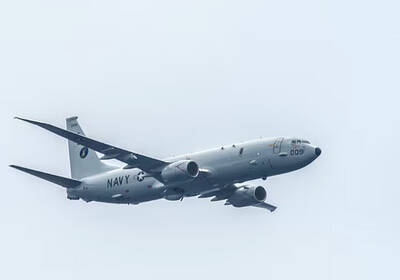
CHINA REACTS: The patrol and reconnaissance plane ‘transited the Taiwan Strait in international airspace,’ the 7th Fleet said, while Taipei said it saw nothing unusual The US 7th Fleet yesterday said that a US Navy P-8A Poseidon flew through the Taiwan Strait, a day after US and Chinese defense heads held their first talks since November 2022 in an effort to reduce regional tensions. The patrol and reconnaissance plane “transited the Taiwan Strait in international airspace,” the 7th Fleet said in a news release. “By operating within the Taiwan Strait in accordance with international law, the United States upholds the navigational rights and freedoms of all nations.” In a separate statement, the Ministry of National Defense said that it monitored nearby waters and airspace as the aircraft


 RSS
RSS