


Newly-discovered electrical circuit problems with the Taurus rocket which will be used to launch ROCSAT-2, Taiwan's second satellite, have delayed the scheduled liftoff from Jan. 17 to Feb. 26, according to the National Space Program Office (NSPO) yesterday.
According to Lee Luo-chuan (李羅權), the president of the National Applied Research laboratories and NSPO director, US Orbital Sciences Corp (OSC), the operator of the Taurus launch vehicle, sent an official letter yesterday morning informing the office that it would take five more weeks to solve the electrical problems.
"The unexpected delay can be entirely attributed to OSC instead of NSPO, which has done its best for the launch," Lee said yesterday at a press conference.
According to Lee, OSC Chairman and CEO David Thompson discussed the electrical problems with him via telephone Tuesday, suggesting that the launch should be postponed.
Lee immediately demanded an official letter describing problems and possible solutions.
Last Thursday, technicians found abnormal electrical current levels when a newly-repaired electronic control unit (ECU) installed in the launch vehicle was switched on for the first time.
Lee said it remains uncertain if the ECU, which was temporarily overloaded, can still function properly.
The ECU plays a key role in adjusting the direction of a satellite blasted into orbit on a rocket.
Abnormal vibration of the ECU installed on the rocket previously postponed the launch from the end of this month to Jan. 17.
"Under the circumstances, OSC will have to either revise the circuit design or use a new ECU," Lee said.
Based on the contract, OSC will have to pay US$36,000 for each day caused by the delay.
Lee said he still had faith in the reliability of OSC because the Taurus rocket, a four-stage, ground-launched vehicle, had successfully launched several satellites this year.
"We agreed to the delay in order to ensure the successful of liftoff of ROCSAT-2 and its future normal operation in space," Lee said.
NSPO scientists said that similar electric circuit problems have been seen before. Abnormal electrical current caused malfunction of the solar panels of a Japanese satellite, resulting in the failure of the satellite in space, they said.
NSPO deputy director Chen Shao-shing (陳紹興), said the delay of ROCSAT-2's launch was an unexpected because electrical circuit design was a very basic task, which should have been easily managed.
Chen said that ROCSAT-2 arrived at Vandenberg Air Force Base in California on Dec. 2. A three-day test conducted by an NSPO team suggested that the satellite itself was in excellent condition.
The satellite should be coupled with the Taurus launch vehicle at least 13 days prior to liftoff.
Chen said that the NSPO would soon recall most of its staff, who arrived at Vandenberg Air Force Base earlier this month to conduct pre-preparation for the launch.
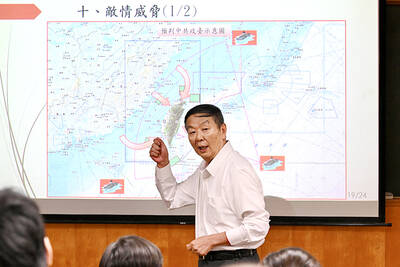
RETHINK? The defense ministry and Navy Command Headquarters could take over the indigenous submarine project and change its production timeline, a source said Admiral Huang Shu-kuang’s (黃曙光) resignation as head of the Indigenous Submarine Program and as a member of the National Security Council could affect the production of submarines, a source said yesterday. Huang in a statement last night said he had decided to resign due to national security concerns while expressing the hope that it would put a stop to political wrangling that only undermines the advancement of the nation’s defense capabilities. Taiwan People’s Party Legislator Vivian Huang (黃珊珊) yesterday said that the admiral, her older brother, felt it was time for him to step down and that he had completed what he
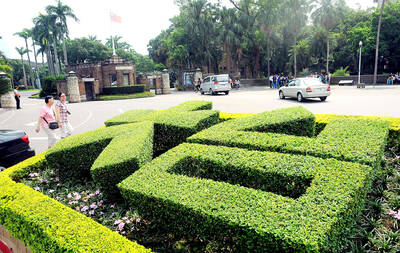
Taiwan has experienced its most significant improvement in the QS World University Rankings by Subject, data provided on Sunday by international higher education analyst Quacquarelli Symonds (QS) showed. Compared with last year’s edition of the rankings, which measure academic excellence and influence, Taiwanese universities made great improvements in the H Index metric, which evaluates research productivity and its impact, with a notable 30 percent increase overall, QS said. Taiwanese universities also made notable progress in the Citations per Paper metric, which measures the impact of research, achieving a 13 percent increase. Taiwanese universities gained 10 percent in Academic Reputation, but declined 18 percent
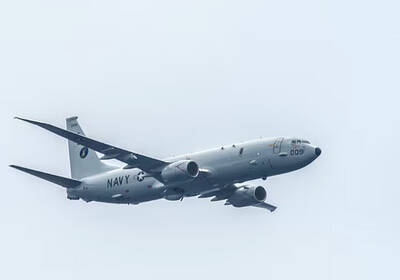
CHINA REACTS: The patrol and reconnaissance plane ‘transited the Taiwan Strait in international airspace,’ the 7th Fleet said, while Taipei said it saw nothing unusual The US 7th Fleet yesterday said that a US Navy P-8A Poseidon flew through the Taiwan Strait, a day after US and Chinese defense heads held their first talks since November 2022 in an effort to reduce regional tensions. The patrol and reconnaissance plane “transited the Taiwan Strait in international airspace,” the 7th Fleet said in a news release. “By operating within the Taiwan Strait in accordance with international law, the United States upholds the navigational rights and freedoms of all nations.” In a separate statement, the Ministry of National Defense said that it monitored nearby waters and airspace as the aircraft
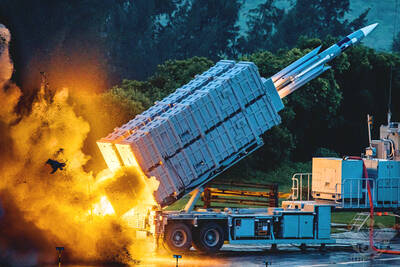
UNDER DISCUSSION: The combatant command would integrate fast attack boat and anti-ship missile groups to defend waters closest to the coastline, a source said The military could establish a new combatant command as early as 2026, which would be tasked with defending Taiwan’s territorial waters 24 nautical miles (44.4km) from the nation’s coastline, a source familiar with the matter said yesterday. The new command, which would fall under the Naval Command Headquarters, would be led by a vice admiral and integrate existing fast attack boat and anti-ship missile groups, along with the Naval Maritime Surveillance and Reconnaissance Command, said the source, who asked to remain anonymous. It could be launched by 2026, but details are being discussed and no final timetable has been announced, the source


 RSS
RSS