


The Cabinet yesterday decided to file a motion to overturn 12 articles of the recently passed Referendum Law (公民投票法) and amend others after the law is promulgated, Cabinet Spokesman Lin Chia-lung (林佳龍) told the press conference yesterday afternoon.
Also yesterday the Democratic Progressive Party (DPP) legislative caucus said it would request the Council of Grand Justices to rule on articles in the controversial law which the caucus maintains are unconstitutional.
"Since overturning a law can only abolish articles, we're taking different approaches to make the law better," Lin said at a news conference yesterday afternoon.
The Cabinet is scheduled to officially approve its proposal tomorrow during the weekly Cabinet meeting. According to the Constitution, the Cabinet has to file a request for the legislature to reconsider the articles before Friday and the legislature has to reach a resolution before Dec. 27.
Articles the Cabinet decided to overturn include the clause empowering the legislature to initiate a national referendum and those in relation to the establishment and responsibilities of the Referendum Supervisory Committee.
The Cabinet argued that the article allowing the legislature to initiate a national referendum should be annulled because it expands the legislative power.
The Cabinet wants the supervisory committee, the function of which, it argues, overlaps with that of the legislature, to be abolished.
Articles the Cabinet seeks to amend include the 5 percent threshold set for the citizenry's right to file a petition to launch a national referendum.
The law mandates that signatures amounting to 5 percent of those who voted in the most recent presidential election, or 770,000 signatures, are required to initiate a national referendum. The Cabinet would like to lower the threshold to 2 percent in line with the number of signatures needed to register as a candidate in a presidential election.
Others articles the Cabinet want to overhaul are those which ban the Cabinet from initiating a referendum, including an advisory one, and those meting out punishments to Cabinet officials violating these rules. The Cabinet argues that the legislation encroaches on the authority of the executive.
The DPP legislative caucus, on the other hand, thinks that some of the articles violate the Constitution and will request a constitutional interpretation on the articles which denies citizens the right to initiate constitutional amendments and yet grant them the exclusive right to repeal such amendments.
Although the DPP does not enjoy a majority in the legislature, Lin said that the government was "not pessimistic" about wining the backing of the legislature.
"As the Constitution mandates that more than half of the legislature is required to endorse or reject our veto motion, the opposition camp has to garner sufficient votes to successfully overturn our request," he said.
If the Cabinet loses its bid to overturn the legislation, Lin said that Premier Yu Shyi-kun does not have to step down to shoulder any political responsibility -- as requested by the opposition.
The Constitution mandates that if more than half of the legislature vetoes the Cabinet's request, the Cabinet must accept the law or resolution, which would then go into effect three days after it is promulgated by the president.
If lawmakers are upset by the Cabinet's attempt to reject a law, they can then call for a no-confidence vote against the premier. However, a petition to call such a vote must be endorsed by one-third of lawmakers. A no-confidence vote must be called within 72 hours of the petition being filed.
Responding to the opposition camp's threat to return the Cabinet's request, Lin said that the legislature is required by the Constitution to decide whether to endorse or reject the Cabinet's request 15 days after receiving the Cabinet's veto motion.
"They still have to make a decision even if they return our request," Lin said, adding that the opposition's threat reflects their political motive to hijack the "preventative referendum" guaranteed by the Referendum Law.
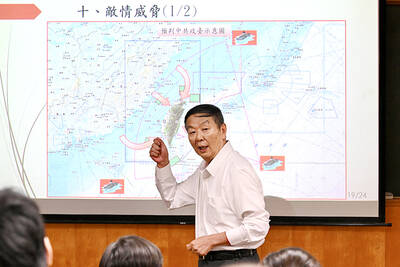
RETHINK? The defense ministry and Navy Command Headquarters could take over the indigenous submarine project and change its production timeline, a source said Admiral Huang Shu-kuang’s (黃曙光) resignation as head of the Indigenous Submarine Program and as a member of the National Security Council could affect the production of submarines, a source said yesterday. Huang in a statement last night said he had decided to resign due to national security concerns while expressing the hope that it would put a stop to political wrangling that only undermines the advancement of the nation’s defense capabilities. Taiwan People’s Party Legislator Vivian Huang (黃珊珊) yesterday said that the admiral, her older brother, felt it was time for him to step down and that he had completed what he

Taiwan has experienced its most significant improvement in the QS World University Rankings by Subject, data provided on Sunday by international higher education analyst Quacquarelli Symonds (QS) showed. Compared with last year’s edition of the rankings, which measure academic excellence and influence, Taiwanese universities made great improvements in the H Index metric, which evaluates research productivity and its impact, with a notable 30 percent increase overall, QS said. Taiwanese universities also made notable progress in the Citations per Paper metric, which measures the impact of research, achieving a 13 percent increase. Taiwanese universities gained 10 percent in Academic Reputation, but declined 18 percent
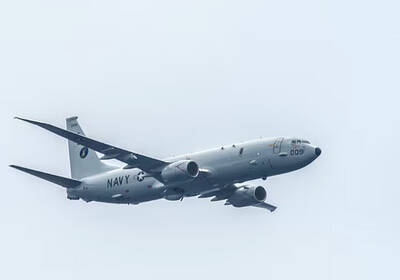
CHINA REACTS: The patrol and reconnaissance plane ‘transited the Taiwan Strait in international airspace,’ the 7th Fleet said, while Taipei said it saw nothing unusual The US 7th Fleet yesterday said that a US Navy P-8A Poseidon flew through the Taiwan Strait, a day after US and Chinese defense heads held their first talks since November 2022 in an effort to reduce regional tensions. The patrol and reconnaissance plane “transited the Taiwan Strait in international airspace,” the 7th Fleet said in a news release. “By operating within the Taiwan Strait in accordance with international law, the United States upholds the navigational rights and freedoms of all nations.” In a separate statement, the Ministry of National Defense said that it monitored nearby waters and airspace as the aircraft

UNDER DISCUSSION: The combatant command would integrate fast attack boat and anti-ship missile groups to defend waters closest to the coastline, a source said The military could establish a new combatant command as early as 2026, which would be tasked with defending Taiwan’s territorial waters 24 nautical miles (44.4km) from the nation’s coastline, a source familiar with the matter said yesterday. The new command, which would fall under the Naval Command Headquarters, would be led by a vice admiral and integrate existing fast attack boat and anti-ship missile groups, along with the Naval Maritime Surveillance and Reconnaissance Command, said the source, who asked to remain anonymous. It could be launched by 2026, but details are being discussed and no final timetable has been announced, the source


 RSS
RSS