


The US, in its first reaction to President Chen Shui-bian's (
"We would be opposed to any referenda that would change Taiwan's status or move toward independence," State Department spokesman Richard Boucher told reporters in Washington.
"We oppose any attempt by either side to unilaterally change the status quo in the Taiwan Strait," he said. "We also urge both sides to refrain from action or statements that increase tensions or make dialogue more difficult to achieve."
Boucher's statement reflects nervousness on the part of George W. Bush's administration that Chen's push for a referendum and a new constitution could spark increased tensions at a time when US-China relations are the best they have been since before the Tiananmen massacre, and when Washington is reliant on Beijing's cooperation in the Korean Peninsula, the war on terrorism and Iraq.
Next week's trip to Washington by Chinese Premier Wen Jiabao (
Nevertheless, the administration has given no indication that recent events have changed its strong support for Taiwan. Officials in recent weeks have reiterated Washington's opposition to the use of force in the Taiwan Strait by China and have indicated that the US would be prepared, if necessary, to respond on Taiwan's side if Beijing resorted to military action.
In opposing a status-changing referendum, Boucher reminded Chen of his inauguration pledge not to declare independence, change Taiwan's name, add "state-to-state" wording to the Constitution or promote a referendum to change the status quo on independence or unification.
"We appreciate President Chen's pledge in 2000 and his subsequent reaffirmation of it, and we take it very seriously," Boucher said.
He added that cross-strait dialogue is "essential to peace and stability in the Taiwan Strait area."
Boucher's comments came as China warned Chen against holding the defensive vote, which it described as an "independence referendum."
An article in the official China Daily on Tuesday quoted "researchers on cross-straits studies" as accusing Chen of "starting an ill-considered attempt to initiate an independence referendum next year."
The story quoted Mu Xiankui of the Chinese Academy of Military Sciences as saying that Chen "seems to be bent on pushing ahead with his separatist scheme by plotting to call the independence vote ... Choosing independence means the choice of war."
The article also cited the Cairo Declaration signed by the US, China and Britain on Dec. 1, 1943, in which Beijing demanded all of Japan's previously occupied territories, including Taiwan, be returned to China.
The article said the declaration "provided effective legal evidence" that Taiwan was part of China under international law.
See story: Cabinet says referendum is legitimate
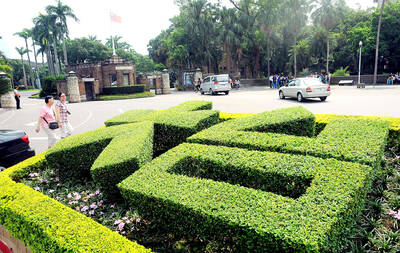
Taiwan has experienced its most significant improvement in the QS World University Rankings by Subject, data provided on Sunday by international higher education analyst Quacquarelli Symonds (QS) showed. Compared with last year’s edition of the rankings, which measure academic excellence and influence, Taiwanese universities made great improvements in the H Index metric, which evaluates research productivity and its impact, with a notable 30 percent increase overall, QS said. Taiwanese universities also made notable progress in the Citations per Paper metric, which measures the impact of research, achieving a 13 percent increase. Taiwanese universities gained 10 percent in Academic Reputation, but declined 18 percent
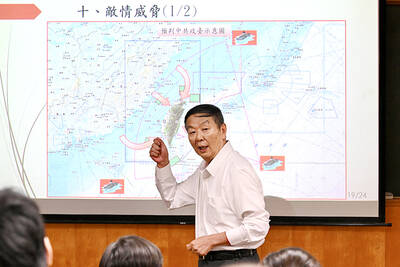
RETHINK? The defense ministry and Navy Command Headquarters could take over the indigenous submarine project and change its production timeline, a source said Admiral Huang Shu-kuang’s (黃曙光) resignation as head of the Indigenous Submarine Program and as a member of the National Security Council could affect the production of submarines, a source said yesterday. Huang in a statement last night said he had decided to resign due to national security concerns while expressing the hope that it would put a stop to political wrangling that only undermines the advancement of the nation’s defense capabilities. Taiwan People’s Party Legislator Vivian Huang (黃珊珊) yesterday said that the admiral, her older brother, felt it was time for him to step down and that he had completed what he
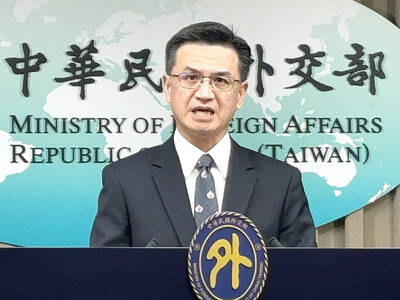
BULLY TACTICS: Beijing has continued its incursions into Taiwan’s airspace even as Xi Jinping talked about Taiwan being part of the Chinese family and nation China should stop its coercion of Taiwan and respect mainstream public opinion in Taiwan about sovereignty if its expression of goodwill is genuine, the Ministry of Foreign Affairs (MOFA) said yesterday. Ministry spokesman Jeff Liu (劉永健) made the comment in response to media queries about a meeting between former president Ma Ying-jeou (馬英九) and Chinese President Xi Jinping (習近平) the previous day. Ma voiced support for the so-called “1992 consensus,” while Xi said that although the two sides of the Taiwan Strait have “different systems,” this does not change the fact that they are “part of the same country,” and that “external
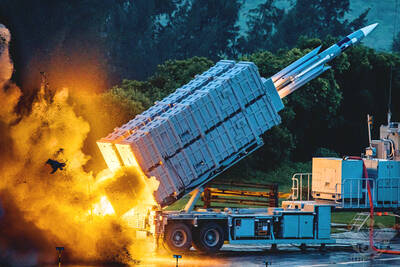
UNDER DISCUSSION: The combatant command would integrate fast attack boat and anti-ship missile groups to defend waters closest to the coastline, a source said The military could establish a new combatant command as early as 2026, which would be tasked with defending Taiwan’s territorial waters 24 nautical miles (44.4km) from the nation’s coastline, a source familiar with the matter said yesterday. The new command, which would fall under the Naval Command Headquarters, would be led by a vice admiral and integrate existing fast attack boat and anti-ship missile groups, along with the Naval Maritime Surveillance and Reconnaissance Command, said the source, who asked to remain anonymous. It could be launched by 2026, but details are being discussed and no final timetable has been announced, the source


 RSS
RSS