


President Chen Shui-bian (陳水扁) was honored on Friday night with the 35th International Human Rights Award, for his long-term efforts and achievement in Taiwan's democracy movement and support for human rights.
Chen received his award during a dinner banquet and award ceremony held by the International League for Human Rights (ILHR) at the Waldorf-Astoria Hotel.
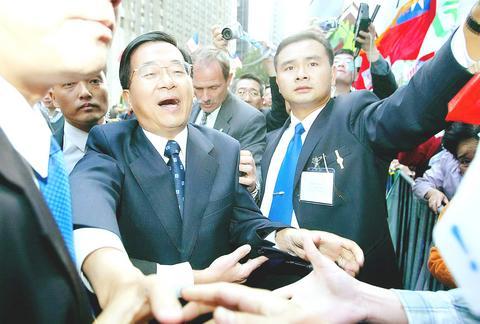
PHOTO: SUNG CHIH-HSIUNG, TAIPEI TIMES
Chen used the occasion to outline what he called as Taiwan's "inadequate constitutional framework," and to make a pitch for his government's plans for the promotion of the right of referendum and the need for a new constitution.
These measures were necessary so Taiwan could realize the concept of "sovereignty to the people" and deep-root democracy and human rights in the country, Chen said.
"As my country's leader, it is imperative that I shoulder responsibility for Taiwan's national development and set a clear vision for the future," Chen said during his 35-minute speech entitled "Taiwan: A Country Embracing Human Rights and Democratic Reform" at the award ceremony.
"I believe that a sound and sustainable constitutional framework can be created through rational debate and engendered by civic consciousness. This is the rationale upon which I have proposed the concept of hastening the birth of a new constitution," Chen said.
Chen used the US' process of creating and amending its Constitution over the past 200 years to stress that the US Constitution also endured continuous debate and amendment to be able to deal with the latest development in society and meet society's needs.
"The hastening of a new Taiwan constitution will determine whether or not our democracy can come into full bloom," Chen said.
"This, strengthened and supplemented by the institutions of direct democracy, such as referendums, would be a necessary step in advancing Taiwan's human rights and the deepening of its democracy," the president said.
"One must not be misled by the contention that holding referendums or re-engineering our constitutional framework, bears any relevance to the `five noes' pledge presented in my inaugural speech," he said. "Neither should matters concerning Taiwan's constitutional development be simplistically interpreted as a political debate of unification versus independence."
"The progression of democracy and human rights in Taiwan not only signifies a triumph of our people in the relentless pursuit for freedom, it is also a torch of democracy for all Chinese societies and has become an indispensable asset to the United States as well as the international society. I have great confidence that by advancing our democracy, we shall show where Taiwan stands in terms of values: a veritable part of the world's democratic community."
Before the award ceremony started, hundreds of Chinese students gathered nearby the Waldorf-Astoria Hotel to demonstrate their opposition to Chen, and exchanged abuse with Chen's overseas Taiwanese supporters across the street.
Chen referred to the incident in his speech, saying the Chinese students "went to the wrong place and abused the wrong person," because his reception of the award in New York showed that human rights was an universal value and Taiwan's achievement in democracy and human rights should be able to serve as a beacon for China.
"You [the Chinese students] should go back and ask, if Taiwan can, why can't China?'" Chen said.
The dinner banquet was co-hosted ILHR President Scott Horton, the US House of Representatives' senior Democrat, David Lantos, and president and CEO of defense contractor United Defense, Thomas Rabaut.
They took turns introducing Chen's achievements since the 1979 Kaohsiung Incident, and urged the US government to invite Chen and his wife for a visit to Washington DC.
Important guests present at the ceremony included former AIT chairmen Nat Bellocchi and Richard Bush. ILHR Executive Director Louise Kantrow said it was the most successful the league had ever held.
Congressman Gary Ackerman, who was also present at the ceremony, made note of a resolution passed unanimously by Congress the previous day welcoming Chen's visit, to applause from the participants.
Also See Story:
Chen pays respects to Soong Mayling at New York home
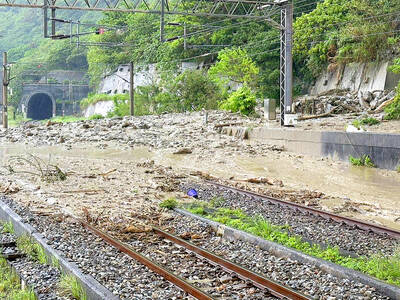
ROLLER-COASTER RIDE: More than five earthquakes ranging from magnitude 4.4 to 5.5 on the Richter scale shook eastern Taiwan in rapid succession yesterday afternoon Back-to-back weather fronts are forecast to hit Taiwan this week, resulting in rain across the nation in the coming days, the Central Weather Administration said yesterday, as it also warned residents in mountainous regions to be wary of landslides and rockfalls. As the first front approached, sporadic rainfall began in central and northern parts of Taiwan yesterday, the agency said, adding that rain is forecast to intensify in those regions today, while brief showers would also affect other parts of the nation. A second weather system is forecast to arrive on Thursday, bringing additional rain to the whole nation until Sunday, it

CONDITIONAL: The PRC imposes secret requirements that the funding it provides cannot be spent in states with diplomatic relations with Taiwan, Emma Reilly said China has been bribing UN officials to obtain “special benefits” and to block funding from countries that have diplomatic ties with Taiwan, a former UN employee told the British House of Commons on Tuesday. At a House of Commons Foreign Affairs Committee hearing into “international relations within the multilateral system,” former Office of the UN High Commissioner for Human Rights (OHCHR) employee Emma Reilly said in a written statement that “Beijing paid bribes to the two successive Presidents of the [UN] General Assembly” during the two-year negotiation of the Sustainable Development Goals. Another way China exercises influence within the UN Secretariat is
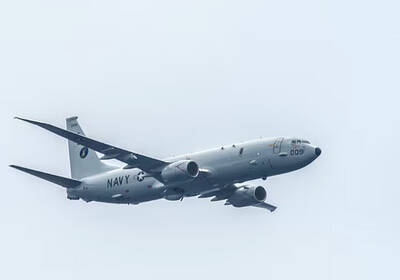
CHINA REACTS: The patrol and reconnaissance plane ‘transited the Taiwan Strait in international airspace,’ the 7th Fleet said, while Taipei said it saw nothing unusual The US 7th Fleet yesterday said that a US Navy P-8A Poseidon flew through the Taiwan Strait, a day after US and Chinese defense heads held their first talks since November 2022 in an effort to reduce regional tensions. The patrol and reconnaissance plane “transited the Taiwan Strait in international airspace,” the 7th Fleet said in a news release. “By operating within the Taiwan Strait in accordance with international law, the United States upholds the navigational rights and freedoms of all nations.” In a separate statement, the Ministry of National Defense said that it monitored nearby waters and airspace as the aircraft
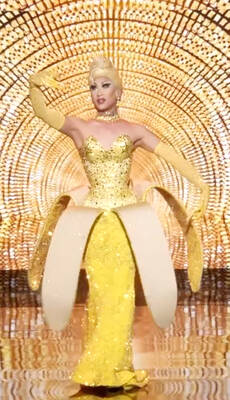
Taiwan’s first drag queen to compete on the internationally acclaimed RuPaul’s Drag Race, Nymphia Wind (妮妃雅), was on Friday crowned the “Next Drag Superstar.” Dressed in a sparkling banana dress, Nymphia Wind swept onto the stage for the final, and stole the show. “Taiwan this is for you,” she said right after show host RuPaul announced her as the winner. “To those who feel like they don’t belong, just remember to live fearlessly and to live their truth,” she said on stage. One of the frontrunners for the past 15 episodes, the 28-year-old breezed through to the final after weeks of showcasing her unique


 RSS
RSS